
Futabasaurus — an elasmosaurid plesiosaur from Japan
Futabasaurus is a genus of long-necked marine reptile (an elasmosaurid plesiosaur) known from fragmentary Upper Cretaceous remains in Japan; the type species is F. suzukii.
Futabasaurus is a genus of marine reptile placed among the long-necked plesiosaurs, specifically within the elasmosaurid group. It lived during the Upper Cretaceous and is represented by fragmentary bones recovered from deposits in Japan. The taxon is known primarily from a single, incomplete type specimen and is catalogued under the type species F. suzukii. Because many elements are missing or damaged, Futabasaurus remains incompletely understood compared with better-known elasmosaurids.
Image gallery
10 Images

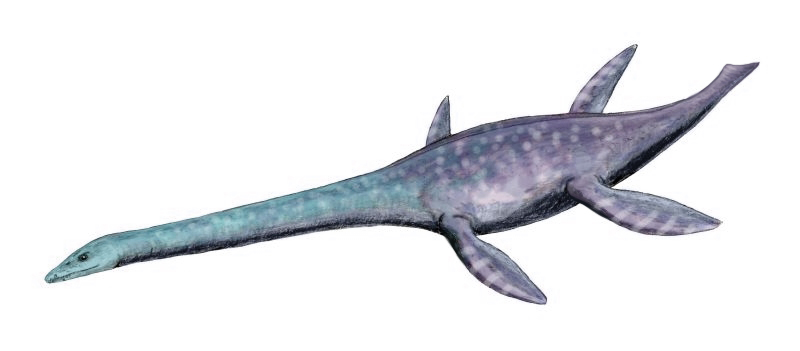


General characteristics
Elasmosaurids are characterized by extremely long necks, relatively small heads, and four large paddle-like limbs adapted for swimming. Though a complete skeleton of Futabasaurus has not been recovered — no complete skeleton exists — the preserved bones indicate it shared the typical elasmosaurid body plan: a streamlined body and wide flippers for propulsion. Skeletal material is fragmentary, so precise estimates of length and proportions are tentative.
Discovery and preservation
Futabasaurus was the first elasmosaurid formally reported from Japan, an important milestone for the regional fossil record. The genus is named for the locality where the remains were found. Many of the recovered bones show apparent bite marks and damage consistent with scavenging or predation, possibly by large marine sharks; this taphonomic pattern complicates interpretation of the original anatomy and completeness of the specimen.
Importance and context
Although incomplete, Futabasaurus has scientific value because it documents the presence of elasmosaurid plesiosaurs in East Asian seas during the Late Cretaceous. Its discovery contributes to understanding how marine reptile faunas were distributed across different continental margins and helps paleontologists compare elasmosaurid diversity worldwide.
Key points
- Taxonomic placement: an elasmosaurid plesiosaur (see plesiosaur for the broader group).
- Temporal range: known from Upper Cretaceous deposits (Upper Cretaceous).
- Specimen status: represented by an incomplete type specimen; no complete skeleton is known.
- Type species: F. suzukii.
- Geographic significance: first elasmosaurid reported from Japan.
Limitations and ongoing research
Because the available material is fragmentary and partly damaged, many anatomical features remain uncertain and subject to revision as new finds appear or existing specimens are reexamined. Future discoveries of more complete material could clarify Futabasaurus's anatomy, size, and precise relationships to other elasmosaurids. For now, reconstructions are cautious and rely on comparisons with better-known relatives.
Related articles
Author
AlegsaOnline.com Futabasaurus — an elasmosaurid plesiosaur from Japan Leandro Alegsa
URL: https://en.alegsaonline.com/art/37092
Sources
- doi.org : 10.1111/j.1475-4983.2006.00554.x