
Flux of Pink Indians — English anarcho-punk band
An English anarcho-punk band formed in 1980, known for politicized lyrics, DIY releases on Crass and Spiderleg, provocative artwork and influence on independent labels and the anarcho-punk scene.
Overview
Flux of Pink Indians were an English anarcho-punk group that emerged from Hertfordshire in 1980. They combined aggressive punk sonics with explicit political commentary, placing them within the broader DIY and anarcho movements of the early 1980s. Early accounts describe their music as confrontational and deliberately provocative, aiming to challenge social and institutional abuses rather than to entertain in a conventional pop sense. Readers can find contemporary context in sources discussing the group’s political orientation and punk identity via political and punk reportage or by consulting primary band listings such as band pages.
Image gallery
2 Images
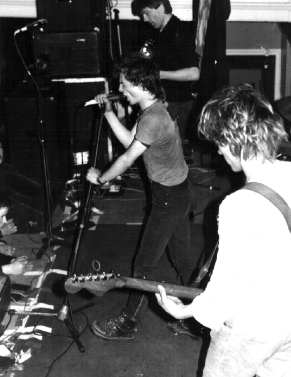
Formation and members
The quartet formed in Hertfordshire in 1980; the arrival date is commonly given as 1980 in press and catalogues (formation year). The original line-up consisted of Colin Latter on vocals, Derek Birkett on bass, Kevin Hunter on guitar and Martin Wilson on drums. Individual members are referenced in biographies and interviews (Colin Latter, Derek Birkett, Kevin Hunter, Martin Wilson). Before adopting the Flux of Pink Indians name, the band performed as the Epileptics and then briefly as Epi-X after complaints from the British Epilepsy Association, a point often noted in histories of punk name disputes (name change).
Early history and recordings
Shortly after forming, Flux connected with the Crass collective and its record label, embracing a shared commitment to anarchist politics and self-managed production. The band signed to that label in the early 1980s and released initial material that brought them notice on the independent scene; the connection to the Crass organisation and its ethos is well documented (Crass label, anarchist politics). Their debut release, often cited as Neu Smell, attracted indie-level attention and included the track that became a small underground success, "Johnny Kidd" (debut album).
Spiderleg, full-length albums and stylistic shifts
Seeking greater control over their output, the band founded their own imprint, Spiderleg, and issued the album Strive to Survive Causing Least Suffering Possible in 1982. The record mixed polemic lyrics with abrasive music and is frequently discussed in surveys of politically motivated punk releases. After further releases and disputes with retailers and censors, the group pared back into a more experimental phase, shortening their name to Flux and moving toward largely instrumental, dub- and ambient-influenced textures on the 1986 release Uncarved Block, which represented a deliberate stylistic pivot (later CD, Uncarved Block).
Controversy and public reaction
Flux became widely noted for provocative presentation and album titles. The record The Fucking Cunts Treat Us Like Pricks generated significant controversy in the early 1980s and was refused by many British retailers; the controversy is cited in legal and cultural discussions of obscenity and censorship in music (banning, retailer reactions). One Manchester independent shop that stocked the record was charged under provisions related to displaying obscene material for gain, a case that later commentators point to when describing tensions between punk culture and the law (legal charge, Manchester, indie shop case).
Legacy and later activity
Flux disbanded in the late 1980s after a period of reduced activity and stylistic change. Band members went on to other projects; notably Derek Birkett used his experience to found the independent label One Little Indian, which later released music by a wide range of artists and is often mentioned in discussions of post-punk entrepreneurial activity (Derek Birkett, independent label). The group’s output has been reissued and anthologised in various forms, and a compilation or re-release was issued in 2003, keeping their work accessible to new listeners (2003 release). Contemporary summaries of Flux of Pink Indians place them within the history of anarcho-punk and DIY culture as a band that deliberately tested the boundaries of acceptable expression while influencing independent distribution practices and political punk discourse (political discourse, recording legacy).
- Selected members: Colin Latter, Derek Birkett, Kevin Hunter, Martin Wilson
- Notable releases: Neu Smell, Strive to Survive, Uncarved Block
- Associated labels and organisations: Crass, Spiderleg, One Little Indian
For more detailed archival information, interviews and discographies consult specialist punk archives and label catalogues which discuss the band’s formation, recorded output, controversies and subsequent influence on independent music networks (political context, punk scene, band pages).
Questions and answers
Q: What was the original name of Flux of Pink Indians?
A: The band was originally called the Epileptics and later changed their name to Epi-X after complaints from the British Epilepsy Association.
Q: When did Flux of Pink Indians form?
A: Flux of Pink Indians was formed in Hertfordshire, England in 1980.
Q: Who were the members of Flux of Pink Indians?
A: The band was made up of Colin Latter (vocals), Derek Birkett (bass), Kevin Hunter (guitar) and Martin Wilson (drums).
Q: What label did they sign with in 1981?
A: In 1981, the group signed on with the Crass label.
Q: What album did they release soon after signing with Crass?
A: They issued their debut album Neu Smell soon after signing.
Q: What happened when they released their 1983 follow-up album?
A: Not surprisingly, their 1983 follow-up The Fucking Cunts Treat Us Like Pricks was banned by many British retailers. One Manchester indie record store which did carry the record was charged for displaying "obscene articles for publication for gain."
Q: When did Flux disband?
A: They disbanded in 1987; Derek Birkett later founded the One Little Indian label.
Related articles
Author
AlegsaOnline.com Flux of Pink Indians — English anarcho-punk band Leandro Alegsa
URL: https://en.alegsaonline.com/art/35292