
East Asia: geography, history, culture and modern significance
Overview of East Asia: geography, major countries and territories, historical developments, cultural traits, economy, and contemporary distinctions within the broader Asian region.
Overview
East Asia is the eastern subregion of the continent represented as the continent and broadly as Asia. It spans diverse climates and landscapes, from the steppes of Mongolia to the islands of Japan. The region covers about 6.64 million km2, roughly 15% of Asia, and is home to some of the world’s largest populations and urban concentrations.
Image gallery
10 Images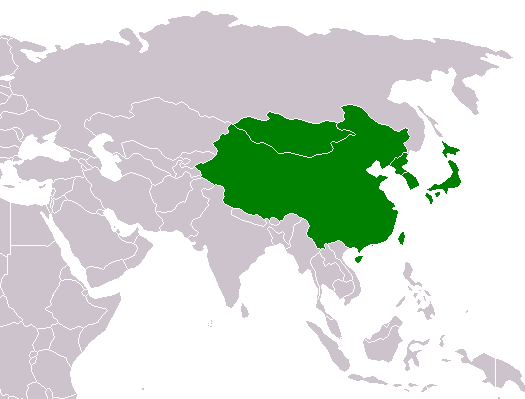





Geography and political makeup
East Asia includes major states and territories such as China, Japan, both Koreas, Mongolia, Taiwan, and the special administrative regions of Hong Kong and Macau. The area is bounded by the Pacific Ocean to the east and includes seas like the Yellow Sea and the East China Sea. High plateaus, river basins and coastal plains make for varied environments and economic zones.
History and culture
Millennia of interaction have shaped East Asia: ancient Chinese civilizations exerted long-range cultural influence through language, administrative models, and philosophies such as Confucianism and Buddhism. Distinct literatures, artistic traditions, and religious practices evolved in China, Japan, Korea and Mongolia, while trade and migration fostered both shared and local customs.
Economy and modern importance
In modern times the region has become an economic powerhouse with major manufacturing, technology and service centers. Cities such as Beijing, Tokyo, Seoul and Shanghai are global hubs. Rapid industrialization, large-scale urbanization and investment in education and infrastructure have driven growth, though development levels and political systems vary widely across the region.
Countries and territories
- People’s Republic of China
- Japan
- Republic of Korea (South Korea)
- Democratic People’s Republic of Korea (North Korea)
- Mongolia
- Taiwan
- Hong Kong (SAR)
- Macau (SAR)
Distinctions and notable facts
Definitions of East Asia can vary by discipline: some uses emphasize cultural zones, others political boundaries. The region is notable for its mix of ancient institutions and rapid modernization, high levels of urban density, significant technological output, and strategic importance in global trade and geopolitics.
Related articles
Author
AlegsaOnline.com East Asia: geography, history, culture and modern significance Leandro Alegsa
URL: https://en.alegsaonline.com/art/29605