
Diego Ramírez Islands — remote Chilean archipelago in the Drake Passage
Small, windswept islands southwest of Cape Horn belonging to Chile, important for seabirds and meteorology; historically the southernmost known land until the 18th century.
Overview
The Diego Ramírez Islands are a compact archipelago located in the Drake Passage, roughly 100 km southwest of Cape Horn. They belong to Chile and lie well to the south of the South American continental shelf. The group sits in a region of strong westerly winds, frequent storms and persistent low temperatures, and it marks one of the last outposts of land encountered en route to Antarctica.
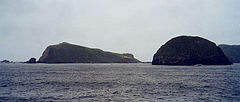
Image gallery
4 Images


Geography and island groups
The archipelago consists of two principal clusters separated by a channel of a few kilometres. The smaller northern cluster, known collectively as Rocas del Norte, comprises five main islets: Islote Cabezas, Islote Peñailillo, Isla Norte, Islote Martínez and Islote Mendoza. The larger southern group includes several rocky islands, among them Isla Bartolomé (the largest), Isla Gonzalo, Islote Ester and numerous smaller stacks and reefs.
History and naming
European discovery of the islands dates to 12 February 1619 during the voyage of the García de Nodal brothers. The archipelago was named for the expedition's cosmographer, Diego Ramírez. For more than a century and a half these islands represented the southernmost known land; that distinction changed after later voyages such as those by James Cook, who extended the mapped limits of the Southern Ocean. Modern sovereignty is Chilean and the islands are administered as part of Chile's southern regions.
Human presence and facilities
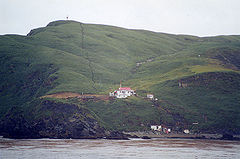
Permanent human habitation is minimal. In 1957 the Chilean Navy established a meteorological and lighthouse facility on Isla Gonzalo above Caleta Condell; that station is resupplied regularly by ship and is considered the southernmost manned outpost of South America under Chilean control. The site includes basic accommodation, weather instruments and a beacon. Occasionally ships bound for Antarctica pass nearby, and the islands receive periodic visits by scientists and authorized tourist vessels.
Environment, wildlife and climate
The islands are botanically sparse: low-growing mosses and lichens dominate the ground cover where soil pockets exist. The climate is cold, wet and windy year-round, with frequent frontal systems that bring rain or drizzle in most months. Despite the harsh weather, the Diego Ramírez Islands are of high ecological value as breeding and resting sites for seabirds and marine mammals. Several species of albatrosses, petrels and penguins use the islands for nesting, feeding on the rich oceanic waters of the Drake Passage.
Importance and notable distinctions
Because of their latitude and exposure to the open Southern Ocean, the islands are important for meteorological observations and for studies of subantarctic ecosystems. They also serve as a navigational landmark for vessels transiting between the southern tip of South America and Antarctic waters. The archipelago is remote, little modified by humans and protected in practice by its limited accessibility and the logistical difficulty of operations in severe weather.
Related points and references
- Proximity to other islands: the Ildefonso Islands lie about 93 km to the north-northwest.
- Historic context: earlier European mapping and later discoveries shifted the perceived southern limits of land several times over the 17th–18th centuries (exploration history).
- Political and logistical notes: Argentina maintained installations on distant South Sandwich Islands in the 20th century; sovereignty and presence in the southern oceans have periodically been matters of national interest (Argentine presence, Falklands War).
- Navigation and tourism: occasional cruise and research vessels include the Diego Ramírez archipelago on itineraries to and from Antarctica and the subantarctic region (cruise routes).
- Administration and logistics: supplies and operations are organized through Chilean maritime services and naval logistics (administrative links, regional ports).
Though small and seldom seen, the Diego Ramírez Islands play a distinct role in southern oceanography, seabird ecology and the human history of sailing and exploration at the edge of the Antarctic convergence.
Related articles
Author
AlegsaOnline.com Diego Ramírez Islands — remote Chilean archipelago in the Drake Passage Leandro Alegsa
URL: https://en.alegsaonline.com/art/27273
Sources
- melfisher.org : "Last Will and Testament of Juan Nunez de Nodal aboard the Nuestra Senora de Atocha"