
Dinajpur District (Bangladesh)
Dinajpur District in northern Bangladesh is an agricultural and cultural region centered on Dinajpur town, known for historical temples, large irrigation tanks, and its role in regional history and economy.
Overview
Dinajpur District lies in the northern part of Bangladesh and is centered on the municipal town of Dinajpur. It is part of the broader Rangpur administrative division and serves as an important local hub for commerce, education and administration in the region.
Image gallery
10 Images






Geography and administration
The district occupies a largely flat, fertile plain traversed by seasonal rivers and irrigation canals. The landscape supports intensive agriculture and a network of small towns and rural unions that provide local governance. Dinajpur town functions as the district headquarters and primary service center.
History and development
Dinajpur has a long rural and urban history shaped by premodern kingdoms, Mughal influence and later British colonial administration. In the twentieth century the boundaries and administration of the greater Dinajpur area changed with partition and subsequent reorganizations, shaping the present district borders and demographic patterns.
Economy, society and culture
Agriculture is the backbone of the local economy; paddy, oilseeds and other crops are widely cultivated, supported by irrigation and seasonal floodplain farming. Small-scale manufacturing, rice and flour mills, and local trading activities complement the rural economy. The population reflects the region's linguistic and cultural traditions, with festivals, folk music and local crafts forming part of everyday life.
Notable sites
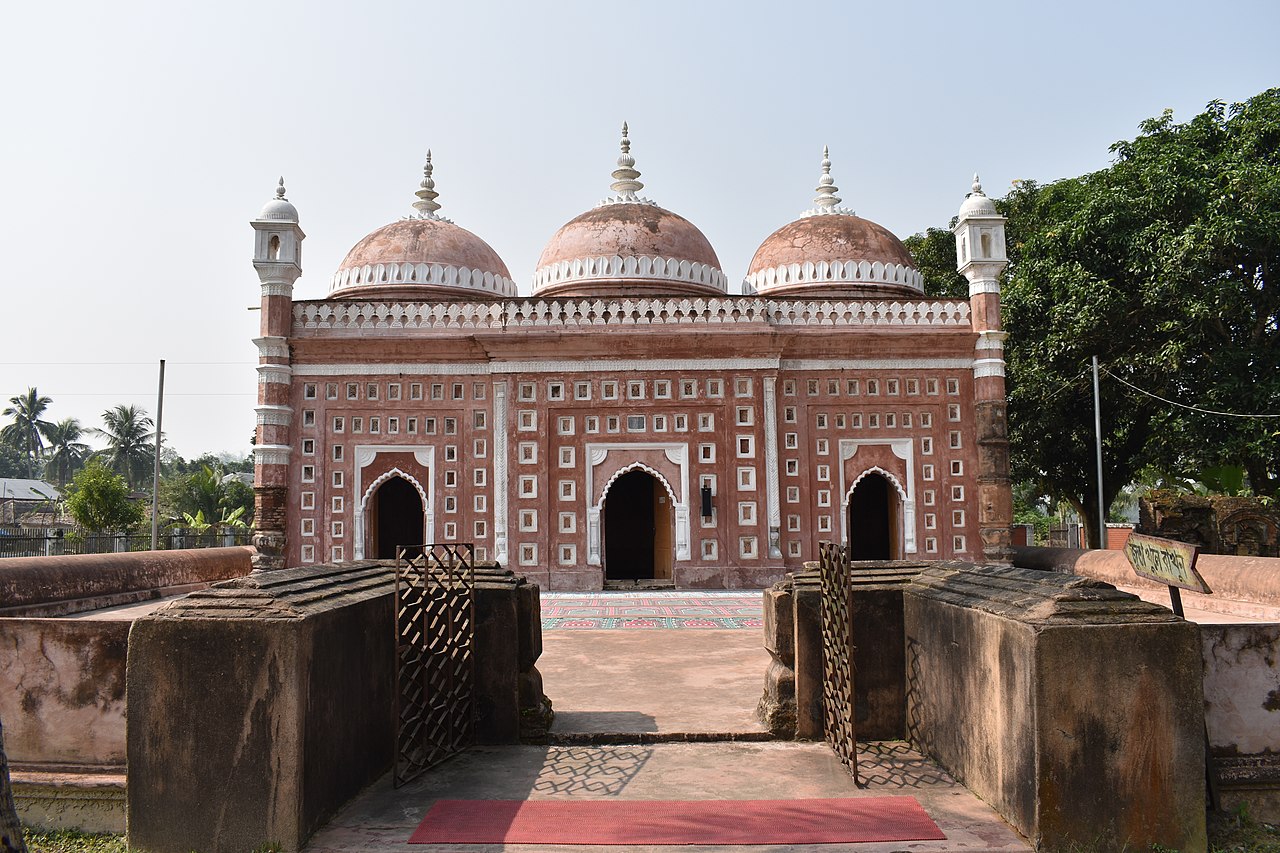
Dinajpur is known for a number of historic and cultural landmarks that attract visitors and scholars alike. Among these are:
- Kantajew Temple – a notable terracotta temple celebrated for its intricate masonry and relief art.
- Ramsagar – an expansive historic water tank built for irrigation and social use, now a local landmark.
- Dinajpur Rajbari – remnants of the former zamindar (landlord) estate, illustrating colonial-era architecture and patronage.
Distinctive features and importance
Dinajpur's importance stems from its agricultural productivity, historical monuments and its role as a regional administrative and educational center. Its cultural heritage and archaeological sites provide insights into Bengal's rural history, while contemporary development focuses on balancing agricultural modernization with preservation of local traditions.
Related articles
Author
AlegsaOnline.com Dinajpur District (Bangladesh) Leandro Alegsa
URL: https://en.alegsaonline.com/art/27472