
Drake Passage
A turbulent stretch of the Southern Ocean between Cape Horn and the Antarctic islands, the Drake Passage links the Atlantic and Pacific, drives global currents, supports rich marine life, and challenges mariners.
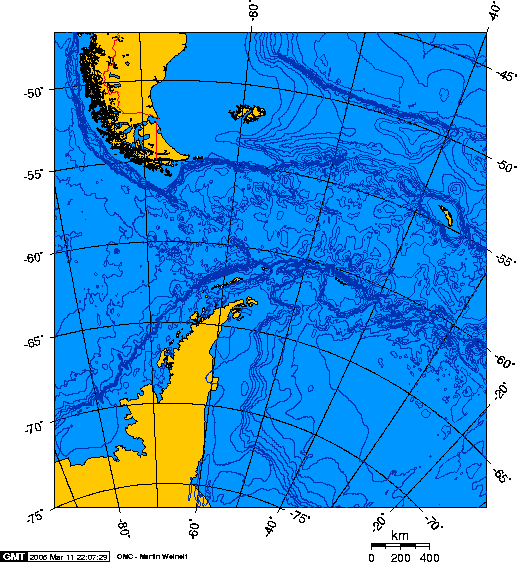
The Drake Passage is the stretch of ocean that separates the southern tip of South America from the Antarctic region. It lies between Cape Horn (Cape Horn) and the South Shetland Islands (South Shetland Islands), connecting the Atlantic and Pacific oceans and forming part of the larger Southern Ocean (Southern Ocean). The feature is commonly described as a body of water (body of water) that provides the shortest crossing between much of the world and the Antarctic continent; for this reason it is a key corridor for research ships and expedition cruises as well as for oceanographic exchanges.
Image gallery
10 Images





Physical characteristics
The passage is dominated by the Antarctic Circumpolar Current, a powerful eastward flow that circulates around Antarctica and helps equalize global ocean properties. Its waters are cold, mixed, and often turbulent; winds and currents interact to produce steep, energetic seas. Storms can generate very large waves, and waves of ten meters or more are commonly reported in strong weather (wave reports). The narrowness of the crossing relative to the scale of the circumpolar flow concentrates momentum and contributes to challenging navigation and rapid changes in sea state.
History and naming
The passage bears the name of Sir Francis Drake (Sir Francis Drake), the Elizabethan privateer and explorer. Historical accounts note that while Drake’s voyages helped open knowledge of the region, he did not actually sail the open route now called the Drake Passage; many early navigators instead used the Strait of Magellan (Strait of Magellan) when seeking a passage around South America because of charting and sailing considerations at the time. Older sources sometimes refer to the feature as Drake Strait.
Ecology, wildlife and human use
Despite the harsh conditions, the Drake Passage supports abundant marine life. It lies on productive oceanic routes that supply nutrients and attract feeding aggregations: whales (whales), dolphins (dolphins), numerous seabird species (seabirds), and several penguin species (penguins) are commonly observed by scientists and visitors. The passage is also one of the principal approaches for scientific expeditions to Antarctica; its mixing processes and biological productivity make it a frequent subject of oceanographic study.
Notable facts and distinctions
- The Drake Passage is one of the fiercest open-ocean passages in the world and is associated with some of the planet’s most dynamic weather and sea conditions (sea condition reports).
- Islands within or close to the passage are scarce; among the few are the Diego Ramirez group south of Cape Horn and the Antarctic island chains to the south (Cape Horn region).
- As a connector between three major ocean basins, the passage plays a disproportionate role in global heat and salt transport and in the large-scale circulation that affects climate.
- Because of its wildlife and its reputation for rough seas, the Drake Passage is sometimes used as a benchmark in accounts of polar travel and ocean sailing, and it continues to be central to Antarctic logistics and research planning.
For visitors and researchers alike, the Drake Passage is both a hazard and a resource: it challenges mariners with strong currents and high seas while offering close access to Antarctic environments and a living laboratory of oceanic processes. Many modern accounts balance the passage’s notoriety for rough water with descriptions of abundant wildlife sightings and important scientific discoveries made in its waters.
Further reading and resources are available through navigational guides and research summaries (general references, regional geology and geography). For historical context see accounts of the early explorers (Drake, Magellan-era routes) and for contemporary observations consult meteorological and oceanographic services (Antarctic islands context, Southern Ocean studies).
Journalists, sailors and scientists who write about or travel the Drake Passage often report sightings and encounters with marine mammals such as whales and dolphins, along with flocks of seabirds and colonies of penguins, highlighting the contrast between its inhospitable seas and rich natural life.
Related articles
Author
AlegsaOnline.com Drake Passage Leandro Alegsa
URL: https://en.alegsaonline.com/art/28867