
Cape Horn
Cape Horn is the southernmost headland of the Tierra del Fuego archipelago in Chile, known for violent seas, a key role in age-of-sail global trade, and a modern yachting milestone.
Overview
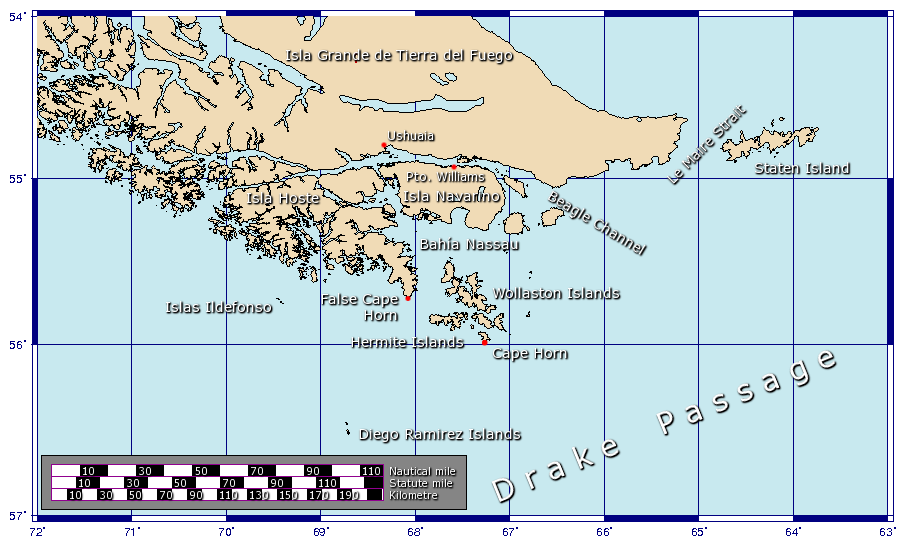
Cape Horn lies near the southern extreme of South America and is commonly identified as the southernmost point of the Tierra del Fuego archipelago. It is a steep, rocky headland on Hornos Island and forms a prominent navigation landmark where the waters of the South Atlantic and South Pacific meet. The cape has long been symbolic of the end of a long ocean passage and a test of seamanship.
Image gallery
10 Images




Name and early history
The name "Cape Horn" comes from the Dutch city of Hoorn; in Dutch the headland is known as Kaap Hoorn and in Spanish as Cabo de Hornos. European knowledge of the area increased during the period of global exploration and trade in the 17th and 18th centuries. The cape became widely known when clipper captains and commercial navigators began rounding it as part of long-distance routes taken by sailing ships.
Geography, climate and hazards
Cape Horn sits within the political boundaries of southern Chile. It faces the turbulent waters of the Drake Passage, where strong westerly winds, powerful ocean swells and frequent storms combine to create extremely challenging conditions. Icebergs and sea ice can appear, especially in colder months; many vessels historically reported encounters with icebergs. These factors, plus submerged rocks and shifting weather, have made the area notorious among mariners.
Maritime role and the clipper route
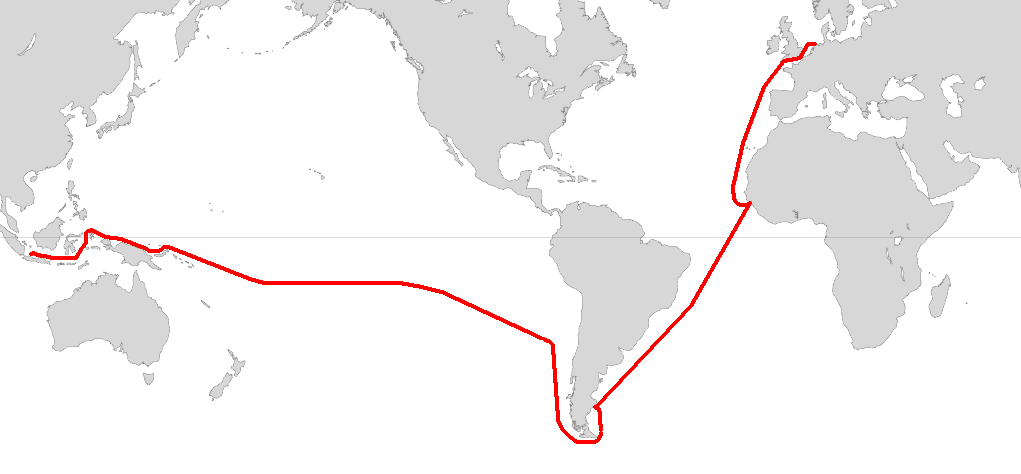
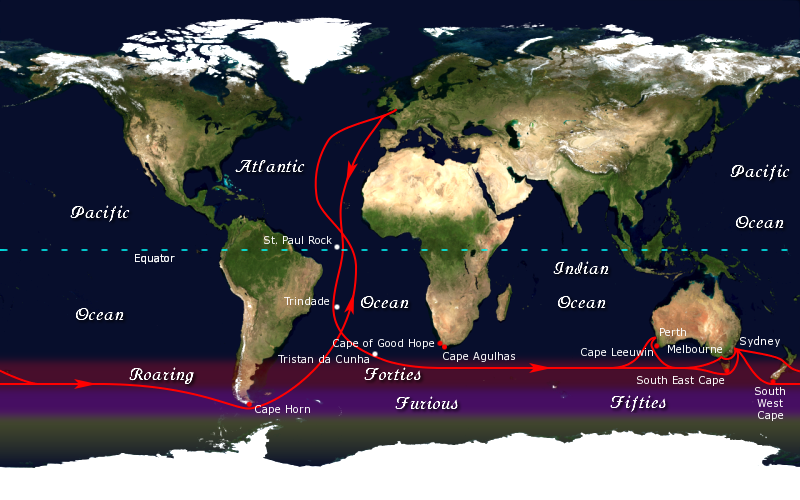
For centuries Cape Horn was a key waypoint on routes that connected Europe, the Atlantic and the Pacific before the construction of the Panama Canal. Merchant sailing craft used the cape as the most direct deep-water passage between oceans and as one of the great capes of global navigation. Rounding the Horn was a significant milestone on many long voyages and is still referenced in accounts of the age of sail.
Modern significance and sport
Commercial reliance on the Horn decreased after the canal opened, but Cape Horn remains an iconic and demanding goal for recreational sailors and racers. Many round-the-world voyages and records follow the traditional southern route and include rounding the cape as part of an overall circumnavigation. High-profile single-handed and crewed races, such as the Vendée Globe, use courses that pass the southern capes.
Distinctions, wildlife and navigation aids
Cape Horn is often described as the most southerly of the great capes and as a symbolic maritime landmark on the southern rim of South America. The islands nearby support seabirds and marine mammals; albatrosses and penguins are among the wildlife often noted by visitors and researchers. To aid navigation, the Chilean authorities maintain a lighthouse and facilities on Hornos Island and continue to monitor conditions for shipping safety.
Further context and resources
- Geographic classification and maps: see materials on what defines a cape.
- Historical ties: the town of Hoorn in the Netherlands is the origin of the name.
- Regional setting: the cape is part of the wider archipelago system in southernmost Chile.
Today Cape Horn is simultaneously a place of natural remoteness, historical memory and contemporary sporting achievement; its reputation for danger remains, and the cape still figures in navigation, conservation and the lore of the sea.
Questions and answers
Q: What is Cape Horn?
A: Cape Horn is a cape located in the southernmost area of the Tierra del Fuego archipelago of southern Chile.
Q: Why was it named "Cape Horn"?
A: It was named after the city of Hoorn in the Netherlands.
Q: Is Cape Horn the southernmost land area of South America?
A: Yes, many people see Cape Horn as the southern tip of South America.
Q: What is the Drake Passage and where is it located?
A: The Drake Passage is located directly to the south of Cape Horn and is the body of water between South America and Antarctica.
Q: Why are the waters around Cape Horn dangerous?
A: The waters are dangerous due to strong winds, large waves, and icebergs.
Q: Has the Panama Canal affected shipping around Cape Horn?
A: Yes, the Panama Canal has greatly reduced the need for cargo ships to travel via Cape Horn.
Q: Why do some recreational sailors still sail around Cape Horn?
A: Sailing around Cape Horn is widely regarded as one of the major challenges in yachting and some sailors still do it as part of a circumnavigation of the globe.
Related articles
Author
AlegsaOnline.com Cape Horn Leandro Alegsa
URL: https://en.alegsaonline.com/art/16712