
Connective tissue: structure, types, functions and significance
Overview of connective tissue: its composition (cells, fibers, extracellular matrix), major types (embryonic, proper, special), typical examples, functions, and notable facts about collagen.
Overview
Connective tissue is a fundamental category of animal tissue that supports, connects, separates or protects other tissues and organs. It is traditionally listed alongside epithelial, muscle and nervous tissues as one of the four basic tissue groups. In broad terms, connective tissue is characterized by relatively few cells embedded in an abundant extracellular material that determines much of its mechanical and physiological behavior. For a concise definition and basic description, see the entry on connective tissue.
Image gallery
5 Images


Composition and structure
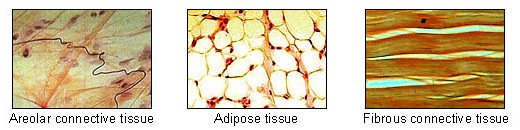
Most connective tissues share three principal components: the resident and transient cells, the fibrous elements or fibres, and the intercellular or extracellular matrix. Cells include fibroblasts, adipocytes, mast cells and various immune cells; fibres are primarily collagen, elastic and reticular types; and the matrix consists of ground substance (proteoglycans and glycosaminoglycans) plus the fibers. The relative amounts of these components vary widely between different connective tissues and determine properties such as stiffness, elasticity and compressive resistance.
Types and common examples
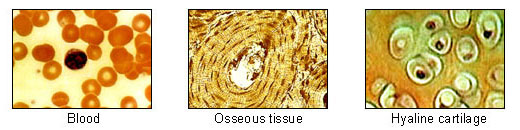
Connective tissue is commonly grouped into embryonic connective tissue, connective tissue proper, and special connective tissues. Examples of tissues classified under these headings include:
- Tendons and ligaments — dense, fiber-rich structures that transmit mechanical forces.
- Blood — a fluid connective tissue whose matrix is plasma and whose cells perform transport and immune roles.
- Cartilage — a firm but flexible tissue that cushions joints and shapes structures.
- Bone — a mineralized connective tissue providing rigid support and mineral storage.
- Adipose tissue — energy-storing, endocrine-active fat tissue.
- Lymphatic tissue — organized connective tissue involved in immune responses.
Functions and examples of importance
Connective tissues perform a wide range of functions that are essential for organismal integrity and homeostasis. These include mechanical support, protection of organs, metabolic storage (fat), transport of gases and nutrients (blood), repair after injury, and participation in immune defense. The physical properties of a given connective tissue—such as the tensile strength of a tendon or the compressive resistance of cartilage—arise from its specific extracellular matrix composition.
Notable biochemical facts
Collagen is the principal structural protein in many connective tissues and is particularly abundant in animals. It is often cited as the most plentiful protein in mammals, comprising a substantial fraction of total body protein—commonly estimated at roughly one quarter in adult mammals. Specific collagen types and crosslinking patterns account for differences in tissue strength and resilience. For further biochemical context, see entries on collagen and general protein structure and function in animals, especially mammals.
Development, clinical relevance and distinctions
Connective tissues arise from mesenchymal cells during embryonic development. Disorders of connective tissue range from genetic collagen defects and inherited syndromes to acquired conditions such as fibrosis, inflammatory diseases and age-related changes. Clinically, understanding the distinctions among connective tissue types guides treatment of injuries (e.g., tendon repair), degenerative joint disease (cartilage loss), metabolic conditions (adipose distribution) and circulatory problems (blood disorders). For targeted information on particular connective tissues and clinical approaches, consult specialized resources linked in the relevant subsections.
Summary: Connective tissue is a diverse group defined by cells embedded in a matrix of fibers and ground substance, with specialized forms adapted for support, protection, storage, transport and repair. Its composition—especially the predominance of collagen in many types—underpins both normal function and a wide variety of medical conditions.
connective tissue (overview) • epithelial • muscle • nervous • cells • fibres • tendons • blood • cartilage • bone • adipose • lymphatic • collagen • protein • animals • mammals
Related articles
Author
AlegsaOnline.com Connective tissue: structure, types, functions and significance Leandro Alegsa
URL: https://en.alegsaonline.com/art/22555
Sources
- mercksource.com : Connective tissue
- jbc.org : "Mapping the ligand-binding sites and disease-associated mutations on the most abundant protein in the human, Type I Collagen"
- doi.org : 10.1074/jbc.M110709200
- pubmed.ncbi.nlm.nih.gov : 11704682