
Conodonts: extinct tooth-bearing chordates important to paleontology
Conodonts were small, eel-like marine chordates known from phosphatic tooth-like elements. Once enigmatic, they are now regarded as early vertebrate relatives and are key fossils for biostratigraphy and thermal history studies.
Overview
Conodonts were small, soft-bodied marine animals best known from abundant microscopic tooth-like fossils called conodont elements. Historically regarded as an enigmatic group, they are placed within the phylum Chordata and many researchers interpret them as primitive vertebrates or close relatives. In some classifications they are ranked as a distinct class, reflecting their unusual anatomy and long history of debate over affinities.
Image gallery
10 Images

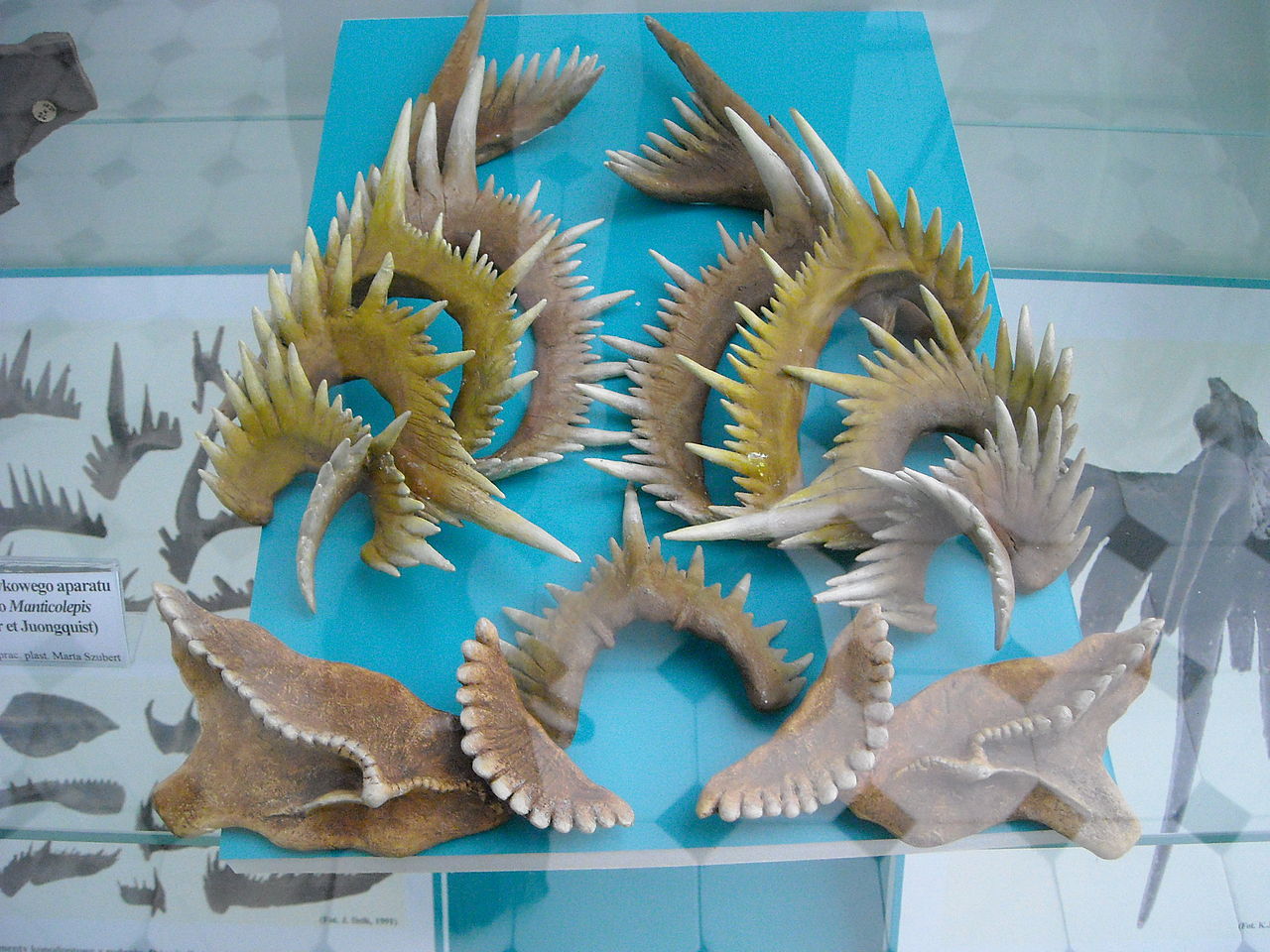


Anatomy and feeding apparatus
Most conodonts are known from isolated, phosphatic (apatite) elements that fossilise readily. These elements occur in a variety of morphologies — coniform (cone-shaped), ramiform (bar-like) and platform-bearing types — and articulate into a complex feeding apparatus within the animal's head. Exceptionally preserved specimens with soft tissues reveal an eel-like body with a notochord, segmented musculature, paired eyes and a row of elements in the mouth region. Element arrangements and wear patterns indicate a range of feeding strategies from simple grasping to more complex processing of small prey or particles.
Fossil record and preservation
Conodont elements appear in marine sediments from the early Paleozoic and persist until the end of the Triassic. Most fossils are isolated elements recovered from bulk sediment or limestone, but soft-bodied specimens that preserved the whole animal are rare and critical. Important material showing elements in life position together with soft anatomy came from a Lower Carboniferous lagerstätte near Edinburgh in Scotland, reported in the late 20th century, which helped confirm their chordate affinities.
Uses in geology and paleontology
- Biostratigraphy: Conodont elements are abundant, widespread and rapidly evolving, making them excellent index fossils for correlating Paleozoic marine rocks.
- Thermal history: The Conodont Alteration Index (CAI), based on color and structural changes in elements, is widely used to estimate maximum burial temperatures of sedimentary sequences.
- Paleoecology and evolution: Variation in element morphology, growth stages and assemblages informs studies of diet, life habits and the early evolution of mineralized tissues in chordates.
Significance
For more than a century conodont elements were collected and classified long before their biological source was understood. The discovery of soft-bodied specimens showing the full animal transformed their status from paleontological curiosities to key tools for stratigraphy, thermal maturity studies and the study of early vertebrate evolution. While some details of their internal relationships remain under study, conodonts are broadly recognised as representing an important and distinctive early chapter in the history of chordates.
Questions and answers
Q: What are conodonts?
A: Conodonts are an extinct class of the phylum Chordata.
Q: Are conodonts regarded as vertebrates?
A: Yes, conodonts are now regarded as vertebrates, although the issue is still a live one.
Q: How were conodonts known for many years?
A: Conodonts were known only from their feeding apparatus, which fossilises well.
Q: Why does most of the conodont animal not fossilize in normal circumstances?
A: Most of the conodont animal was soft-bodied, so everything but the teeth were not fossilised.
Q: When were the conodont teeth found with trace fossils of the host organism?
A: The conodont teeth were found with trace fossils of the host organism in the early 1980s.
Q: Where did the conodont teeth with trace fossils come from?
A: The conodont teeth with trace fossils came from the Lower Carboniferous lagerstätte near Edinburgh, Scotland.
Q: What fossils are most commonly found from conodonts?
A: Most commonly found fossils from conodonts are their feeding apparatus or teeth.
Related articles
Author
AlegsaOnline.com Conodonts: extinct tooth-bearing chordates important to paleontology Leandro Alegsa
URL: https://en.alegsaonline.com/art/22572