
Tendon (sinew): structure, function, and clinical overview
Tendons are strong fibrous tissues that attach muscle to bone, transmit force, enable movement and provide proprioceptive feedback. This article describes structure, function, common injuries and clinical importance.
A tendon, sometimes called a sinew, is a dense band of fibrous tissue that connects a contracting muscle to a bone. Tendons are specialized to resist and transmit mechanical tension generated by muscle while allowing some elastic storage and return of energy. They are distinct from ligaments, which primarily link bone to bone and stabilize joints.
Image gallery
4 Images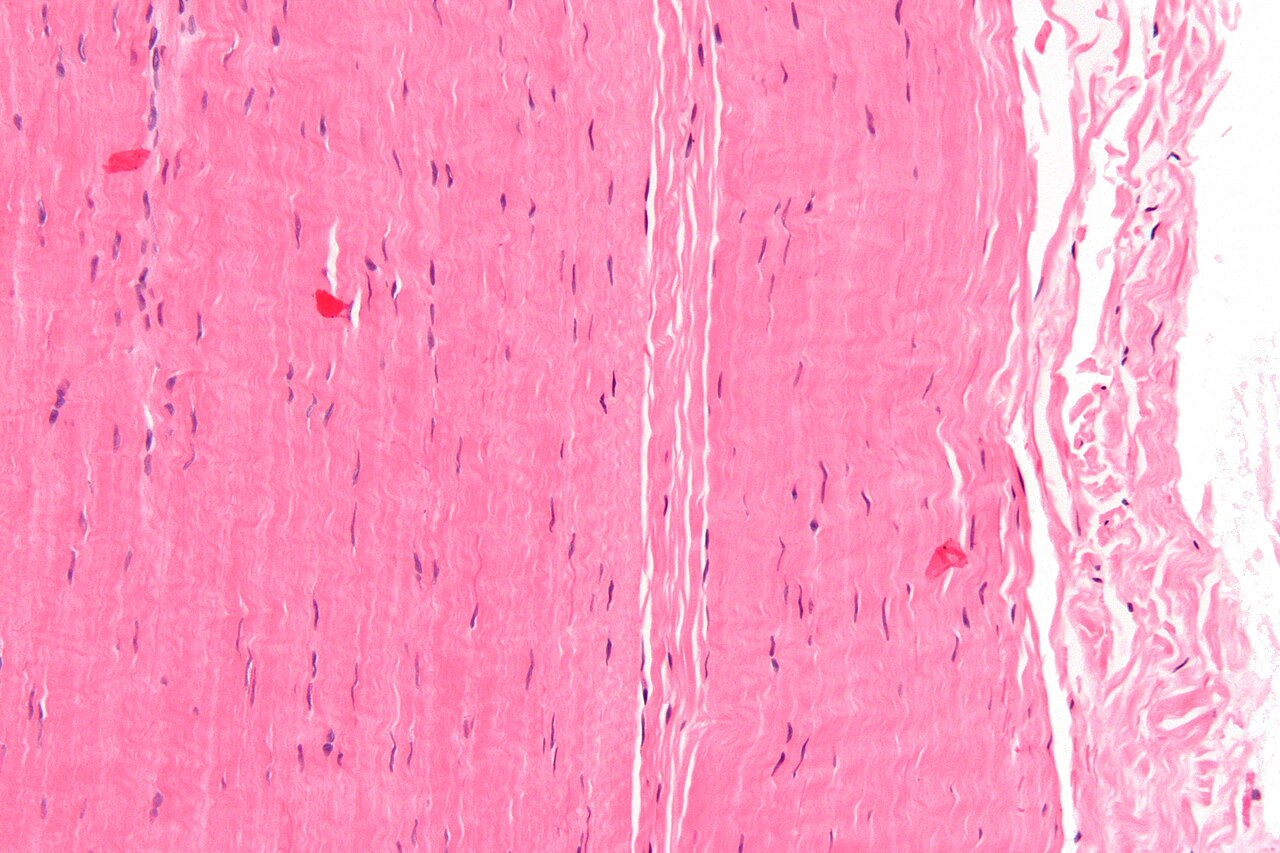


Structure and composition
At the microscopic level tendons are formed mainly of parallel collagen fibers embedded in an extracellular matrix. The dominant collagen type is the strong, fibrillar form that gives tensile strength. Fibers are organized into bundles (fascicles) and are surrounded by connective tissue layers (endotenon and epitenon); some tendons also have a surrounding paratenon or synovial sheath to reduce friction where they glide.
Function and biomechanics
Tendons transmit force from muscle to bone so that joints move in a controlled way. Their stiffness and elasticity affect how energy is stored and released during activities such as running and jumping, and they contribute to fine control through sensory nerve endings that provide proprioceptive feedback. The tendon-bone junction (enthesis) is a specialized interface that gradually transitions soft tissue to mineralized bone to withstand load.
Examples and locations
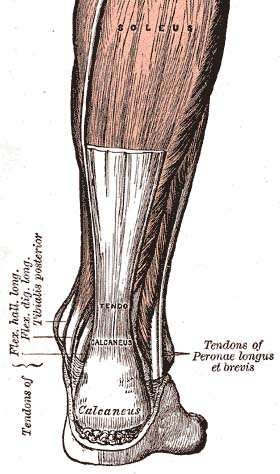
- Achilles tendon (calcaneal) — connects calf muscles to the heel and endures high loads during walking and running.
- Patellar tendon — transmits quadriceps force to the tibia, important for knee extension.
- Rotator cuff tendons — stabilize and move the shoulder joint.
- Flexor and extensor tendons of the hand — enable finger motion and precision grip.
Injury, healing, and clinical relevance
Tendons have relatively limited blood supply compared with muscle, so they heal more slowly after injury. Common problems include tendinopathy (degenerative changes and pain), tendonitis (inflammation), and partial or complete tears. Treatment options range from rest, rehabilitation and load-modifying exercises to injections and surgical repair for severe ruptures. Rehabilitation often emphasizes gradual loading to restore strength and tendon structure.
Notable facts and distinctions
Tendons adapt to chronic loading by changing stiffness and cross-sectional area, but excessive or sudden loads can lead to damage. Their mechanical role and sensory contributions make them central to both athletic performance and everyday movement. Understanding tendon biology and mechanics informs prevention and treatment of common musculoskeletal conditions.
For more detailed anatomical and clinical information see resources on muscle and skeletal tissues: muscle, bone, mechanical tension, and contrasts with ligaments.
Author
AlegsaOnline.com Tendon (sinew): structure, function, and clinical overview Leandro Alegsa
URL: https://en.alegsaonline.com/art/96957