
Conoidasida — apicomplexan protists with a conoid
Conoidasida is a group of parasitic protists in the phylum Apicomplexa, distinguished by an apical conoid. Members include coccidia; they have complex life cycles and are important parasites of animals and humans.
Conoidasida is a class of single-celled, parasitic eukaryotes within the larger phylum Apicomplexa. These organisms are defined by an apical complex containing a conoid, a specialized cytoskeletal structure used during host-cell interaction. Most species live as obligate parasites of animals and display multi-stage life cycles that alternate between asexual and sexual reproduction.
Image gallery
2 Images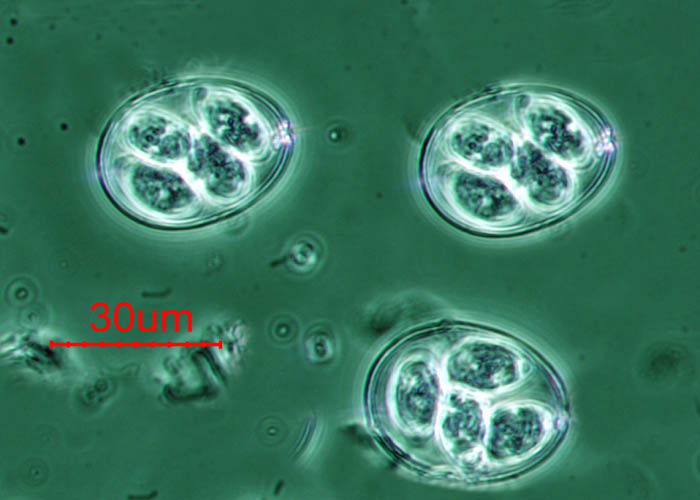
Distinctive features
Conoidasida members share a set of anatomical and cellular traits associated with host invasion and intracellular survival. Key features include:
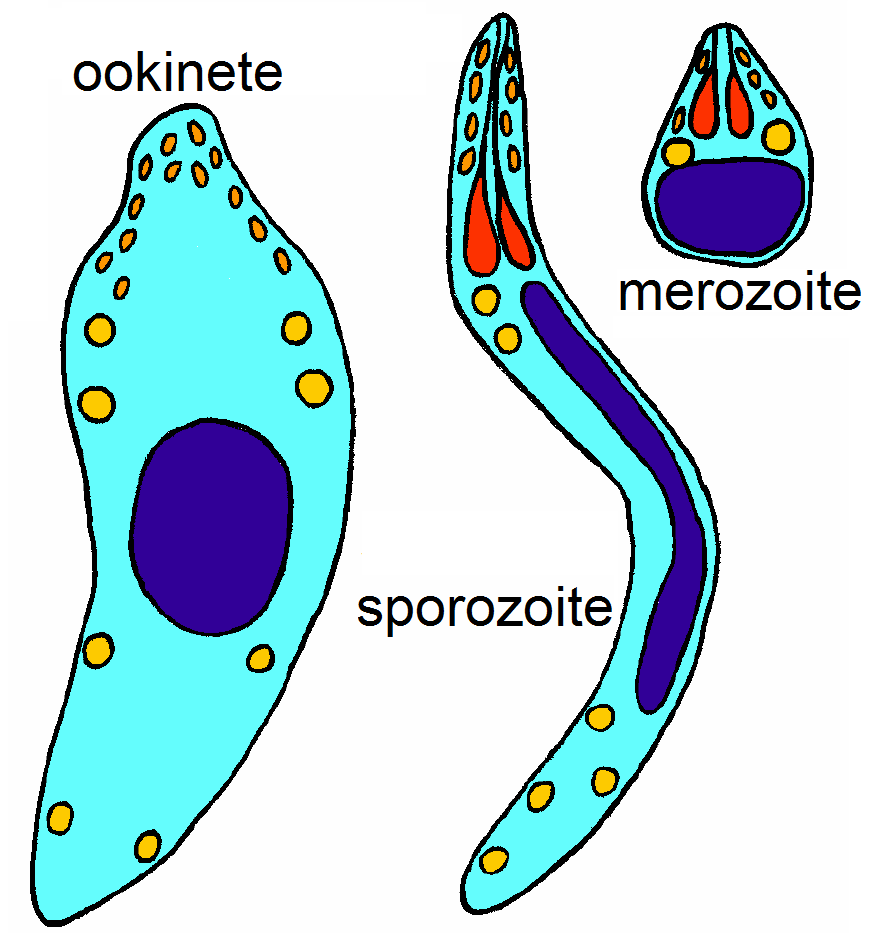
- Conoid: a cone-shaped assembly of spirally arranged microtubules at the cell apex, involved in penetrating host tissues.
- Apical organelles: rhoptries and micronemes, which secrete proteins that facilitate attachment and entry into host cells.
- Complex life cycle stages: forms such as sporozoites, merozoites and oocysts are commonly produced.
Taxonomy and history
Historically Conoidasida has been contrasted with Aconoidasida, a related group that lacks a true conoid in most life stages. Classification within Apicomplexa has been refined by microscopy and molecular phylogenetics, and names at the order and family level have changed as new data emerged. One well-known order associated with conoidasids is the Eucoccidiorida, which contains many coccidian parasites.
Hosts, life cycles and examples
Species infect a wide range of vertebrate and invertebrate hosts. Their life cycles commonly include both asexual multiplication in one host and sexual reproduction that produces resistant oocysts. Representative genera include Toxoplasma and Eimeria, which are important in human health and veterinary medicine because they cause toxoplasmosis and coccidiosis respectively.
Importance and distinctions
Conoidasida organisms are significant as disease agents, model systems in cell biology, and subjects of evolutionary study. Their apical machinery is a focal point for research into host invasion and for development of drugs and vaccines. For a general overview of related parasitic protists see Apicomplexa overview.
Related articles
Author
AlegsaOnline.com Conoidasida — apicomplexan protists with a conoid Leandro Alegsa
URL: https://en.alegsaonline.com/art/22573