
Coachella Valley: geography, climate, cities, agriculture and tourism
Desert valley in Southern California known for resort communities, date agriculture, the Coachella festival, and the Palm Springs Aerial Tramway.
Overview
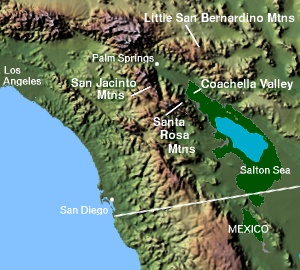
The Coachella Valley is a dry rift valley within the larger Colorado Desert in Southern California. It occupies a broad low basin framed by mountain ranges and has developed as both a resort destination and an intensive agricultural district. The valley's name is widely associated with the internationally known Coachella Valley Music and Arts Festival held each spring in Indio. For a general regional overview see regional information and the context of Southern California.
Image gallery
5 Images


Geography and climate
The valley lies below surrounding ranges and has a hot desert climate (classified as BWh in the Köppen scheme). Winters are typically mild and pleasant; local winter conditions are often described as warm compared with temperate zones. Summer months are very hot and can reach or exceed 100 °F (40 °C) at lower elevations. Regional weather patterns are influenced by elevation contrasts, occasional desert winds and continental air masses; this combination produces a climate that visitors sometimes compare to parts of the Middle East in terms of heat and aridity.
Cities and communities
The Coachella Valley contains several incorporated cities and many unincorporated neighborhoods. Among the principal cities, from west to east, are:
- Desert Hot Springs
- Palm Springs
- Cathedral City
- Rancho Mirage
- Palm Desert
- Indian Wells
- La Quinta
- Indio
- Coachella
These communities range from resort towns and retirement enclaves to agricultural centers, planned communities and event venues. Local pages and visitor guides provide details on lodging, golf and cultural institutions in each city.
Agriculture and water resources
Despite the arid setting, the valley supports productive agriculture. Farmers rely on both groundwater and imported water delivered by engineered systems such as aqueducts fed from the Colorado River. Significant groundwater reserves underlie parts of the basin, but the balance between pumping and recharge is an ongoing planning concern. The region is a major U.S. producer of date fruit and of specialty citrus; the local grapefruit once marketed as the Coachella Grapefruit is part of that agricultural history. Agriculture, urban growth and water use are central topics in regional policy and sustainability efforts.
Tourism, culture and notable features
The valley is a longstanding resort destination with spas, golf courses, cultural institutions and access to nearby mountains for hiking. Palm Springs is known for its mid‑century architecture, festivals and museums, while other communities host tennis, polo and golf tournaments and a growing calendar of cultural events. The Coachella Valley Music and Arts Festival in Indio draws large international audiences each spring and anchors a year‑round events economy.
A prominent local attraction is the Palm Springs Aerial Tramway, frequently cited as an engineering landmark. The tramway rotates visitors from the valley floor to high elevation near Mount San Jacinto, providing access to alpine trails and a markedly different climate above the desert. The system and its stations are often discussed in engineering and tourism materials (engineering; tramway).
History, environment and planning
The valley's human history includes long occupation by the Indigenous Cahuilla people, historic ranching and the development of irrigation agriculture in the 20th century, followed by expansion as a resort and retirement region. Conservation of desert habitats, management of water resources and planning for sustainable growth are continuing challenges. Local authorities, academic researchers and community groups publish resources about water management, habitat protection and economic development; readers can consult municipal and regional sources for current plans and data (regional planning summaries).
Access and further information
Visitor season generally runs from September through June, when temperatures are most comfortable for outdoor activities. Transportation options include regional highways, local airports and visitor shuttle services; information on travel, lodging and cultural programs is available through city tourism pages and regional visitor centers. For authoritative overviews and specific topics see regional guides and municipal resources such as those linked above and specialized studies on climate, agriculture and infrastructure.
For more detailed local information consult municipal pages for the cities listed, regional environmental reports and travel resources that cover accommodation, events and recreation in the Coachella Valley.
Related articles
Author
AlegsaOnline.com Coachella Valley: geography, climate, cities, agriculture and tourism Leandro Alegsa
URL: https://en.alegsaonline.com/art/21209