
Indian Wells, California — desert resort city in the Coachella Valley
Indian Wells is an incorporated resort city in Riverside County, California, known for luxury resorts, golf, and the annual Indian Wells tennis tournament held at the Indian Wells Tennis Garden.
Indian Wells is a small incorporated city in Riverside County, California, located in the eastern portion of the Coachella Valley. It lies within the greater Palm Springs area and is adjacent to communities such as Palm Desert, La Quinta and Indio. A desert municipality with a small year-round population (the U.S. 2000 Census recorded 3,816 residents), Indian Wells functions largely as a resort and residential enclave with a notably seasonal visitor flow.
Geography and climate. The city occupies a portion of the arid San Gorgonio Pass foothills and valley floor, offering wide views of surrounding mountains. Summers are hot and dry while winters are mild and sunny, which has made the community attractive as a winter destination for visitors and second-home owners. The built environment mixes low‑rise resorts, gated communities and landscaped golf courses set against the desert landscape.
History and development. The Coachella Valley area was originally inhabited by Native American peoples, and the land that became Indian Wells developed more fully in the 20th century as transportation improved and desert resorts grew in popularity. The modern city was incorporated in the late 1960s and expanded gradually with hotels, country clubs and residential subdivisions tailored toward affluent retirees and seasonal residents. Over time its identity shifted toward luxury hospitality, leisure sports and events.
Demographics and economy. Indian Wells has a relatively small permanent population but a high concentration of wealth compared with many other U.S. communities. It has been reported to have one of the highest proportions of millionaires in the United States, and the local economy is dominated by hospitality, golf and service industries that cater to tourists and second‑home owners. The city’s tax base and municipal services reflect this resort‑oriented profile, with public spaces and infrastructure scaled to seasonal peaks.
Sporting and cultural significance. Indian Wells is best known internationally for hosting a major professional tennis tournament each spring. The event, widely called the Indian Wells Masters, is one of the highest‑level competitions outside the Grand Slam schedule and is part of the top tiers of both the men’s and women’s tours; it is organized in cooperation with the sport’s principal governing bodies, including the Association of Tennis Professionals. The tournament is held at the Indian Wells Tennis Garden, which features a stadium court with seating for roughly 16,100 people and extensive practice and tournament courts. The event has appeared under sponsorship names over time and draws professional players and spectators from around the world. The city’s association with tennis has helped raise its international profile.
Image gallery
4 Images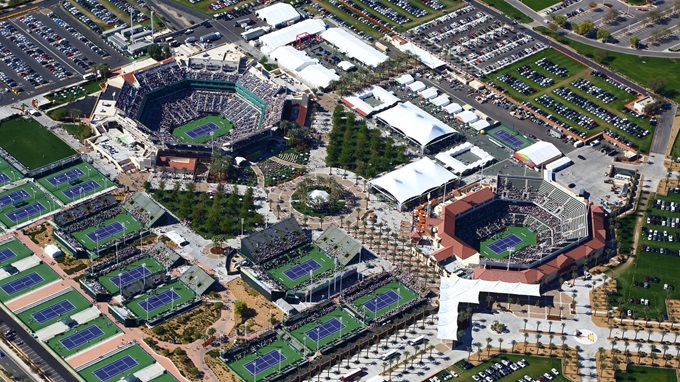


Attractions and amenities
- Indian Wells Tennis Garden and annual professional tournament (tennis, Indian Wells Masters).
- Resorts, spas and championship golf courses that cater to affluent seasonal visitors and residents.
- Close access to desert hiking, scenic drives and nearby cultural events in the Coachella Valley region.
Notable facts and distinctions. The city’s combination of desert climate, well‑appointed leisure facilities and a short drive to neighboring resort towns has made it a magnet for seasonal tourism and upscale residential development. Indian Wells contrasts with larger nearby population centers by offering lower density, resort zoning, and an economy focused on hospitality and recreation. For travelers and sports fans alike, the city is best known as a tennis capital within the valley and as a quiet, high‑amenity community in Southern California’s desert region.
For more information about the region, government and events, consult county resources and regional visitor guides that cover Riverside County, the Coachella Valley and adjacent cities such as Palm Springs, Palm Desert, La Quinta and Indio. Additional background on economic and demographic patterns may be found through national and local statistical sources that track income, real estate and tourism trends—topics often noted when discussing the city’s high proportion of affluent households (summary reports).
Related articles
Author
AlegsaOnline.com Indian Wells, California — desert resort city in the Coachella Valley Leandro Alegsa
URL: https://en.alegsaonline.com/art/47139