
Aqueduct
Man-made channels—pipes, canals, tunnels, or bridges—built to convey water for drinking, irrigation, navigation, or power; overview of design, history, uses and distinctions.
Overview
An aqueduct is any human-made channel or structure that transports water from one location to another. In practice this term covers a wide range of constructions: buried pipes, open canals, tunnels bored through rock, and raised bridge-like structures that span valleys. The primary purpose is to carry water for human use, but aqueducts also serve other functions and are adapted to local terrain and technology. The word derives from Latin roots often cited together as aqua (water) and ducere (to lead).
Image gallery
10 Images



Design and common parts
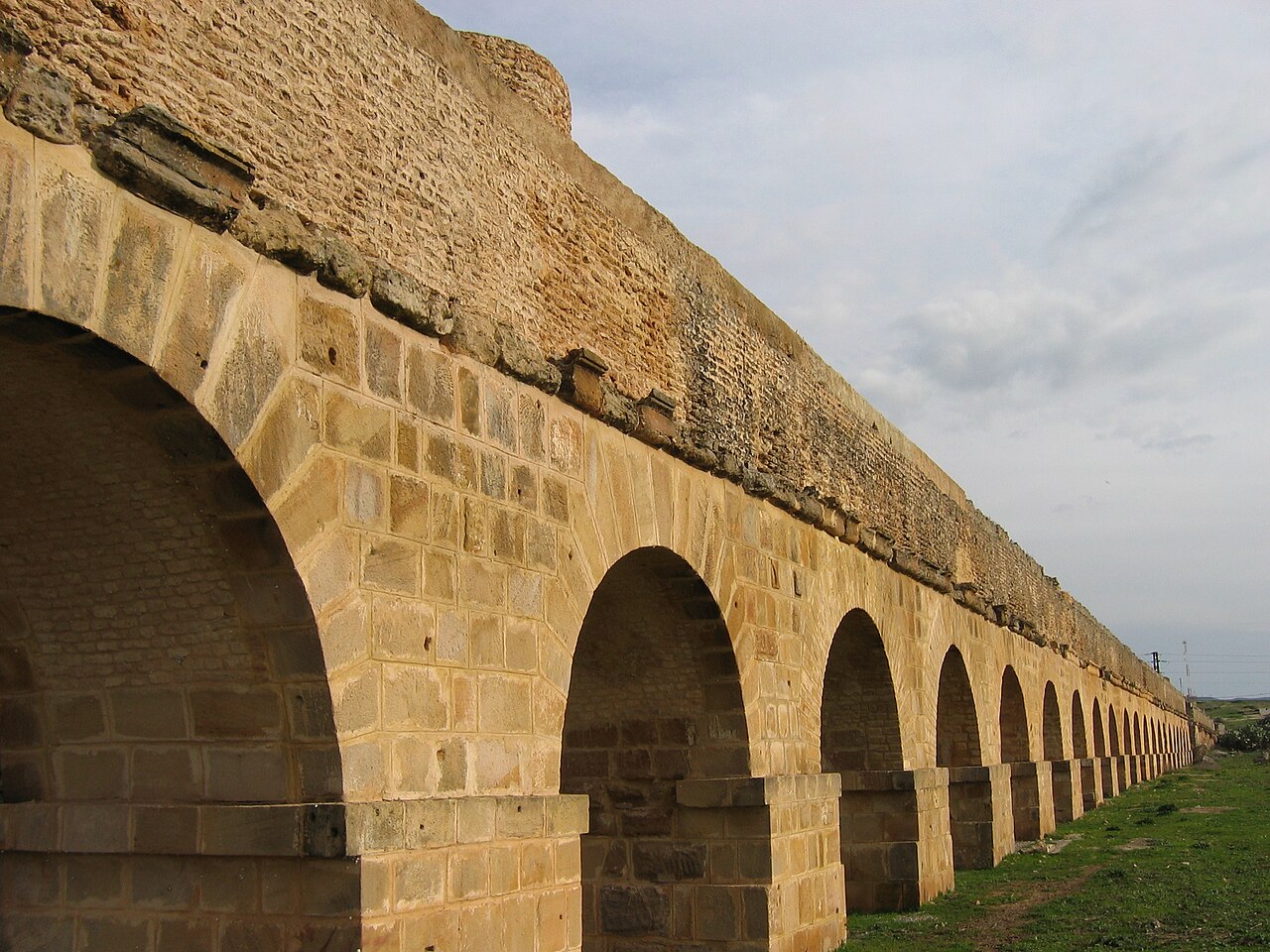
Typical elements of an aqueduct include a source (spring, river, reservoir), a conveyance route that maintains an appropriate gradient, control works such as gates or valves, and delivery features like distribution chambers. Construction materials vary: masonry and concrete for historic elevated spans, brick and stone for tunnels, and steel or plastic for modern pipelines. Some aqueducts are engineered to carry a navigation channel on top of the waterway: these canal aqueducts allow boats and even ships to cross obstacles without descending to the valley floor.
Types
- Open channel aqueducts (canals and flumes)
- Closed conduit aqueducts (pressurized pipes and tunnels)
- Viaducts or bridge aqueducts (elevated structures)
- Subsurface systems (qanats, adits and galleries)
History and development
People have redirected and stored water since antiquity. Early civilizations developed simple channels and qanat-like galleries to move groundwater; later, sophisticated stone and concrete aqueducts appeared in many regions. Roman engineering popularized long-distance stone-lined conduits and arched viaducts that supplied cities with fresh water. Over centuries the basic goal—reliable supply—remained the same, while materials and pumping technologies evolved into the large buried pipelines and tunnel networks of the modern era.
Uses and importance
Aqueducts support municipal drinking water systems, irrigated agriculture, industrial processes, navigation where canal sections are carried over obstacles, and in some cases hydroelectric schemes that route water to turbines. They enable urban growth by moving water from remote, often higher-elevation sources to population centers, and they can be key elements in regional water transfers and drought resilience strategies.
Distinctions and notable facts
Not every water channel is called an aqueduct in everyday speech: canals built primarily for navigation, streams diverted for mills, and storm sewers have different names and legal classifications. Aqueducts are generally intended to convey usable water over distance. Maintaining gradient, preventing leakage and sediment buildup, and protecting water quality are central engineering concerns. For further technical detail and historical examples see sources linked in context such as municipal guides and engineering references (water conveyance, irrigation, hydroelectricity).
Questions and answers
Q: What is an aqueduct?
A: An aqueduct is a man-made channel that carries water from one place to another.
Q: What is the purpose of aqueducts?
A: Usually, they are used to supply water to cities and towns. They may also carry water for irrigation, or for hydroelectricity.
Q: What are some examples of aqueducts?
A: Pipes, canals, tunnels, and bridges that serve this purpose are all called aqueducts. Some aqueducts carry a canal for boats and ships.
Q: What is the origin of the word "aqueduct"?
A: The word "aqueduct" comes from the Latin words "aqua" (water) and "ducere" (to lead).
Q: How long have aqueducts been used?
A: Aqueducts have been used since ancient times.
Q: Why were aqueducts important in ancient times?
A: Aqueducts were important in ancient times because they provided a dependable water supply for cities and towns.
Q: How are aqueducts still relevant today?
A: Aqueducts are still relevant today because they are still used to supply water to cities and towns, and for irrigation and hydroelectricity.
Related articles
Author
AlegsaOnline.com Aqueduct Leandro Alegsa
URL: https://en.alegsaonline.com/art/5096
Sources
- commons.wikimedia.org : Aqueduct