
Christmas cake: traditional fruitcake, varieties, history and customs
Rich fruitcake made and served for Christmas in many countries. Covers ingredients, regional types (Dundee, mincemeat, apple), preparation, ageing, storage, dietary adaptations and serving traditions.
Overview
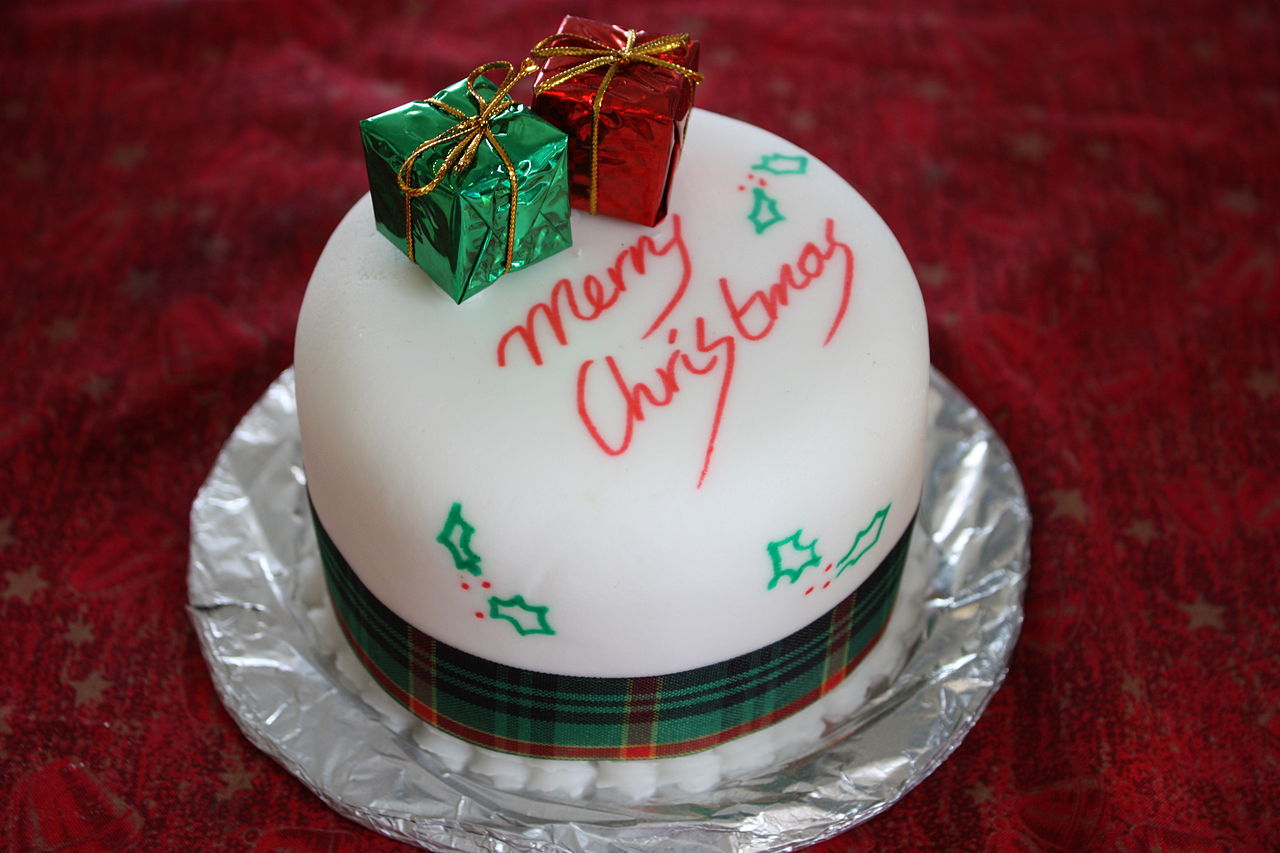
A Christmas cake is a rich, often dense cake traditionally made and eaten at Christmas. In many English-speaking countries it is synonymous with a type of fruitcake: a batter or sponge that incorporates a large proportion of dried fruit and often candied peel, sometimes bound with nuts and spices, and commonly finished with marzipan and a smooth icing. Some recipes are matured after baking by periodically adding a small measure of spirits to the cake — a practice often called "feeding" — to develop flavour and extend shelf life.
Image gallery
7 Images




Typical ingredients and methods
Core ingredients include mixed dried fruits, candied peel, sugar, fat (butter or margarine), eggs, and a flour such as wheat flour. Many recipes call for nuts such as almonds or other nuts, and spices like cinnamon or nutmeg. Fruit is frequently soaked in a spirit such as brandy or rum before mixing, or the finished cake is brushed with alcohol; in some regional recipes a local spirit such as Scotch whisky is used. Cakes can be baked in loaf or round tins, sometimes in layers, or made using alternative techniques such as steaming for related puddings.
Varieties and notable types
Regional and family traditions produce a wide variety of Christmas cakes. A well known British example is the Dundee cake, associated with Scotland and the city of Dundee, which typically uses fewer candied peels and more whole almonds, and may be flavoured with whisky. At one end of the spectrum are very moist, heavily fruited cakes; at the other are lighter, crumbly versions that rely more on texture than density. A mincemeat cake is made by folding mincemeat into cake batter rather than only using it as a pie filling, and traditional or vegetarian mincemeat can also be adapted into steamed puddings.
Less typical but popular adaptations include apple-based cakes combining sliced apple with creamy elements such as whipped or sour cream and cream cheese, yielding a softer, fresher dessert. Commercial mixes and pre-made fruitcake bases remain widely available and convenient for home bakers.
Preparation tips and ageing
Successful Christmas cakes often benefit from careful preparation: ensuring fruit is well distributed, lining tins to prevent over-browning, and baking slowly to allow an even finish. After cooling, many bakers wrap cakes in alcohol-soaked cloth or brush with spirits and store them in a cool place, occasionally "feeding" with additional spirit to keep them moist. Marzipan and icing are typically applied after the cake has matured and the surface is firm.
Storage, shelf life and safety
High sugar content together with alcohol and thorough cooking gives fruit-based Christmas cakes a long shelf life when stored correctly. Cakes should be kept in airtight containers and, if alcoholic treatment is used, stored in a cool, dark place. For households with allergies, nuts such as almonds or other nuts can be omitted or replaced; there are also versions designed to be nut-free, low-sugar, fruit-forward, vegan or icing-free to suit dietary needs.
Cultural role and serving
Christmas cake often plays a central role in seasonal hospitality: it appears as a dessert, a table centrepiece, a gift, or part of celebratory teas. It is commonly sliced thinly and served with hot drinks, a glass of fortified wine, or cream; some prefer it lightly warmed or accompanied by butter. The cake is distinct in texture and method from other festive bakes such as stollen or panettone, and from steamed Christmas puddings, though families may include several of these items in their celebrations.
Modern variations and retail availability
Contemporary bakers and producers offer a wide range of adaptations to match changing tastes and requirements. You will find ready-made fruitcake mixes and pre-baked cakes in many grocery stores, artisan producers who emphasise hand-selected fruit and natural ingredients, and recipes that eliminate alcohol while maintaining moisture through other liquids or syrups. Commercial and home recipes both allow for extensive personalization in spice balance, fruit selection, nut inclusion and decorative finish.
Further reading and resources
For more on techniques, ingredient choices and regional descriptions see: cake basics, fruit choices, icing techniques, holiday traditions, Scottish varieties, spirit options, texture contrasts, candied peel, sultanas and raisins, glace cherries, almond use, nut substitutions, apple versions, cream additions, egg roles, cream cheese options, flour types, and pudding comparisons.
Related articles
Author
AlegsaOnline.com Christmas cake: traditional fruitcake, varieties, history and customs Leandro Alegsa
URL: https://en.alegsaonline.com/art/20146