
Chutney — South Asian condiment and relish
Chutney is a diverse family of spicy or sweet relishes from the Indian subcontinent, made from fruits, vegetables, herbs or dairy and served as an accompaniment to many dishes.
Chutney is the English word commonly used for a wide range of sauces, relishes and pastes that originate in the Indian subcontinent. Traditionally made at home, chutneys vary from thin, piquant sauces to thick, sweet preserves. They are designed to complement cooked dishes and snacks by adding contrasting flavors: sour, sweet, salty, bitter and spicy in single spoonfuls.
Image gallery
10 Images


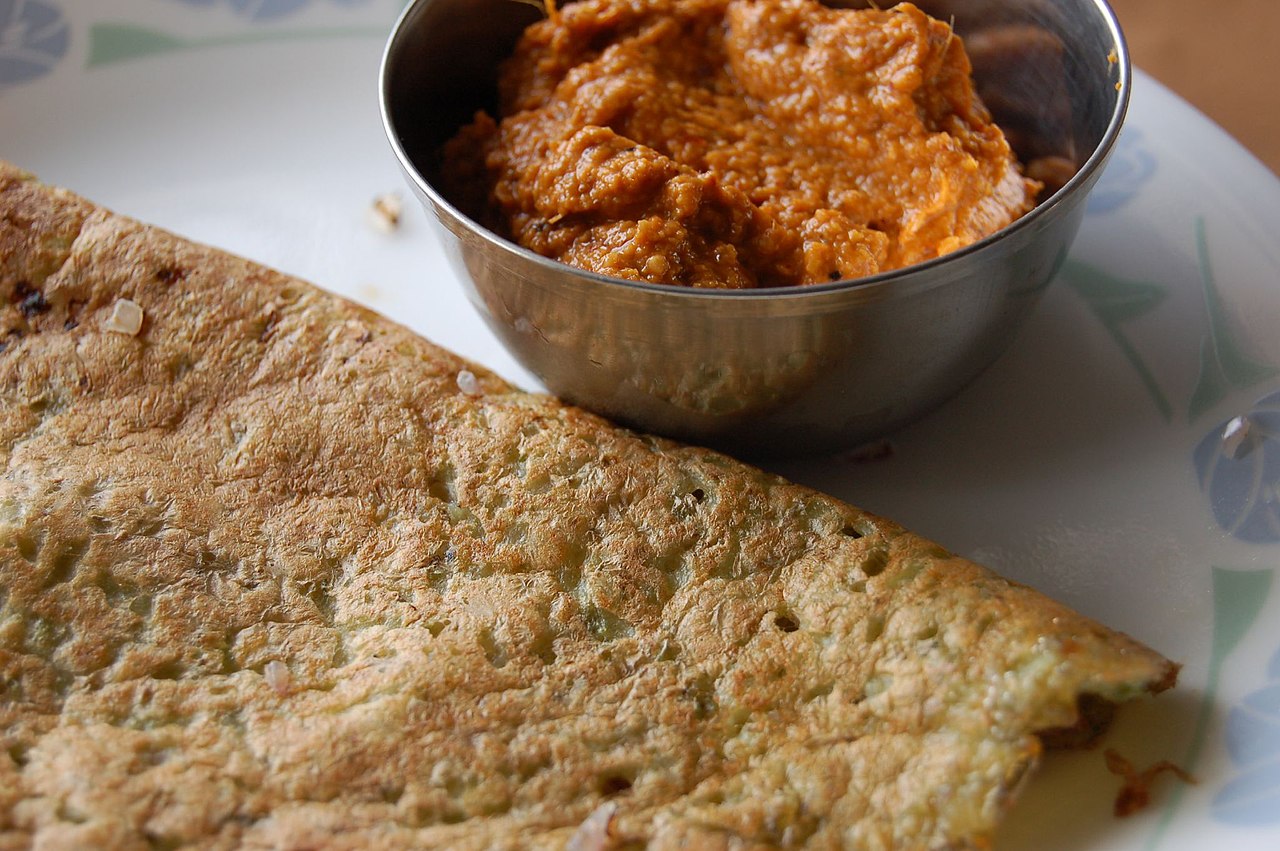




Characteristics and common ingredients
Chutneys may be fresh or cooked, smooth or chunky. Typical components include fruits (mango, tamarind, apple), vegetables (tomato, onion), herbs (coriander, mint), dairy (yoghurt, curd), nuts (peanut), coconut, sugar or jaggery, salt and a range of spices. Many recipes balance acidity and sweetness; others emphasize heat. Variants such as coconut chutney or mint-coriander chutney are often blended fresh, while fruit chutneys are frequently simmered to concentrate flavors.
Regional traditions and history
The practice of preserving and seasoning foods with vinegars, sugars and spices predates modern national borders and developed across South Asia. Regional cuisines created distinct chutneys: for example, South Indian coconut chutney is commonly served with dosa, while North Indian and Pakistani kitchens favour tamarind or mango-based chutneys. British colonial encounters and global trade helped introduce chutney to Europe, where cooked fruit chutneys also became popular as condiments for cheeses and meats. For further cultural context consult condiment history and regional cookery sources such as South Asian cuisine.
Uses and serving suggestions
Chutneys function as an accompaniment to breads, rice dishes, grilled meats, snacks and savoury pastries. They appear alongside street foods and in formal meals, and are used as dips, spreads or finishing sauces. Common pairings include chutneys with samosas, dosas, tandoori dishes, and sandwiches. Commercially made chutneys are sold jarred and can be used like a relish; home-made versions are adjusted to taste.
Preparation, preservation and variations
Fresh chutneys are typically ground and served immediately; cooked chutneys are simmered and bottled, often kept refrigerated or canned for longer storage. Preservation methods—sugar, salt, oil and acid—determine texture and shelf life. Variations include sweet chutneys (fruit and sugar), sour chutneys (tamarind, lemon), spicy green chutneys (chili, coriander, mint), and dairy-based dips (yoghurt with spices). Recipes and techniques are covered in many culinary guides; see general references at recipe collections and preservation notes at food preservation.
Distinctions and notable facts
Chutney is related to but distinct from pickles and western relishes: pickles generally involve fermentation or brining whole or large pieces of vegetables, while chutney emphasizes blended textures and a balance of sweet, sour and spicy elements. Chutneys play a versatile role in modern kitchens and global cuisines, appearing in both traditional meals and fusion recipes. For additional examples and serving ideas see culinary guides.

Distribution and use
In India, there are many variations of chutneys, which are freshly prepared and served with meals such as dosa and idli. Chutneys also add an additional flavour component to curries and rice dishes, and their often high fat content softens the typical spiciness of Indian dishes. South Indian chutneys are usually based on a puree of coconut meat and are enriched with other ingredients, spices and herbs (e.g. chilli, mint or coriander leaves) as desired; they keep for a few days if refrigerated. There are also variations based on vegetables or fruits (e.g. aubergine or mango), often flavoured with tamarind or amchur.
The English brought chutneys to Europe during the colonial period, where vegetable and fruit chutneys became more popular. It became common to preserve chutney in jars to benefit from a long shelf life. Today, tomato or mango, for example, are often used. The addition of onion and garlic or even coconut and coriander leaves is also typical. Furthermore, the use of spices and juices such as sugar, chili, ginger, lemon juice, tamarind extract or vinegar enhances the desired flavor.
Depending on the region and the ingredients used, chutneys are either cooked in a similar way to jam and preserved for storage or pureed cold and eaten fresh.
Variants
- Hari Chutney ("Green Chutney") or Hara masala ("Green Mixture") consists of mint, coriander greens, preferably fresh coconut flakes and plenty of green chillies. It is often mixed with rice to make a pilaf; chicken in green sauce (hara masala murgh) is also well-known.
Related articles
Author
AlegsaOnline.com Chutney — South Asian condiment and relish Leandro Alegsa
URL: https://en.alegsaonline.com/art/20333