
Claret — British term for red Bordeaux wine
Claret is the traditional British name for red wines from Bordeaux. The term covers styles, grapes, history, classifications and typical food pairings associated with Bordeaux reds.
Claret is a traditional English name for red wines produced in the Bordeaux region of southwestern France. In modern use it generally denotes Bordeaux-style red blends rather than a single grape variety. The name reflects a long commercial and cultural relationship between Britain and the Bordeaux wine trade.
Image gallery
10 Images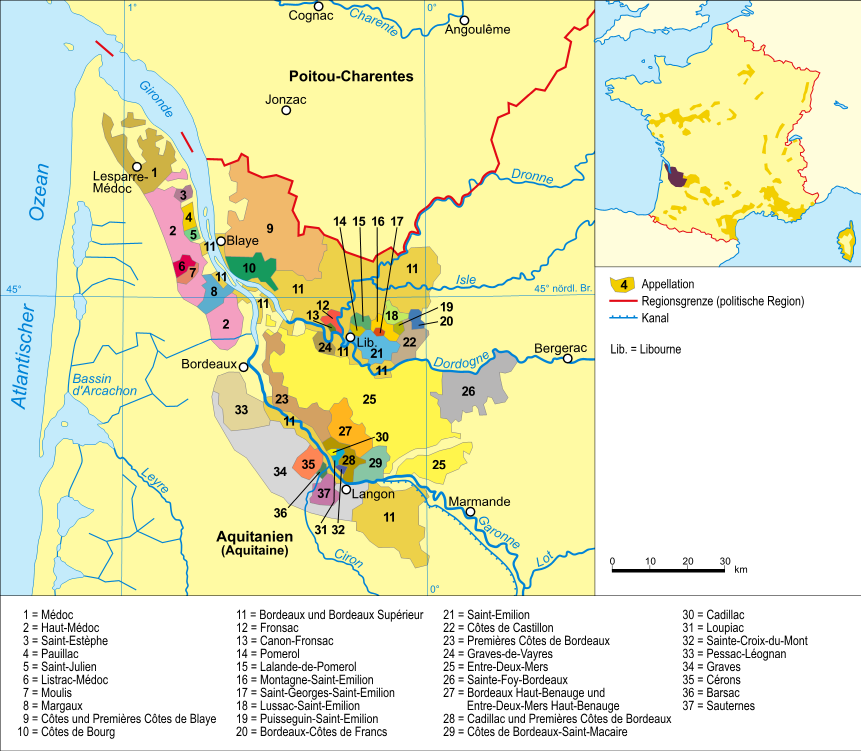








Terminology and origin
The word derives from the Old French clairet, once used for lighter-coloured red wines; the English form dates from medieval trade with the Bordeaux region. Today in British English "claret" is commonly used interchangeably with Bordeaux when referring to red wines from that appellation, though French legal labelling follows the Appellation d'Origine Contrôlée (AOC) system.
Grapes and styles
Bordeaux reds are typically blends. Principal grape varieties include:
- Merlot
- Cabernet Sauvignon
- Cabernet Franc
- Petit Verdot and Malbec (in smaller amounts)
Styles vary by subregion: left-bank estates tend to produce Cabernet-dominant, structured wines, while right-bank wines often emphasize Merlot for a softer, fruitier profile. Aging in oak barrels and the vintage conditions influence body, tannin and longevity.
Classification and commerce
Bordeaux has a complex system of classifications and appellations, the most famous being the 1855 classification for the Médoc and Sauternes. Many estates are traded internationally and "claret" historically signified wines prized by British consumers and merchants. The AOC (appellation d'origine contrôlée) certifies geographic origin and production rules in France.
Uses and pairings
Claret is commonly served with red meats, roasts and strong cheeses. It is a staple at formal meals and has cultural associations with British dining. Collectors value certain château bottlings for aging potential and historical significance.
Notable distinctions: "Claret" is a customary English label for Bordeaux reds rather than a technical term under French wine law; the precise character of any claret depends on vineyard, blend and vintage.
Related articles
Author
AlegsaOnline.com Claret — British term for red Bordeaux wine Leandro Alegsa
URL: https://en.alegsaonline.com/art/20705