
Raisin (dried grape)
Raisins are grapes dried to concentrate sugars and nutrients. This entry covers varieties, production methods, culinary uses, nutrition, storage, and notable distinctions.
Overview
A raisin is a grape that has been dried to remove most of its water, leaving a small, sweet, energy-dense fruit. Raisins are eaten on their own as snacks, incorporated into baking and cooking, and used in both sweet and savory dishes across many cuisines. Drying concentrates flavors and sugars, producing a long-shelf-life product that remains popular worldwide.
Image gallery
10 Images






Characteristics and varieties
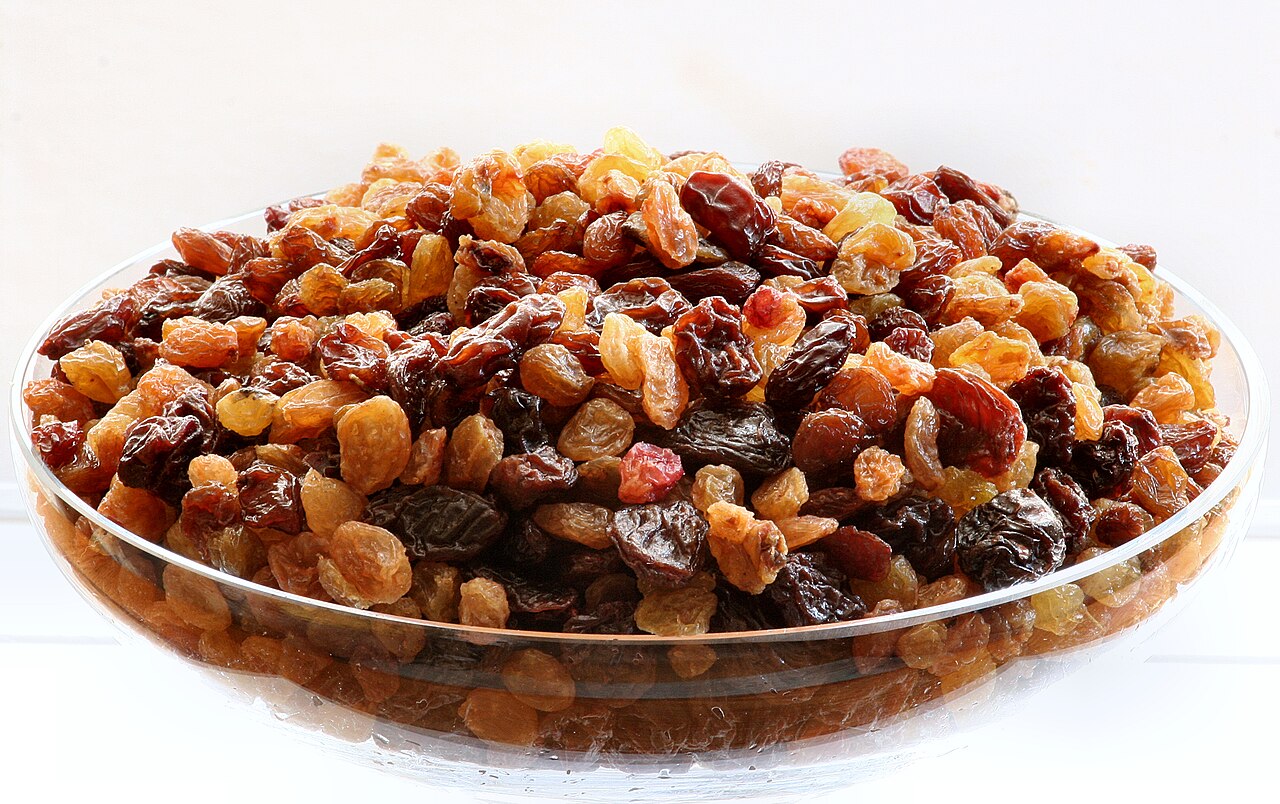
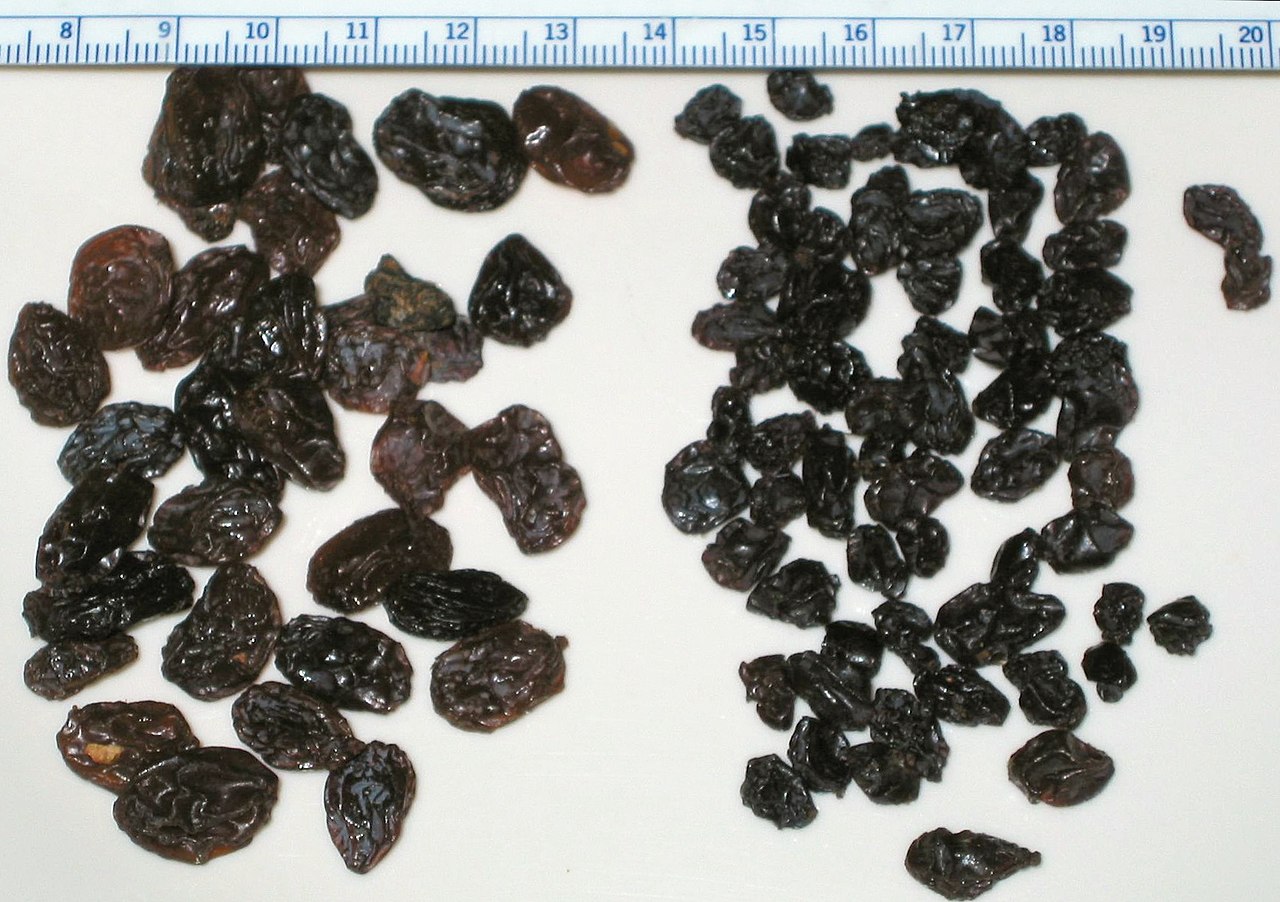
Raisins vary in color, size, texture, and flavor depending on the grape variety and drying method. Common types include dark raisins made from red or black grapes, golden or sultana raisins often made from seedless green grapes and sometimes treated with sulfur dioxide to retain color, and currants — small, tart dried grapes from the Black Corinth variety. Texture ranges from plump and soft to dry and chewy.
Production and history
Drying methods include sun-drying, shade-drying, mechanical dehydration, and oven methods. Historically, raisins have been produced for millennia in regions with warm, dry climates such as the Mediterranean and parts of Asia. They became important trade items and remain commercially significant in many agricultural regions.
Uses and examples
Raisins are versatile in the kitchen:
- Added to breads, cakes, and cookies.
- Mixed into cereals, salads, and trail mixes.
- Stewed or combined with meat dishes in Middle Eastern and Mediterranean recipes.
Nutrition and considerations
Because drying concentrates natural sugars, raisins are high in carbohydrates and calories relative to fresh grapes, making them an energy-rich snack. They also supply dietary fiber, minerals, and antioxidants. People monitoring blood sugar or calorie intake should eat them in moderation. Proper storage in cool, dry conditions preserves freshness and prevents stickiness or fermentation.
For more on grape varieties and growing practices see cultivation and varieties, and for dietary guidance consult resources on nutrition.
Related articles
Author
AlegsaOnline.com Raisin (dried grape) Leandro Alegsa
URL: https://en.alegsaonline.com/art/80936