
Chinook: the warm, snow‑melting mountain wind of the Rockies
Chinook winds are warm, dry downslope winds that rapidly raise temperatures east of the Rocky Mountains, often melting snow. They are a regional form of foehn wind with characteristic clouds and significant local impacts.
Overview
A chinook is a warm, dry, downslope wind that occurs on the lee side of mountain ranges, most notably the Canadian and United States Rocky Mountains. It is a type of westerly wind that can produce very rapid temperature rises — commonly 20–30°C in an hour in places such as southern Alberta — and is famous for its ability to melt snow quickly, earning it the nickname "snow eater." The phenomenon is regional but shares physical principles with other mountain lee winds worldwide.
Image gallery
10 Images



How a chinook forms
Chinooks develop when relatively moist air moves inland from the Pacific, is forced upward by mountain slopes, and cools. As the air rises it condenses and releases latent heat. After precipitation or cloud formation on the windward side, the now-drier air descends the leeward slopes and warms by compression (adiabatic heating), producing a noticeably warmer and drier flow on the plains below.
- Wind origin: maritime air masses arriving from the ocean, often via the Pacific Ocean.
- Orographic lift: ascent over the high terrain of the Rocky Mountains.
- Latent heat release: condensation of water vapor (moisture) on the windward side.
- Adiabatic warming and drying downwind: produces the warm, gusty chinook flow across the prairie.
Where and when they occur
Chinooks are most frequent in winter and early spring, when strong westerly flows collide with mountain barriers and temperature contrasts are large. In Canada they commonly affect southern and central Alberta and can reach toward the province’s eastern border on especially strong events. Similar winds occur along other mountain ranges; in the European Alps they are referred to as foehn winds.
Impacts and examples
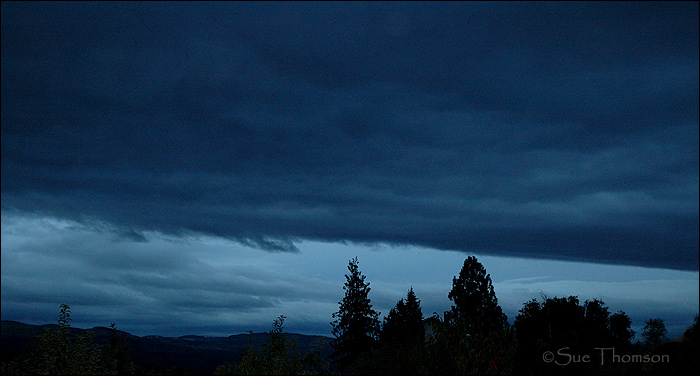
The rapid warming associated with chinooks can have practical consequences: they melt snowpacks, reduce heating demand, influence local weather patterns, and sometimes trigger avalanches by destabilizing layered snow. Urban areas such as Calgary have long experience with chinook episodes, which can produce striking temperature swings and the distinctive "chinook arch" cloud formation seen to the west.
Name, cultural notes and distinctions
The word "chinook" has roots in indigenous and regional trade languages and came into English usage in the Pacific Northwest and inland regions. While chinooks, foehns and other lee-side warm winds share the same underlying physics, they differ in local names, typical moisture history, and regional effects. Meteorological study continues into their dynamics, predictability, and influence on ecosystems and human activities.
For further reading and regional descriptions see resources linked here: winter patterns, Alberta examples, eastern extent, prairie impacts, and comparative studies of lee winds at moisture processes and mountain dynamics. Additional background is available via oceanic source influences and regional climate summaries at snow and snowfall portals.
Related articles
Author
AlegsaOnline.com Chinook: the warm, snow‑melting mountain wind of the Rockies Leandro Alegsa
URL: https://en.alegsaonline.com/art/19798