
Clastic rock: sedimentary rocks made of broken fragments (clasts)
Clastic rocks are sedimentary rocks composed of fragments (clasts) of pre-existing rock. Classified by grain size, shape and sorting, common types include conglomerate, breccia, sandstone and mudstone.
Clastic rocks are sedimentary rocks composed chiefly of fragments, or clasts, of earlier rocks and minerals. These clasts originate from the mechanical breakdown of a pre-existing rock and are transported, sorted and deposited before being buried and consolidated. The term "clastic" emphasizes texture: discrete grains set in a finer-grained matrix or cement distinguish clastic rocks from chemical or organic sedimentary types.
Weathering and erosion produce clasts of many sizes; transport by water, wind, ice or gravity moves them and modifies their shape. Deposition occurs when transport energy falls and material accumulates. Subsequent burial promotes compaction and cementation — processes collectively called lithification — that turn loose sediment into rock. The mineralogy of clasts and the nature of the cement control strength, porosity and durability.
Image gallery
9 Images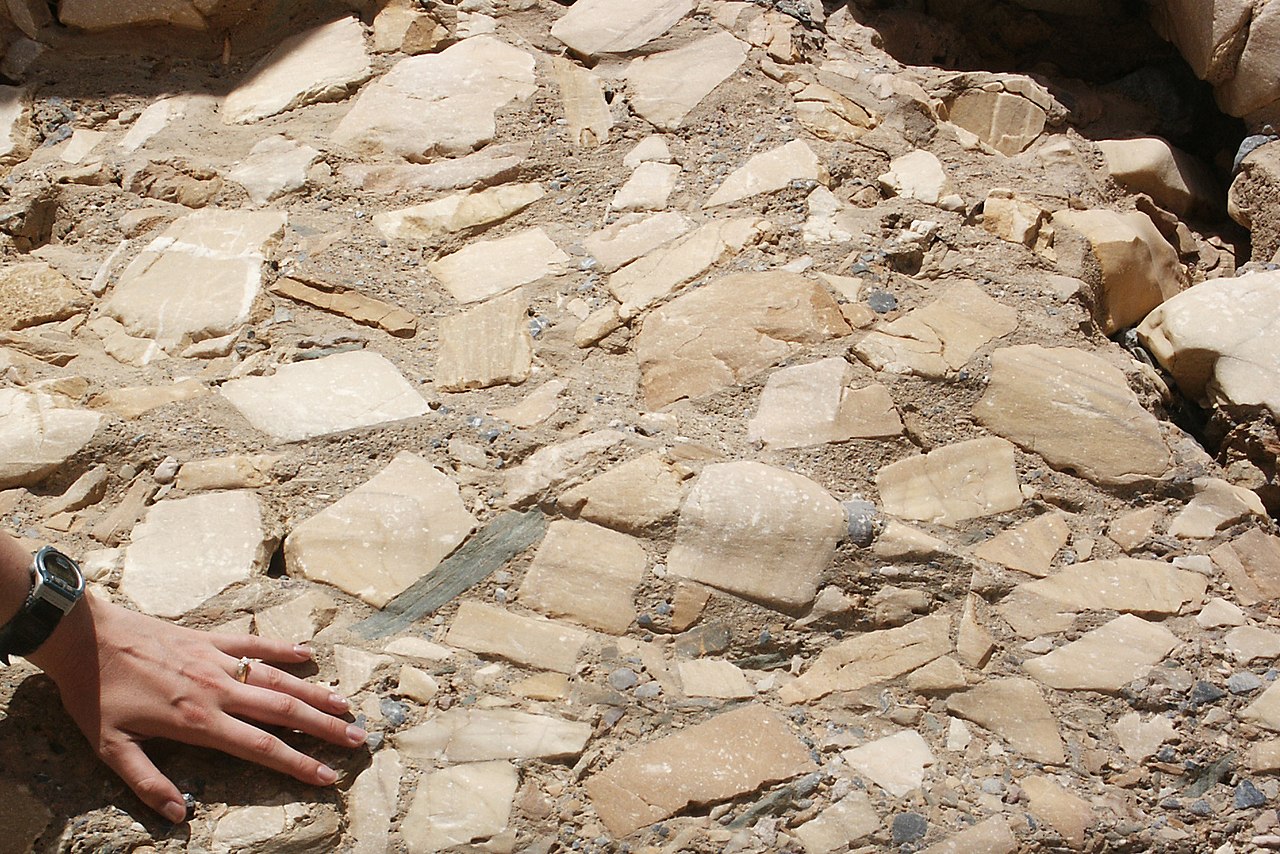




Classification by size, shape and composition
Clastic rocks are commonly described by grain or clast size (from clay and silt up through sand to gravel and larger), clast shape (roundness and sphericity) and sorting (the range of grain sizes). Fine-grained clastic rocks include sandstone and mudstone, while coarser deposits consist of gravel-sized fragments and larger. Field and laboratory classification uses these textural criteria to name and interpret samples.
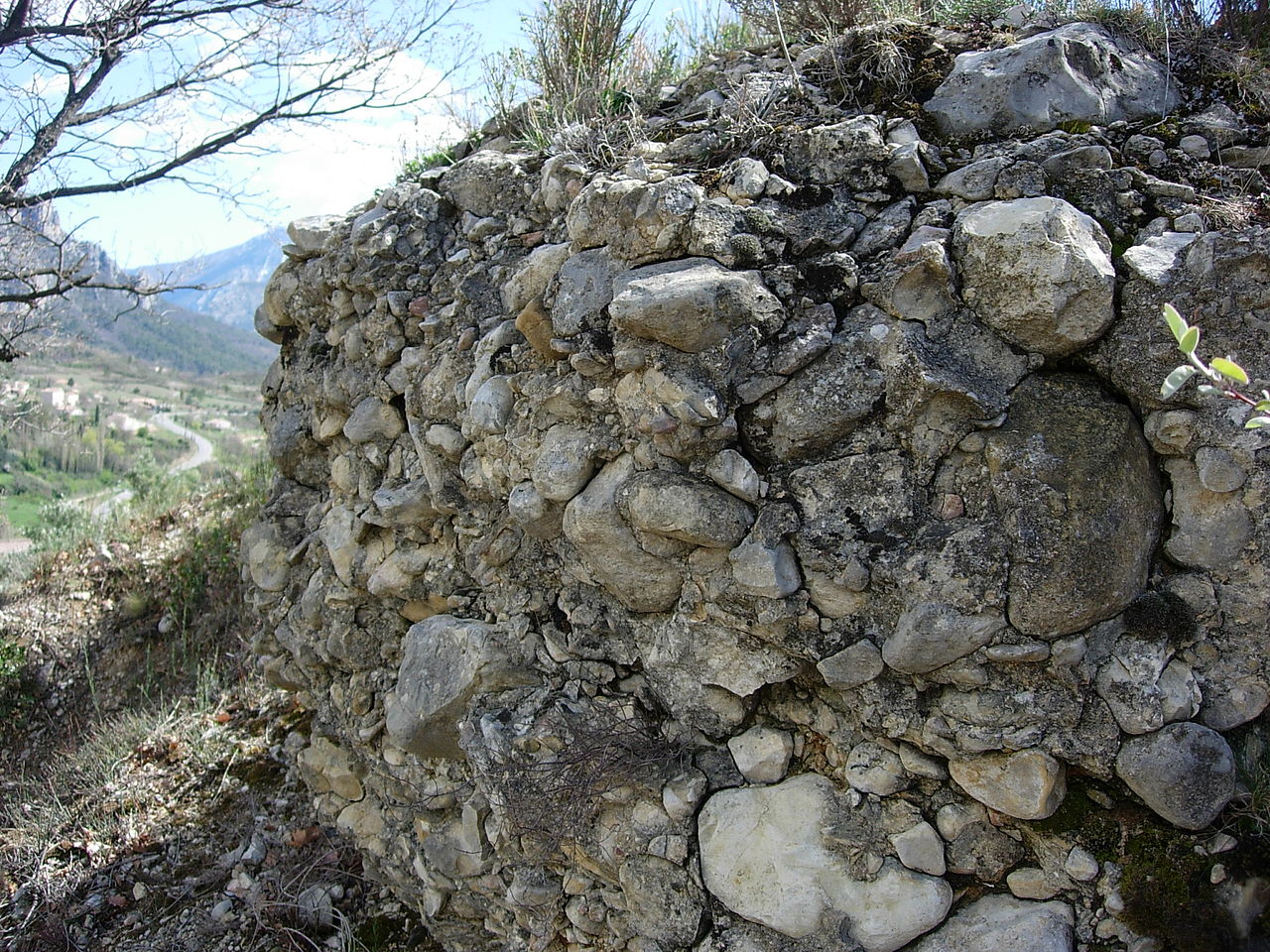
- Conglomerate: rock dominated by rounded clasts, indicating prolonged transport and abrasion (conglomerates).
- Breccia: rock composed of angular, poorly rounded clasts that point to short transport or in-place fragmentation (breccias).
- Sandstones, siltstones and mudstones: classified by the relative proportions of sand, silt and clay-sized particles.
Environments, structures and provenance
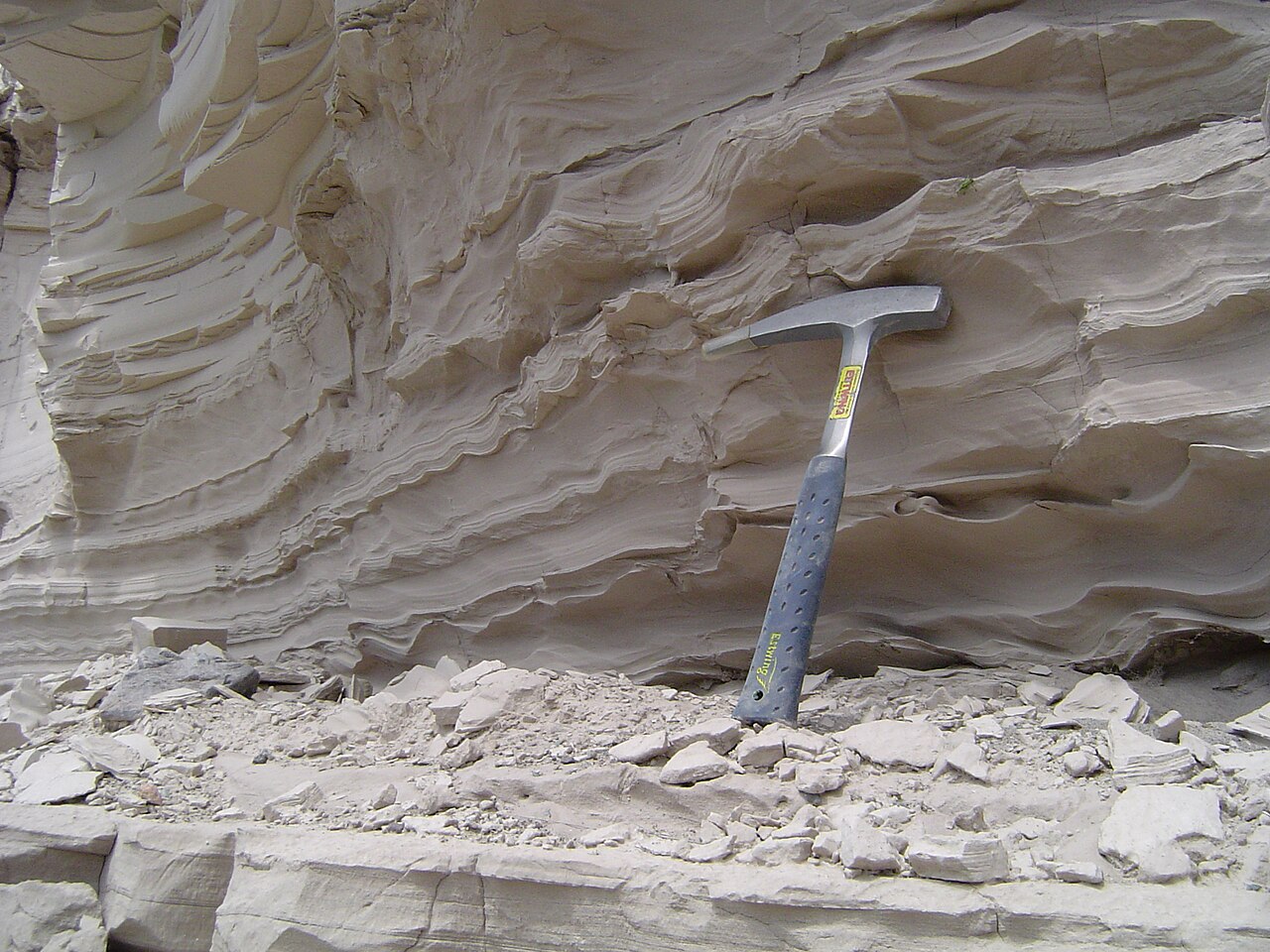
Clastic sediments accumulate in many environments: rivers, deltas, beaches, alluvial fans, glacial tills and submarine fans. Sedimentary structures such as cross-bedding, graded bedding, imbrication and ripple marks record flow directions and depositional processes. The composition and fabric of clasts provide clues to provenance — the source area and transport history — because different source rocks yield different mineral assemblages and clast types.
Sorting and roundness are practical indicators: well-sorted, well-rounded grains generally imply longer transport or reworking by consistent energies (for example, beach or wind-blown sands), whereas poorly sorted, angular material often records rapid deposition close to the source (for example, talus or proximal alluvial fans).
Diagenesis, metamorphism and uses
After burial, clastic sediments undergo diagenesis: compaction, recrystallization of unstable minerals, and cementation by silica, calcite or clay minerals. With increasing temperature and pressure they may be metamorphosed; sandstone can become quartzite, and original sedimentary fabrics may be modified or preserved to varying degrees. Clastic rocks are important economically as aquifers and hydrocarbon reservoirs (porous sandstones and conglomerates), as sources of construction aggregate, and as building stone. Engineers and geologists evaluate their porosity, permeability and mechanical properties when used in construction or resource exploration.
Identification of clastic rocks in the field relies on observing clast size, composition, roundness, sorting and the presence of matrix or cement. Together these features provide a record of past environments, transport processes and the tectonic setting of sediment production.
Related articles
Author
AlegsaOnline.com Clastic rock: sedimentary rocks made of broken fragments (clasts) Leandro Alegsa
URL: https://en.alegsaonline.com/art/20792