
George S. Patton Jr. — U.S. Army General and Armored Forces Commander in World War II
George S. Patton Jr., U.S. Army general who led American armored forces in WWII and shaped campaigns in North Africa, Sicily and Normandy; noted for aggressive tactics and a contentious public persona.
George Smith Patton, Jr. (November 11, 1885 – December 21, 1945) was a senior U.S. Army officer who served from 1909 until his death in 1945. He became widely known for his aggressive leadership of American armored forces and for his role in defeating Nazi Germany in Europe during World War II.
Image gallery
10 Images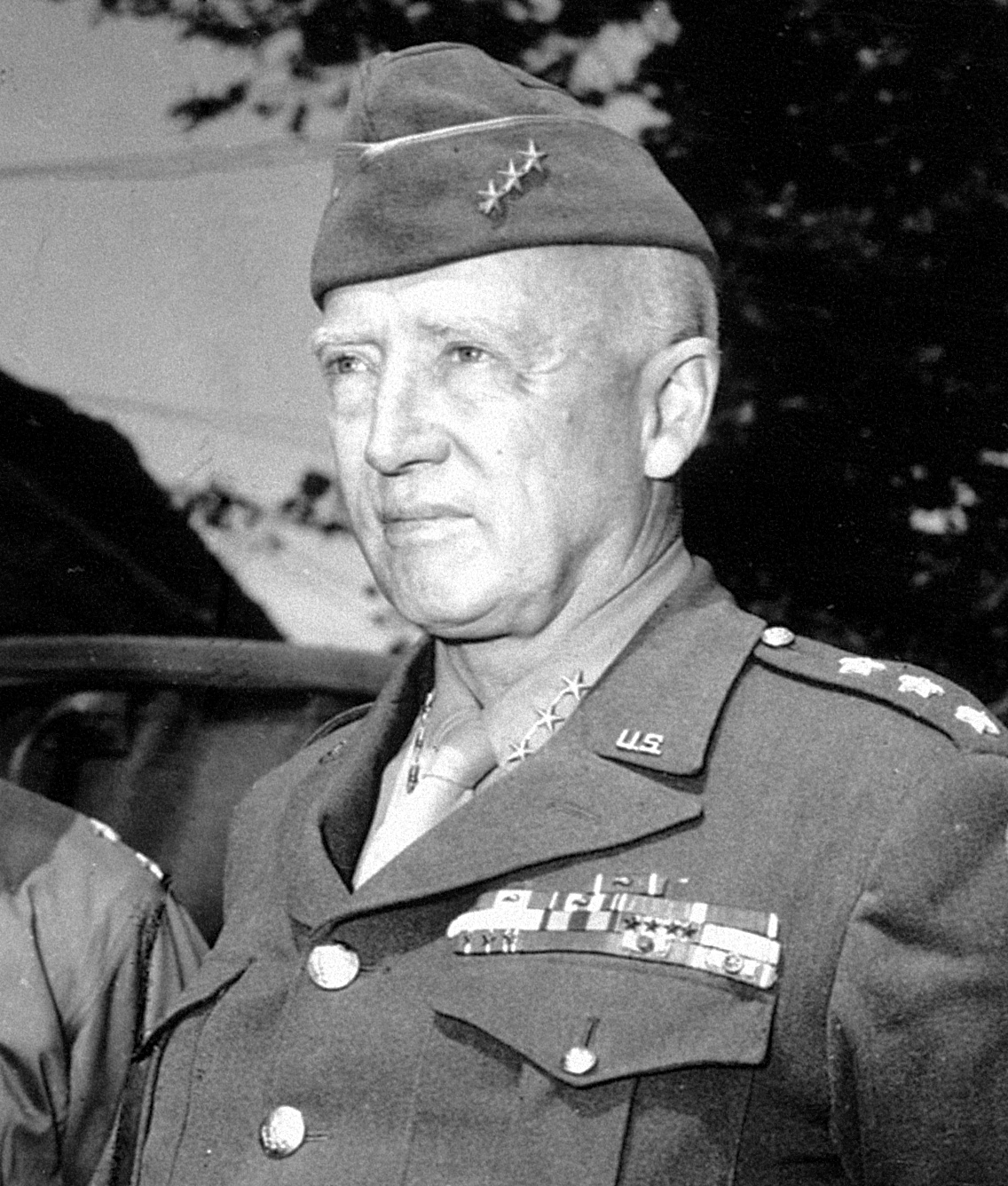




World War II and wider context
Patton was assigned to campaigns in North Africa in 1942, taking part in the North African Campaign. The United States had entered the war after the attack on the Pearl Harbor naval base and the subsequent political and military developments that followed the entry of the United States under President Franklin D. Roosevelt. Within days of those events, Adolf Hitler declared war on the United States, bringing America and Germany into direct conflict while Germany was governed by the Nazi Party.
At the time, senior German military figures such as Hermann Göring, who led the Luftwaffe, and Erich Raeder, an Admiral of the Kriegsmarine, were prominent in shaping strategy. Allied descriptions of the German high command often referred to its senior commanders when analysing the Axis order of battle.
Campaigns and command
During 1943 and 1944 Patton participated in several major offensives. He was involved in the Allied invasion of Sicily and the Allied invasion of Italy, and later took part in operations associated with the Normandy campaign and the breakout from the beachhead after D-Day. In these operations he repeatedly faced forces of Nazi Germany and sought to apply rapid, mobile tactics with armored units. The political and military direction of Germany at the time came from leaders such as Adolf Hitler, whose decisions affected how the Allies planned their campaigns.
Personal life
Patton was born in San Gabriel, California, on November 11, 1885. He married Beatrice Banning Ayer in 1910; the couple had one son.
Death and legacy
On December 21, 1945, Patton died from injuries sustained in an automobile accident near Heidelberg in Germany. He was 60 years old. His remains were interred at the American Cemetery and Memorial in Luxembourg City, Luxembourg.
Patton's wartime career, his outspoken personality, and his controversial actions have made him a subject of historical study and popular culture. The 1970 film Patton (1970 Film) dramatized his life and was widely seen; the central role was played by actor George C. Scott.
Author
AlegsaOnline.com George S. Patton Jr. — U.S. Army General and Armored Forces Commander in World War II Leandro Alegsa
URL: https://en.alegsaonline.com/art/138833