
North African Campaign (World War II)
Major World War II theatre in North Africa from June 1940 to May 1943, involving Axis and Allied forces in desert warfare, amphibious landings (Operation Torch) and the Tunisia campaign, ending in Axis surrender.
Overview
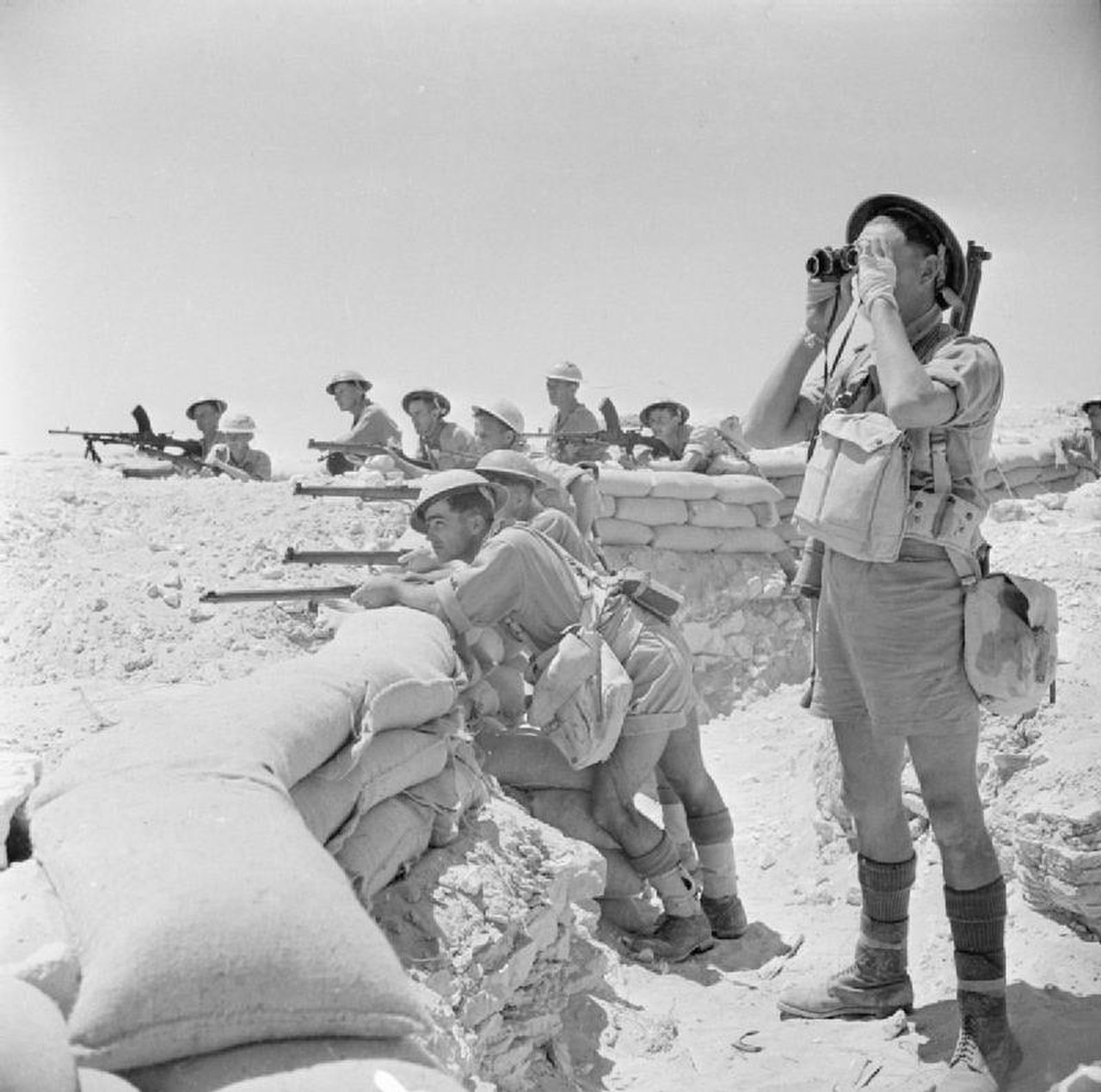
The North African Campaign (June 1940–May 1943) was a central theatre of the Second World War fought across Libya, Egypt, Tunisia, Algeria and Morocco. It combined wide-ranging mobile desert operations, coastal and urban fighting, and large-scale amphibious landings. Control of North Africa affected Mediterranean sea lanes, access to Middle Eastern oil and the ability to threaten southern Europe. The campaign required extended logistics over harsh terrain, integration of armour, air power and naval control, and was shaped by intelligence efforts and shifting political loyalties.
Image gallery
10 Images



Background
Fighting opened after Italy declared war in June 1940. Italian forces advanced from their North African colonies, but British Commonwealth counter-attacks and eventual German reinforcement altered the balance. The campaign evolved through alternating advances and retreats, with neither side able to sustain long logistics chains without secure sea and air supply. Local and colonial politics—including the role of Vichy France—also influenced operations and Allied planning.
Combatants and organization
The principal Axis formations included Italian armies and German units, most prominently the Afrika Korps commanded for much of the fighting by Generalfeldmarschall Erwin Rommel. Allied formations comprised British Commonwealth forces, Free French units and from late 1942 substantial United States Army contingents. Command arrangements changed over time as new formations arrived and as Allied unity of command developed to coordinate maritime, air and land operations.
Major phases and notable battles
- Early operations (1940–1941): Italian offensives from Libya and British counter-attacks produced rapid changes in front lines. British-led advances into Cyrenaica were countered by the arrival of German forces, initiating a prolonged see-saw in the Libyan and Egyptian deserts. The prolonged Siege of Tobruk in 1941 tied down Axis resources and became a symbol of Allied resistance.
- The Desert War (1941–1942): Mobile armoured forces fought over vast distances, using limited roads and oases to maneuver. Supply constraints, desert terrain and air superiority were decisive. Both sides launched offensives and counter-offensives, resulting in heavy attrition and the capture and recapture of key ports and supply bases.
- El Alamein (late 1942): The Second Battle of El Alamein marked a major Allied turning point when British Commonwealth forces under Lieutenant General Bernard Montgomery halted and pushed back Axis advances, forcing a retreat westward into Libya and toward Tunisia.
- Operation Torch and Tunisia (late 1942–1943): Allied amphibious landings in Morocco and Algeria opened a western front. Initial resistance from some Vichy French units was followed by their eventual co-operation with the Allies. U.S. forces learned hard lessons, exemplified by the defeat at Kasserine Pass, before improved coordination helped drive Axis forces into Tunisia, where they were encircled and forced to surrender in May 1943.
Logistics, intelligence and air–sea control
Logistics were decisive: supply convoys across the Mediterranean, control of ports and the capacity to maintain mechanized forces determined operational reach. Air superiority and naval interdiction shaped resupply and movement. Intelligence—including signals intercepts and reconnaissance—gave advantages in anticipating enemy movements. Shortages of fuel, spare parts and reinforcements increasingly hampered Axis operations as Allied control of the sea and air improved.
Outcome and significance
The Allied victory in North Africa removed Axis forces from the southern Mediterranean, cleared the path for the invasion of Sicily and the Italian campaign, and freed Allied shipping routes to the Middle East and beyond. The capitulation of Axis forces in Tunisia in May 1943 delivered experienced troops and matériel into Allied hands and demonstrated the effectiveness of combined operations. The campaign also accelerated the prominence of commanders and shaped Allied operational doctrine on logistics and joint force coordination.
Legacy and study
Military historians study the campaign for its lessons on mobile desert warfare, combined arms, logistics and coalition warfare. The North African fighting encompassed multinational armies and complicated political alignments, including episodes involving Vichy France and colonial troops. Its operational and strategic lessons informed subsequent Allied operations in the Mediterranean and European theatres.
Further reading and primary topics
- World War II overview
- Geography of North Africa
- Timeline: June 1940
- Timeline: May 1943
- Libyan and Egyptian desert operations
- Morocco in 1942: Operation Torch context
- Algeria and Allied landings
- Tunisia Campaign
- Campaigns for control of Libya
- Operations in Egypt
- Siege of Tobruk
- Events of 1941
- Second Battle of El Alamein
- British Commonwealth forces
- Bernard Montgomery (command)
- German Afrika Korps
- Late 1942 developments
- Allied strategic goals
- Vichy France and the campaign
- Fall of Tunis
- Surrenders and prisoners
- Axis capitulation, 13 May 1943
Questions and answers
Q: What was the North African Campaign?
A: The North African Campaign was part of the Second World War and took place in North Africa from 10 June 1940 to 13 May 1943. It included fighting in the Libyan and Egyptian deserts (the Desert War), and in Morocco and Algeria (Operation Torch) and Tunisia (Tunisia Campaign).
Q: What were some of the key battles during this campaign?
A: Some of the key battles during this campaign were the Siege of Tobruk in 1941, which was one of the turning points, as well as Operation Torch in North-West Africa, Battle of Kasserine Pass, Battle of Mareth, and finally forcing Axis forces to surrender at Cape Bon.
Q: Who commanded British Commonwealth forces during El Alamein?
A: Lieutenant general Bernard Montgomery commanded British Commonwealth forces during El Alamein.
Q: How did Allied forces deal with Vichy France troops?
A: Allied forces battled against Vichy France troops before they changed sides.
Q: When did Allies land in Operation Torch?
A: Allies landed in Operation Torch late 1942.
Q: What happened at Battle of Kasserine Pass?
A: At Battle of Kasserine Pass, Allies suffered a serious defeat.
Related articles
Author
AlegsaOnline.com North African Campaign (World War II) Leandro Alegsa
URL: https://en.alegsaonline.com/art/70801
Sources
- adviceandresearch.blogspot.com : Young Italians in the Battle of Mareth