
John of Damascus: Byzantine theologian, hymnographer, and defender of icons
Byzantine monk and priest (c.675–749) known for theological works, hymns, and his defense of sacred images; influential in Eastern Orthodox and Catholic tradition.
Overview
John of Damascus (c. 675/676–4 December 749) was a Christian writer, monk and priest whose work became foundational for Eastern Orthodox theology and greatly respected in the Roman Catholic tradition. Often called "the last of the Church Fathers," he is best known for systematic theology, devotional poetry, and a vigorous defense of the veneration of icons.
Image gallery
10 Images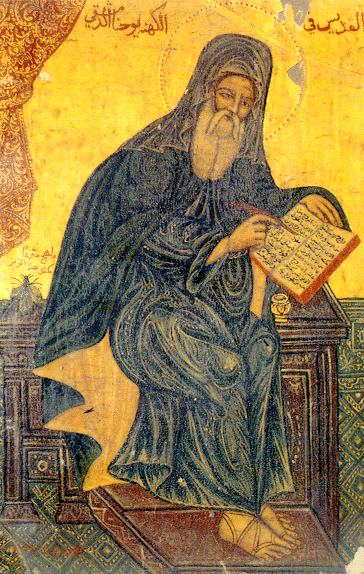





Early life and career
Born and raised in Damascus, then part of the Near East, John belonged to a family of Arab origin that served in the Umayyad administration. Sources describe him receiving a broad education, studying law, theology, philosophy and music. Some accounts indicate he held a civil post under the Muslim caliph at Damascus before withdrawing to monastic life and eventually becoming a priest and monk at the monastery of Mar Saba near Jerusalem, where he spent his later years and died.
Writings and hymns
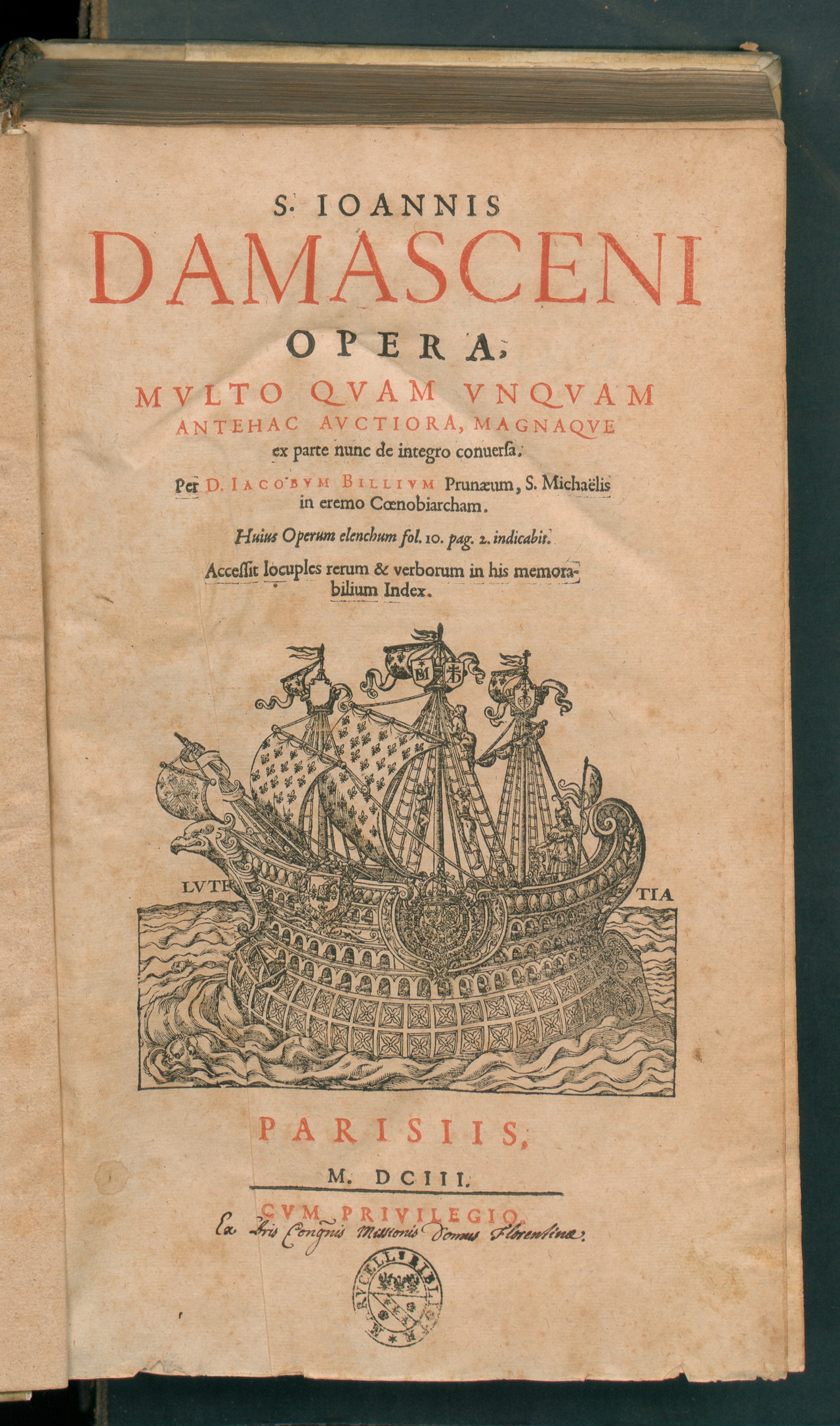
John wrote across genres: theological treatises, biblical commentaries, sermons, polemics against heresy, and liturgical poetry. His major prose work, the "Fount of Knowledge," includes the "Exposition of the Orthodox Faith," a clear overview of Christian doctrines that summarizes patristic teaching for later generations. He is also credited with the "Three Treatises on the Divine Images," a central text in the debate over icons. As a hymnographer he composed numerous hymns and canons that remain in use in the Orthodox liturgy.
Theology and the icon controversy
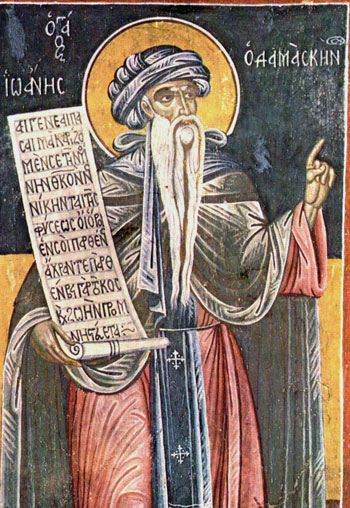
John argued that sacred images can be venerated because the Incarnation made visible the invisible God; by depicting Christ, the saints and biblical scenes the faithful are helped to worship the one who became flesh. His theological method combined patristic sources with philosophical precision, aiming to explain doctrine in an ordered way. These defenses proved influential during periods of iconoclasm in the Byzantine Empire and informed later theological and devotional practice.
Legacy and veneration
Recognized as a saint in Eastern Orthodox, Oriental Orthodox and Roman Catholic calendars, John is celebrated for both his theological clarity and poetic gifts. The Orthodox tradition honors him as a leading Church Father; the Roman Catholic Church regards him as a Doctor of the Church. His works were transmitted in Greek, Syriac and later Latin translations, shaping medieval theology and liturgy across Christian traditions.
Selected works and significance
- Exposition of the Orthodox Faith (part of the Fount of Knowledge)
- Three Treatises on the Divine Images (defense of icons)
- De Haeresibus (catalogue of heresies and refutations)
- Numerous liturgical hymns and canons still used in worship
For readers exploring primary texts or introductions to his thought, see materials linked in scholarly collections and liturgical anthologies. Modern interest in John of Damascus spans theology, art history (because of his argumentation about icons) and the study of Christian life under early Islamic rule, where he lived as a Christian in what is now Syria and in the region historically called Palestine. Further contextual resources and translations can be consulted via general reference collections and academic studies on late antique and early medieval Christianity (Christian history and patristics), monasticism, and Byzantine hymnography (music).
Additional online and print sources provide introductions to his life, critical editions of his works and commentary on his role in the icon debates; for overviews see resources associated with patristic corpora and university research pages (Jerusalem studies), museum catalogs on Byzantine art (John of Damascus in iconography), and thematic surveys of early medieval legal and administrative contexts (law, philosophy, theology). Primary hymns and liturgical texts appear in collections of Byzantine chant (hymns).
John's combination of learned exposition, poetic composition and practical defense of Christian devotional practice secured his place as a pivotal figure in the history of Eastern Christianity and a bridge to Western medieval theology.
Related articles
Author
AlegsaOnline.com John of Damascus: Byzantine theologian, hymnographer, and defender of icons Leandro Alegsa
URL: https://en.alegsaonline.com/art/122607