
Damascus: ancient capital and cultural center of Syria
Damascus (Dimashq) is the capital of Syria and one of the world's oldest continuously inhabited cities. Its Old City is a UNESCO World Heritage site and a long-standing center of culture, religion, and trade.
Overview
Damascus, known in Arabic as Dimashq (دِمَشْق) and sometimes called the "City of Jasmine," is the political and cultural capital of Syria. It is the nation's largest urban area, with several million residents in the metropolitan region. Damascus is widely regarded as one of the world's oldest continuously inhabited cities, a place where layers of history remain visible in streets, monuments and neighborhoods.
Image gallery
10 Images




Geography and urban character
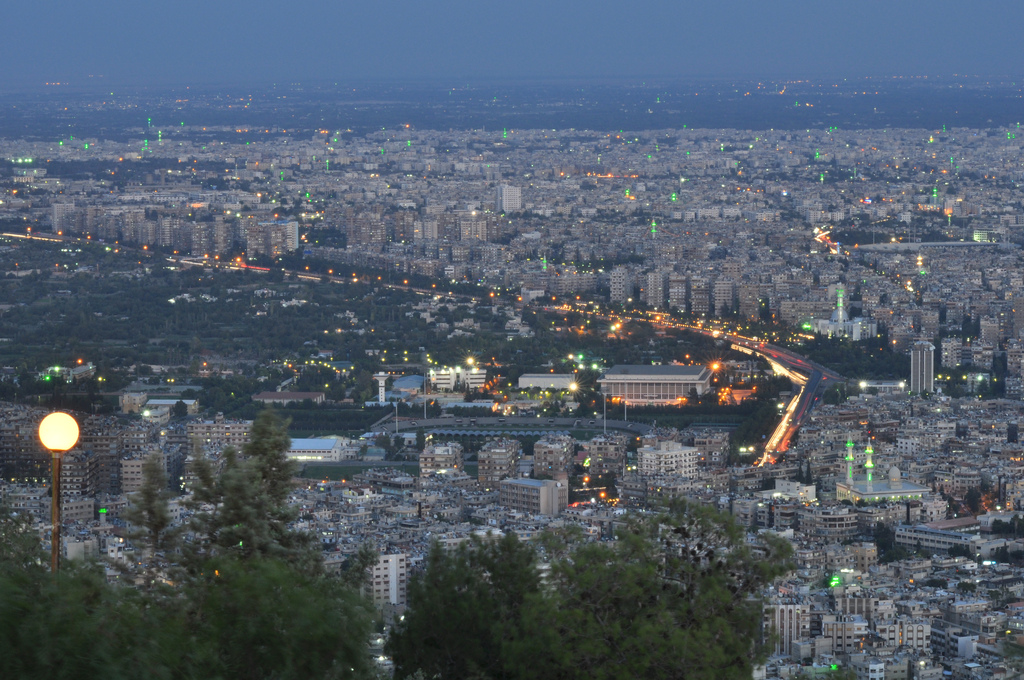
The city lies in southwestern Syria on an oasis watered by the Barada River and sheltered by the Anti-Lebanon mountains. That location made it a crossroads of caravan routes and regional trade for millennia. Modern Damascus combines a dense historic core, known as the Old City, with newer residential and commercial districts that have expanded outward along major roads.
Historical development
Archaeological and historical evidence shows human settlement in the Damascus area since prehistoric times, with continuous growth through Bronze and Iron Age polities, Hellenistic and Roman rule, and later Islamic caliphates. During the Umayyad period the city became an important political and religious center; later it was part of Ottoman territories and ultimately the capital of independent Syria in the 20th century. Each era left architectural and cultural traces in the urban fabric.
Landmarks and architecture
The Old City of Damascus contains a compact maze of alleys, courtyards and markets. It is designated a UNESCO World Heritage site for its exceptional historic and religious monuments. Notable places include:
- The Umayyad (Great) Mosque, an early and influential example of Islamic architecture.
- Souqs and caravanserais that illustrate the city's role as a trading hub.
- Citadel remains, historic houses with decorated courtyards, and several important Christian and Muslim religious sites.
Culture, economy and significance
Damascus has long been a center for crafts, textile production, scholarship and religious pilgrimage. Its markets and manufacturing workshops produced goods famed across the region. As Syria's capital, it has also been the focus of political life and national institutions. Despite modern challenges, Damascus continues to be valued for its layered history, living traditions and role in regional identity.
Distinctions and notable facts
Beyond its antiquity, Damascus is notable for the preservation of an urban core that reflects many historical periods. The nickname "City of Jasmine" refers to the prominent cultivation of jasmine and its use in local culture. The Old City’s protected status seeks to conserve both tangible monuments and the traditional urban way of life that developed over thousands of years.
Related articles
Author
AlegsaOnline.com Damascus: ancient capital and cultural center of Syria Leandro Alegsa
URL: https://en.alegsaonline.com/art/25263
Sources
- cbssyr.org : Chapter 2: Population & Demographic Indicators
- albaath.news.sy : statement by the governor of Damascus, Syria
- britannica.com : "Damascus"
- damascusuniversity.edu.sy : "جامعة دمشق"
- spu.edu.sy : "Syrian Private University"
- jude.edu.sy : "Aljazeera Private University"