
John of Gaunt, 1st Duke of Lancaster: life, influence and dynastic legacy
Comprehensive overview of John of Gaunt (1340–1399): his origins, marriages, political role in late 14th‑century England, the Beaufort line, wealth, and long-term dynastic impact.
Overview
John of Gaunt (1340–1399) was one of the most powerful English magnates of the late fourteenth century. Born the third surviving son of Edward III and Philippa of Hainault, he belonged to the House of Plantagenet. The byname "of Gaunt" derives from his birthplace, the Flemish town of Ghent (Medieval French: Gand). Through inheritance, marriage and royal favour he amassed vast estates, political influence and a network of dynastic alliances that shaped English and continental politics for generations.
Image gallery
9 Images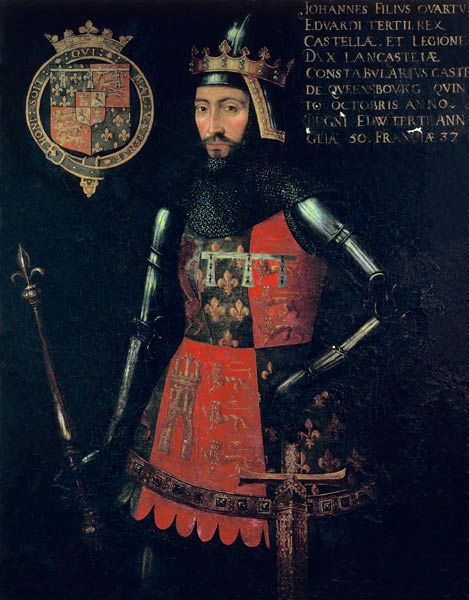


Early life and career
As a royal prince John benefited from the privileges accorded to the king's sons: military command, administrative office and advantageous marriage prospects. He served in campaigns abroad and held important lordships in England and on the Continent. While he did not achieve the martial fame of his elder brother Edward, the Black Prince, he cultivated political authority by managing wide estates, retaining supporters and acting within the royal household.
Marriages and children
John married three times. His first marriage to Blanche of Lancaster brought the Lancastrian inheritance into his possession and produced his principal heir, Henry Bolingbroke, later Henry IV. Other children by Blanche included daughters who formed important foreign alliances. His second marriage to Constance of Castile advanced a claim in Iberia and produced a daughter who later became Queen of Castile. For many years he maintained a close relationship with Katherine Swynford; their long liaison produced children later known by the surname Beaufort. After John and Katherine Swynford married, the Beauforts were legitimised by royal and papal action. Despite later restrictions placed on their succession rights, Beaufort descendants became central to later dynastic contests.
Political influence and public role
John of Gaunt's influence derived less from brief military triumphs than from sustained control of resources and patrons. During the minority and early reign of his nephew Richard II he was a stabilising presence and a leading counsellor. His household and affinity operated as a political force: retainers, administrators and clients advanced his interests in regional and national affairs. His authority at times provoked opposition among other magnates and entered into the factional politics of the 1380s and 1390s.
Estates, wealth and economic power
John ranked among the richest men of his era. His wealth came from inherited ducal lands, the Lancaster estates obtained through marriage, rents, judicial rights and occasional royal grants. He held properties across England and in some continental territories, and his income allowed him to maintain a large household and patronage network. Modern attempts to translate medieval fortunes into contemporary monetary terms vary widely and remain speculative; they serve mainly to underline that John controlled resources on a scale unusual for a subject of his time.
The Beauforts and dynastic consequences
The Beaufort children—born before John and Katherine were married and subsequently legitimised—played a decisive role in later succession politics. Their descendants include leading nobles, bishops and queens. Through the Beauforts and the main Lancastrian line John became an ancestor of monarchs in England, Scotland and later the unified crowns. Notably, the Lancastrian kings Henry V and Henry VI traced descent to him, while later dynasties, including claimants associated with Edward IV, Richard III and ultimately the Tudors under Henry VII, were connected through branches that derived from John. One of his Beaufort daughters, Joan Beaufort, became Queen of Scots and linked his line into the Scottish royal succession as well. Over the fifteenth and sixteenth centuries the three principal houses that followed—Lancaster, York and Tudor—could all claim descent from John of Gaunt in varying degrees, and this shaped the wars of succession and a century of dynastic realignment.
Death, inheritance dispute and the accession of Henry IV
When John died in early 1399 his estates were contested amid a tense political atmosphere. While Richard II treated parts of John’s inheritance as forfeit, John’s eldest son Henry Bolingbroke returned from exile later that year, reclaimed Lancastrian property and deposed Richard. Henry's seizure of the throne as Henry IV marked the start of the Lancastrian regime and confirmed the practical significance of John’s patrimony and political legacy.
Patronage, reputation and historiography
Contemporaries and later chroniclers recorded John of Gaunt as a man of considerable influence, wealth and presence at court. He acted as patron to writers and clerics, and his household provided a focal point for literary and administrative talent in the later fourteenth century. Historians have assessed him variously as a stabiliser of royal government, a self-interested magnate and a key dynastic architect whose private life had public consequences. His long life and the prominence of his descendants have made him a figure of recurring interest in studies of late medieval England.
Further reading and related topics
For readers seeking to follow the wider dynastic and political threads from John of Gaunt, useful topics include the broader Plantagenet family, the Lancastrian claim to the throne, the origins and careers of the Beauforts, and the later houses that shaped English monarchy: for example the House of Tudor. Biographical entries on contemporaries and descendants — including the Black Prince, Richard II, Henry IV, Henry V and Henry VI — help place John’s life in its political and familial context.
Questions and answers
Q: Who was John of Gaunt?
A: John of Gaunt was a member of the House of Plantagenet, who ruled England for over 300 years. He was the third surviving son of Edward III and Philippa of Hainault, and the father of Henry IV.
Q: What influence did he have over English throne?
A: He had great influence over the English throne during the childhood of his nephew, Richard II, and during subsequent periods of political strife. He is not thought to have been an opponent of the king.
Q: Who were his legitimate children?
A: His legitimate children included Philippa of Portugal and Elizabeth, Duchess of Exeter by his first wife Blanche; and Queen Catherine Castile by his second wife Constance.
Q: Who were his illegitimate children?
A: John fathered five children outside marriage - one early in life by a lady-in-waiting to his mother, and four by Katherine Swynford (his long-term mistress). These were surnamed Beaufort after a former French possession belonging to him.
Q: How did they become legitimised?
A: The Beaufort children were legitimised by royal and papal decrees after John and Katherine married in 1396.
Q: How much money would be equivalent to John's wealth today?
A: Taking into account inflation rates, it is estimated that John was worth a modern equivalent value of $110 billion - making him the sixteenth richest man in history.
Related articles
Author
AlegsaOnline.com John of Gaunt, 1st Duke of Lancaster: life, influence and dynastic legacy Leandro Alegsa
URL: https://en.alegsaonline.com/art/122608
Sources
- british.history.ac.uk : "Richard II: September 1397"
- dailymail.co.uk : "Meet the 14th Century African king who was richest man in the world of all time (adjusted for inflation!)"