
Harold Stassen
Harold Stassen (1907–2001) was an American Republican politician, governor of Minnesota (1939–1943) and a frequent presidential candidate known for state reform, wartime service and mid‑century internationalism.
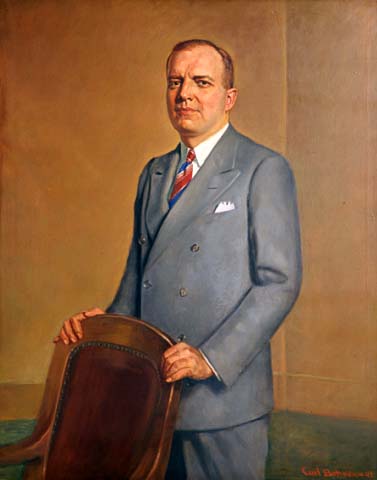
Harold Edward Stassen was an American politician who became a prominent voice in the Republican Party during the middle decades of the 20th century. Born and raised in the Upper Midwest, he combined a reform‑minded approach to state government with a commitment to international cooperation after World War II. Stassen's career is remembered both for early executive success at the state level and for his many bids for national office.
Image gallery
6 Images




Early life and education
Stassen was born on April 13, 1907, in West St. Paul, Minnesota. He pursued higher education in his home state and completed legal studies at the University of Minnesota Law School. His training in law and early civic involvement helped him win elected office at a notably young age and established his reputation as a capable administrator.
Governor of Minnesota
Stassen was elected the 25th Governor of Minnesota, serving from 1939 until 1943. As governor he promoted administrative reform, modernizing certain state operations and advocating efficiency in government. His youth and reform program earned him national attention and positioned him as a rising star within his party prior to America’s full engagement in World War II.
Wartime service and later public roles
In 1943 Stassen resigned the governorship to serve in the armed forces during World War II, placing wartime duty above continued state political ambition. Following the war he remained active in public life and in broader internationalist causes, supporting cooperative approaches to postwar reconstruction and collective security efforts that were widely discussed in the immediate postwar era.
Presidential campaigns
Over nearly five decades Stassen repeatedly sought the Republican nomination for President of the United States. His long series of campaigns made him a well‑known perennial candidate and kept him engaged with party affairs and national debate. His bids for the nomination included campaigns in the years listed below:
Although none of these campaigns won the party's nomination, they illustrate the persistence of Stassen's public ambition and his continuing effort to influence national policy debates. Political observers often cited his candidacies when discussing the phenomenon of the longtime or recurring candidate in American politics.
Political outlook
Stassen was associated with a strain of mid‑century Republicanism that emphasized efficient government administration and an active role for the United States in international affairs. He supported institutions and policies designed to address collective challenges after the war, and he appealed to voters who favored pragmatic reform over ideological extremes. Over time his repeated national campaigns reflected both personal persistence and shifts within the Republican Party.
Personal life and legacy
In 1929 Stassen married Esther G. Glewwe; the couple had two children, Glenn and Kathleen, and maintained a long marriage that endured until his death. Harold Stassen died on March 4, 2001, in Bloomington, Minnesota, at the age of 93.
Stassen's career offers historians a case study in how early executive success at the state level does not always translate into lasting national leadership, and how an enduring willingness to run for office can shape a public reputation. His name is frequently invoked in discussions of postwar internationalism, mid‑century Republican reformers, and the political dynamics that produce perennial candidates.
For further reading, consult collections of mid‑20th century political papers, state archives, and contemporary press coverage that document his governorship, wartime service, and later campaigns. These primary and secondary sources provide the most detailed accounts of his public roles and policy positions.
Related articles
Author
AlegsaOnline.com Harold Stassen Leandro Alegsa
URL: https://en.alegsaonline.com/art/120342