
1980 United States presidential election
The November 4, 1980 U.S. presidential election in which Republican Ronald Reagan defeated incumbent Democrat Jimmy Carter; a turning point shaped by economic trouble, the Iran hostage crisis, and a conservative shift.
Overview
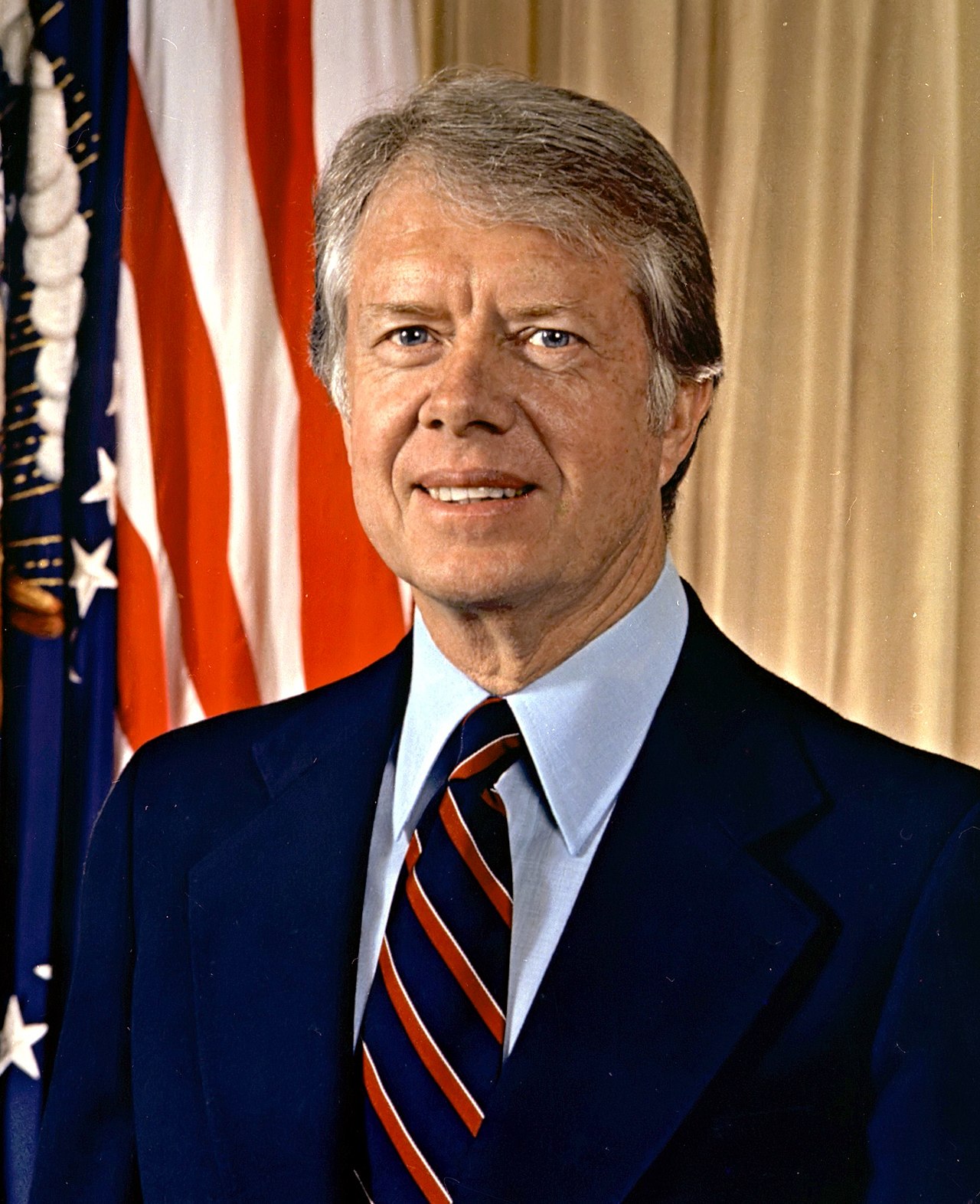
The 1980 United States presidential election took place on November 4, 1980. The Republican nominee Ronald Reagan, a former actor and the then-former Governor of California, won a decisive victory over the incumbent Democratic president Jimmy Carter. Reagan ran as the standard-bearer of the Republican Party, while Carter led the Democratic ticket. The race also included a prominent independent bid by Representative John B. Anderson, who ran as a notable third-party and independent candidate.
Image gallery
10 Images




Context and major issues
The election unfolded against a backdrop of economic difficulty and foreign policy crises. The U.S. economy was battling a recession and persistent high inflation, while the nation faced an energy crisis that affected prices and public confidence. Internationally, tensions were heightened after the 1979 Iranian Revolution; Iran was holding American citizens captive, a prolonged hostage situation that dominated headlines and shaped perceptions of presidential leadership. Observers also noted broader Cold War competition with the Soviet Union, which framed debates about defense and foreign policy strategy (Soviet relations).
Candidates and campaign themes
Campaigning emphasized contrasting approaches. Reagan advocated tax reductions, deregulation, smaller federal government, and increased defense spending to counter the Soviet Union; his economic ideas drew on what became known as supply-side thinking. Carter defended his record, stressing human rights and caution on nuclear escalation while proposing continued government action to address economic and energy problems. Carter's appeals often focused on moral leadership and international stability themes. The Anderson campaign drew moderate and independent voters dissatisfied with both major parties.
Factors that influenced the result
- Economic dissatisfaction: voters responded to high prices and a weak recovery (recession).
- Foreign policy crises: the hostage situation in Iran eroded confidence in the incumbent's effectiveness.
- Political realignment: Reagan's message appealed to conservatives, suburban voters, and those seeking a change in national direction.
Outcome and significance
Reagan won by a large margin, an outcome frequently described as a landslide because he captured a substantial majority of electoral votes and broad support across states. The result brought the Republican Party into the presidency and began a period in which conservative ideas about smaller government, lower taxes, and stronger military posture gained prominence in American politics. The election is often viewed as a turning point that reshaped party coalitions and policy debates for the following decades.
Notable facts and distinctions
The 1980 contest illustrated how economic conditions and international events can rapidly change electoral fortunes. It also underscored the potential influence of independent candidacies on the political conversation, even if they did not win office. Scholars and commentators have linked the election to subsequent policy shifts and to the evolving dynamics of presidential campaigning, messaging, and coalition-building. Contemporary accounts and later analyses emphasize the interplay between domestic issues and Cold War-era foreign policy in producing the final result (landslide).
For further reading about the principal figures and the broader era, see links on Reagan (biography), the Republican and Democratic parties (party, party), California governance (state), Carter's presidency (president), independent campaigns (Anderson, third-party, independent), economic context (recession, inflation), energy and foreign crises (energy, Iran, Iranian Revolution, hostages), and Cold War considerations (Soviet, Cold War) as well as campaign themes (human rights) and the election's scale (landslide).
Questions and answers
Q: When did the 1980 United States presidential election take place?
A: The election happened on November 4, 1980.
Q: Who won the 1980 United States presidential election?
A: Ronald Reagan, the Republican candidate and former Governor of California, won the election.
Q: Who were the other two candidates in the 1980 United States presidential election?
A: The other two candidates were the incumbent Democrat president Jimmy Carter and Independent John B. Anderson.
Q: What were some of the problems the country faced during the 1980 United States presidential election?
A: The country was in a recession, inflation was very high, there was an energy crisis, and Iran was holding 52 Americans hostage.
Q: What were some of the key campaign promises of Ronald Reagan during the 1980 United States presidential election?
A: Reagan campaigned to cut income taxes and to reduce government spending overall while increasing defense spending to challenge the Soviet Union in the Cold War.
Q: What were some of the key campaign promises of Jimmy Carter during the 1980 United States presidential election?
A: Carter campaigned for more government programs and mentioned the importance of human rights and preventing nuclear war.
Q: Did Ronald Reagan win the 1980 United States presidential election by a small margin or a large margin?
A: Ronald Reagan won the election by a landslide, meaning that he had a lot more votes than his opponent.
Related articles
Author
AlegsaOnline.com 1980 United States presidential election Leandro Alegsa
URL: https://en.alegsaonline.com/art/112168