
1948 United States presidential election
The 1948 U.S. presidential election saw Harry S. Truman unexpectedly defeat Thomas E. Dewey, with Strom Thurmond's Dixiecrat ticket taking Southern electoral votes; notable for polling errors and an early newspaper headline.
Overview
The 1948 United States presidential election took place on November 2, 1948. Incumbent President Harry S. Truman defeated Republican nominee Thomas E. Dewey in a result that surprised many observers. Truman captured 303 electoral votes to Dewey's 189; Strom Thurmond, running as a States' Rights (Dixiecrat) candidate, took 39 electoral votes, including one cast by a faithless elector in Tennessee. Truman won a narrow plurality of the popular vote and secured a full four-year term.
Image gallery
10 Images


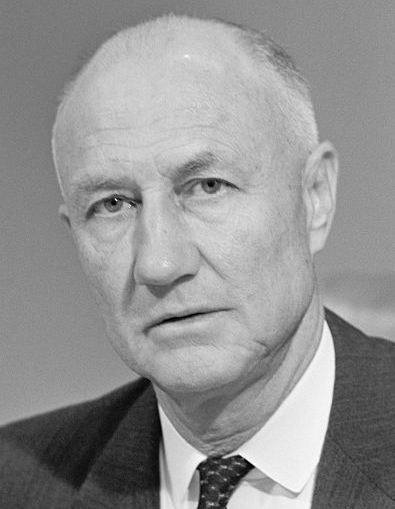
Major candidates and parties
The contest featured several notable tickets and third-party campaigns:
- Harry S. Truman (Democratic Party) — the incumbent president seeking election in his own right after succeeding Franklin D. Roosevelt in 1945.
- Thomas E. Dewey (Republican Party) — Governor of New York and the Republican standard-bearer who ran on a moderate platform.
- Strom Thurmond (States' Rights/Dixiecrat) — a Southern segregationist candidate whose campaign reflected regional opposition to federal civil-rights proposals.
- Other third-party campaigns, notably the Progressive Party, also contested the election but won no electoral votes.
Campaign themes and tactics
Postwar issues shaped the campaign: reconversion to a peacetime economy, inflation and labor unrest, the emerging Cold War, and civil-rights proposals advanced by the national Democratic Party. Truman embarked on an energetic whistle-stop train tour, attacking the Republican-controlled Congress as a "do-nothing" body and appealing directly to farmers, laborers and veterans. Dewey ran a cautious, low-risk campaign aimed at appealing to moderate and business voters; critics argue this restrained approach left him unable to capitalize on late shifts in public opinion. The civil-rights plank in the Democratic platform provoked a Southern party split that produced the Dixiecrat ticket led by Thurmond.
Polls, media mistakes and the upset
Most major pollsters and many newspapers expected a Dewey victory. Several organizations stopped polling weeks before the election or underestimated late-deciding voters, contributing to the surprise. A famous newspaper edition ran an early banner suggesting Dewey had won; when final returns made Truman the victor, that edition became emblematic of the limits of pre-election prediction. The 1948 outcome prompted changes in polling methodology and greater caution among news organizations and survey researchers.
Results and legacy
The election reinforced the value of vigorous, retail-style campaigning and the influence of last-minute voter shifts. Truman's victory preserved Democratic control of the White House and shaped subsequent debates over civil rights, labor policy and U.S. foreign affairs. The strong showing by a Southern segregationist ticket signaled deep regional tensions that would influence party realignments in later decades. The 1948 contest remains one of the best-known examples of an electoral upset in twentieth-century American politics.
Notable facts
- Election date: November 2, 1948.
- Electoral vote totals: Truman 303, Dewey 189, Thurmond 39.
- Often remembered for erroneous early press coverage and flawed pre-election polling.
Questions and answers
Q: Who were the candidates in the 1948 United States presidential election?
A: The candidates in the 1948 United States presidential election were Harry S. Truman and Thomas E. Dewey.
Q: Who won the 1948 United States presidential election?
A: Harry S. Truman won the 1948 United States presidential election.
Q: What was the margin of victory in the 1948 United States presidential election?
A: Harry S. Truman won the 1948 United States presidential election by 303 electoral votes to Thomas E. Dewey's 189 electoral votes.
Q: How many electoral votes did Thurmond get in the 1948 United States presidential election?
A: Thurmond got 39 electoral votes, including a faithless elector in Tennessee, in the 1948 United States presidential election.
Q: Why is the 1948 United States presidential election known as an upset?
A: The 1948 United States presidential election is known as an upset because the predictions had shown that Thomas E. Dewey would beat Harry S. Truman at the polls. For example, a newspaper in Chicago printed an issue in advance which said that Dewey had won the election.
Q: Who was the Governor of New York during the 1948 United States presidential election?
A: Thomas E. Dewey was the Governor of New York during the 1948 United States presidential election.
Q: What was the date of the 1948 United States presidential election?
A: The 1948 United States presidential election happened on November 2, 1948.
Related articles
Author
AlegsaOnline.com 1948 United States presidential election Leandro Alegsa
URL: https://en.alegsaonline.com/art/112006