
Straw: composition, history, uses, and distinctions
Straw is the dry stalks of cereal plants left after harvesting grain. This article explains what straw is, how it differs from hay, its historical and modern uses, processing, and environmental aspects.
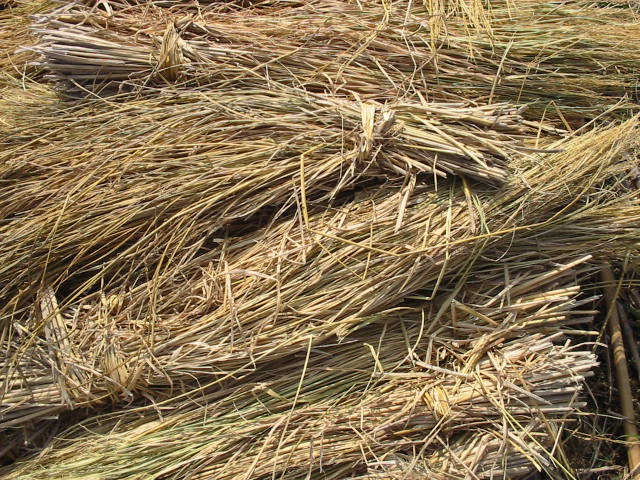
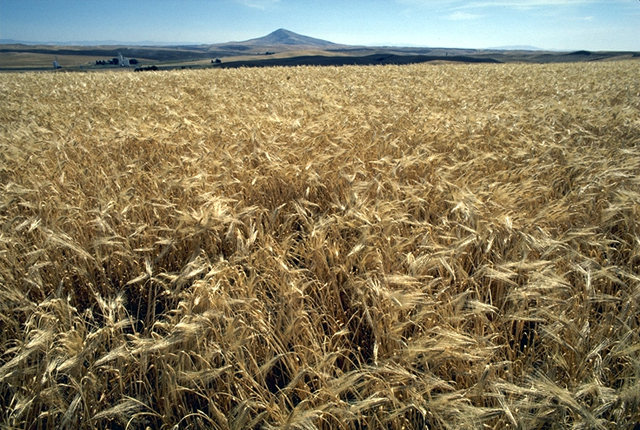
Straw is the dry, hollow stems of cereal plants remaining after grain, such as oats or wheat, has been harvested. It is a low-moisture, fibrous agricultural byproduct valued for its lightness and insulating qualities. While often confused with hay, straw is not used primarily for feed; hay consists of cut grasses or legumes harvested for animal nutrition. For background on grain types that produce straw, see cereal grains and examples such as oats and wheat.
Image gallery
10 Images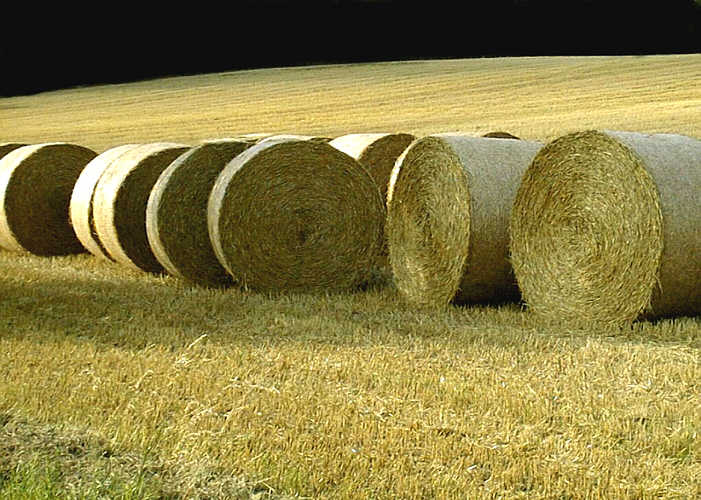





Characteristics
Typical straw is composed largely of cellulose, hemicellulose and lignin, giving it stiffness and resistance to rapid decay. It is usually yellow to golden in color and comes in long, hollow internodes. Quality varies with crop species, harvest timing and weather; shorter, coarser straw is common from some grains while others yield finer, more pliable stalks.
History and traditional uses
Historically straw has been used for practical and domestic purposes: as animal bedding to provide warmth and dryness, as thatch for roofing, and mixed with earth to make cob or adobe walls. Farmers traditionally spread straw in stalls and barns for animal comfort; for its bedding role see animal bedding. Thatched roofs and earthen construction also employed straw to bind clay and sand, a practice still noted in traditional building methods: cob and adobe.
Modern applications
Today straw appears in many contexts: as mulch and soil cover in gardens, as material for basketry and crafts, and processed into pellets or briquettes as a renewable fuel source. Craftspeople still use straw for weaving baskets and mats (basketry), while energy applications treat straw as agricultural biomass (fuel). It is also used in mushroom cultivation and erosion control.
Uses and handling
- Animal bedding and litter — commonly chosen for absorbency and insulation (bedding).
- Garden mulch and compost addition — improves moisture retention and structure.
- Construction materials — straw bales, thatch and earth mixes provide low-cost insulation.
- Industrial uses — bioenergy, packaging, and artisanal weaving (weaving).
Distinctions to note: straw is different from chaff and from hay; it is a byproduct rather than a primary fodder. Proper storage—dry, ventilated and off the ground—prevents mold and spontaneous heating. For comparisons between straw and hay, readers may consult introductory resources on hay. Overall, straw remains a versatile, sustainable agricultural residue with historical roots and wide-ranging modern roles.
Related articles
Author
AlegsaOnline.com Straw: composition, history, uses, and distinctions Leandro Alegsa
URL: https://en.alegsaonline.com/art/94221