
Styphnolobium japonicum — Japanese pagoda tree
Deciduous ornamental legume native to East Asia, grown for fragrant white flowers and shade; formerly placed in Sophora and used in traditional medicine for flavonoids like rutin.
Styphnolobium japonicum, commonly called the Japanese pagoda tree or Chinese scholar tree, is a medium‑sized deciduous tree grown widely as an ornamental and street tree. Native to parts of China and Korea, it produces dense panicles of cream‑white, pea‑like flowers in late summer and pinnate leaves that provide a light canopy. It is placed in the genus Styphnolobium by modern treatments: see genus accounts for comparative details genus treatments.
Image gallery
6 Images
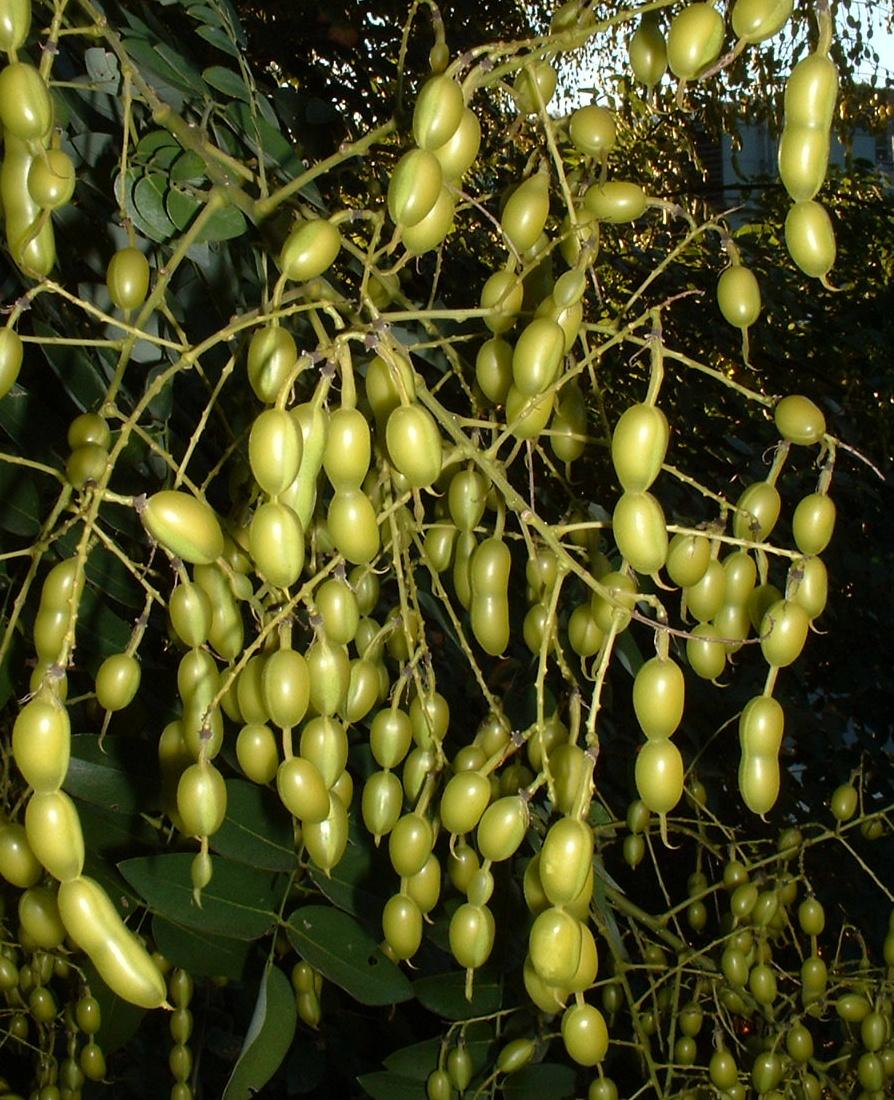


Description and identification
The habit is typically a rounded crown reaching medium height in cultivation. Leaves are imparipinnate with several pairs of elliptic to oblong leaflets. Flowers are borne in erect terminal panicles and are fragrant, visiting bees and other insects. The fruit is a flattened, firm legume (pod) containing several hard, glossy seeds. Unlike many legumes, Styphnolobium species generally lack visible nitrogen‑fixing root nodules.
Taxonomy and history
Historically treated as Sophora japonica, the species was moved to Styphnolobium after taxonomic study of morphological and chemical characters; older horticultural literature and some regional floras still use the former name. For nomenclatural notes and synonyms consult modern treatments and regional checklists taxonomic notes and floristic sources regional references.
Uses, chemistry and cautions
The species is widely planted as a shade, avenue and specimen tree because it tolerates pruning, pollution and a range of soils. In East Asian traditional medicine dried flower buds and extracts have been used as haemostatics and as sources of flavonoids such as rutin; these compounds are subjects of phytochemical study. The seeds and pods are not generally consumed and are treated with caution in ethnobotanical accounts. For a family overview and phytochemistry context see legume references family overview.
Cultivation and ecology
- Prefers full sun to light shade and well‑drained soils; tolerates urban conditions and moderate drought once established.
- Propagated by seed, cuttings or grafting; cultivars are selected for flower production and form.
- Relatively pest resistant; occasional problems include foliar pests or branch dieback in poor sites.
For practical cultivation advice, planting tips, and conservation or invasive status in non‑native regions consult horticultural guides and plant databases: cultivation and care. Further reading on genus and species comparisons is available in specialist monographs and botanical treatments styphnolobium resources.
Related articles
Author
AlegsaOnline.com Styphnolobium japonicum — Japanese pagoda tree Leandro Alegsa
URL: https://en.alegsaonline.com/art/94437