
Stenopterygius — a streamlined Lower Jurassic ichthyosaur
Stenopterygius was a dolphin‑shaped marine reptile of the Lower Jurassic known for its narrow flippers, streamlined body, and fossils preserving live‑birth embryos; common in German Posidonia shale.
Overview
Stenopterygius was a genus of ichthyosaur—an extinct group of marine reptiles—that lived in shallow seas during the Early (Lower) Jurassic. Its body shape converged on that of modern dolphins and tunas: a spindle‑shaped trunk, a dorsal fin, and a powerful tail. The name Stenopterygius comes from Greek roots meaning "narrow wing," a reference to relatively slender flippers compared with some other ichthyosaurs.
Image gallery
10 Images

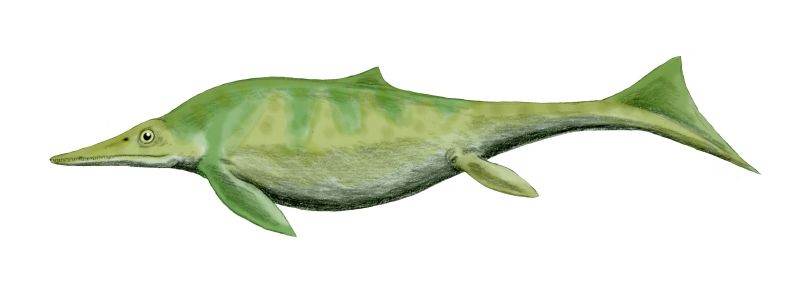


Anatomy and adaptations
Stenopterygius had a streamlined profile adapted for fast swimming. Compared with earlier, broader‑bodied Triassic ichthyosaurs, it exhibited a more hydrodynamic torso and a comparatively smaller skull. The limbs had evolved into paddle‑like flippers with reduced digits to steer and stabilize the body. These features indicate a lifestyle of active pursuit: quick bursts of speed to chase fish and cephalopods, combined with sustained cruising between hunting grounds.
Fossil record and discovery
Most well‑preserved Stenopterygius specimens come from Early Jurassic marine deposits in Central Europe, notably the Posidonia Shale of southern Germany (Holzmaden area). Exceptional preservation in these rocks has yielded skeletons with fine anatomical detail, sometimes showing body outline and stomach contents. Paleontologists use such specimens to reconstruct growth, feeding habits, and swimming mechanics for the genus.
Reproduction and behavior
Like other ichthyosaurs, Stenopterygius gave birth to live young (viviparity). Several fossils show embryos within the body cavity, evidence that reproduction occurred internally rather than by laying eggs on land. These finds were crucial in demonstrating that some reptiles evolved fully marine life cycles independently of returning to land to reproduce. Birth orientation in ichthyosaurs is commonly interpreted as tail‑first, which would reduce the risk of drowning of newborns during delivery.
Ecology and significance
Stenopterygius occupied mid‑level predator niches in Early Jurassic oceans, feeding on small fish, belemnites and other cephalopods. Its anatomy illustrates evolutionary trends seen in marine tetrapods: streamlining, limb modification into flippers, and internal gestation. The genus is frequently cited in discussions of convergent evolution between reptiles and modern marine mammals.
Distinctions and related taxa
- Compared with Ichthyosaurus: Stenopterygius typically had narrower flippers and a proportionally smaller head.
- Evolutionary context: It represents a more derived Jurassic form relative to bulkier Triassic ichthyosaurs that retained less efficient swimming shapes.
- Research value: Fossils with preserved embryos and occasional soft‑tissue outlines make it an important taxon for studying marine adaptation and reproductive evolution.
For further reading on its body shape and paleoecology see dolphin‑like convergence, fossil descriptions at ichthyosaur overview, geological context of the Lower Jurassic, comparisons with Ichthyosaurus, limb anatomy notes at flipper studies, skull proportions at cranial comparisons, and Triassic–Jurassic transitions at evolutionary timelines.
Related articles
Author
AlegsaOnline.com Stenopterygius — a streamlined Lower Jurassic ichthyosaur Leandro Alegsa
URL: https://en.alegsaonline.com/art/93728