
Lower Jurassic (Early Jurassic epoch)
The Lower Jurassic (Early Jurassic) epoch lasted from about 201.3 to 174.1 million years ago. It records post‑extinction recovery, widespread marine deposits, diversifying dinosaurs, and notable fossil localities such as Dorset.
Overview
The Lower Jurassic, also called the Early Jurassic, is the first epoch of the Jurassic. It spans roughly from 201.3 to 174.1 million years ago and follows the end‑Triassic extinction. During this interval global ecosystems recovered and many modern Mesozoic groups began to diversify. The terminology for time and rock units (for example epoch and stages) is defined by international stratigraphic practice and regional criteria.
Image gallery
7 Images


Stratigraphy and stages
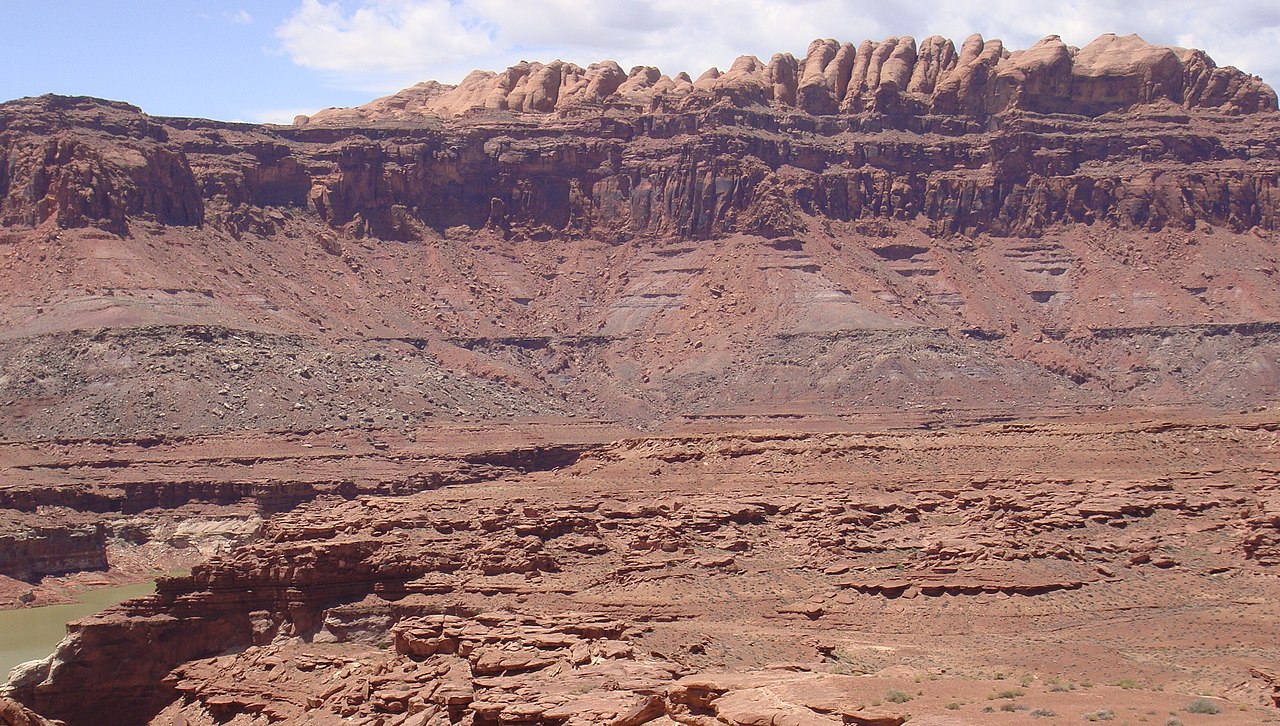
Internationally the Lower Jurassic is subdivided into smaller stages (commonly Hettangian, Sinemurian, Pliensbachian and Toarcian) that permit correlation of marine and terrestrial sequences. In Europe these rocks are often grouped as the Lias or Blue Lias and are notable for alternating beds of limestone, clays and siltstone. Geologists use ammonites and other fossils to refine correlations and link the chronostratigraphic stages to absolute ages.
Paleogeography and climate
During the Lower Jurassic the supercontinent configuration inherited from the late Triassic continued to fragment. Rifting and the progressive opening of shallow seaways produced widespread marine transgressions and regional basins. Climate was generally warm, with variation between humid and more arid belts; episodes of restricted circulation are recorded in some Toarcian‑age black shales and organic‑rich beds, evidence for oceanic anoxic conditions in parts of the world.
Marine and terrestrial life
Marine ecosystems contained abundant ammonites, belemnites, bivalves and diverse microfossils; marine reptiles such as ichthyosaurs and plesiosaurs were important predators. On land, dinosaurs continued to dominate many ecosystems and diversified into multiple groups. Early mammals and other small vertebrates persisted and radiated in specific niches. Overall life on the Earth in this epoch shows both continuity from the Triassic and significant evolutionary turnover.
Notable localities and history of study
Classic exposures of Lower Jurassic strata are found on the southern English coast, notably around Dorset and the famed Jurassic Coast, where the alternating mudstones and limestones preserve an exceptional fossil record. The early 19th‑century work of collectors such as Mary Anning helped establish paleontology as a scientific discipline. Equivalent and well‑studied units occur across Europe, North America and other continents and are often referred to collectively as marine strata when describing depositional settings.
Scientific importance
Study of the Lower Jurassic is central to understanding post‑extinction recovery, the early Mesozoic radiation of major animal groups (including dinosaurs) and changing paleoenvironments leading into the Middle Jurassic. Researchers combine fossil evidence, geochemical proxies and radiometric dating to refine age estimates and to reconstruct sea level, climate and biotic events across the epoch. For overviews of the wider interval see summaries of the Jurassic period and related stratigraphic literature.
- Chronological bounds: approximately 201.3 to 174.1 million years ago.
- Typical deposits: Lias/Blue Lias, Toarcian black shales, and equivalent sequences worldwide.
- Key themes: biotic recovery, marine transgressions, ammonite biostratigraphy, and early dinosaur evolution.
Further reading and regional syntheses are available in stratigraphic guides and geological surveys that summarize lithology, paleontology and regional correlation for the Lower Jurassic epoch.
Questions and answers
Q: What is the Lower Jurassic?
A: The Lower Jurassic is the first epoch in the Jurassic period that began 201.3 million years ago and ended at 174.1 million years ago.
Q: How is the Jurassic period divided?
A: The Jurassic period is divided into three parts: Lower, Middle, and Upper.
Q: When did the Lower Jurassic start?
A: The Lower Jurassic started after the end-Triassic extinction event at 201.3 million years ago.
Q: What rocks form the Lias group in Europe?
A: The Lias group in Europe consists mostly of limestone, with some clays and siltstone.
Q: Where did Mary Anning do much of her work?
A: Mary Anning did much of her work on the Dorset Jurassic Coast in the formation of the Lias group.
Q: What happens to the mudstones in the earliest Jurassic?
A: The mudstones in the earliest Jurassic (Blue Lias) give way to carbonate rocks as the water deepens in the Middle Jurassic.
Q: When were dinosaurs on the Earth?
A: Dinosaurs were on the Earth during the Jurassic period, which was one of the time periods when they lived.
Related articles
Author
AlegsaOnline.com Lower Jurassic (Early Jurassic epoch) Leandro Alegsa
URL: https://en.alegsaonline.com/art/59599