
Stick insect (Phasmatodea): camouflage, biology and diversity
Stick insects (order Phasmatodea) are cryptic, primarily herbivorous insects that mimic sticks or leaves. This article summarizes their form, life cycle, behavior, distribution, taxonomy and interactions with people.
Overview
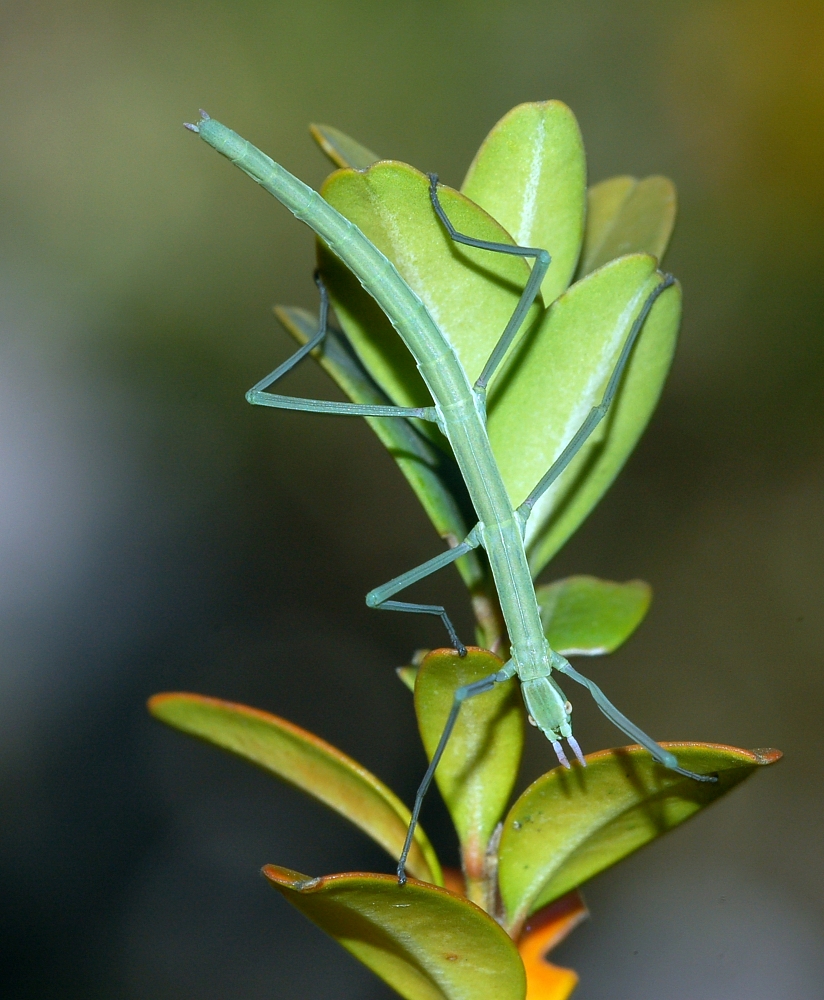
Stick insects, also called phasmids, walking sticks, stick-bugs or ghost insects, belong to the insect order Phasmatodea. They are best known for remarkable camouflage: many species resemble twigs or bark, while others closely imitate leaves. The order includes more than 3,000 described species and contains the true leaf insects (family Phylliidae) among its most striking members.
Image gallery
10 Images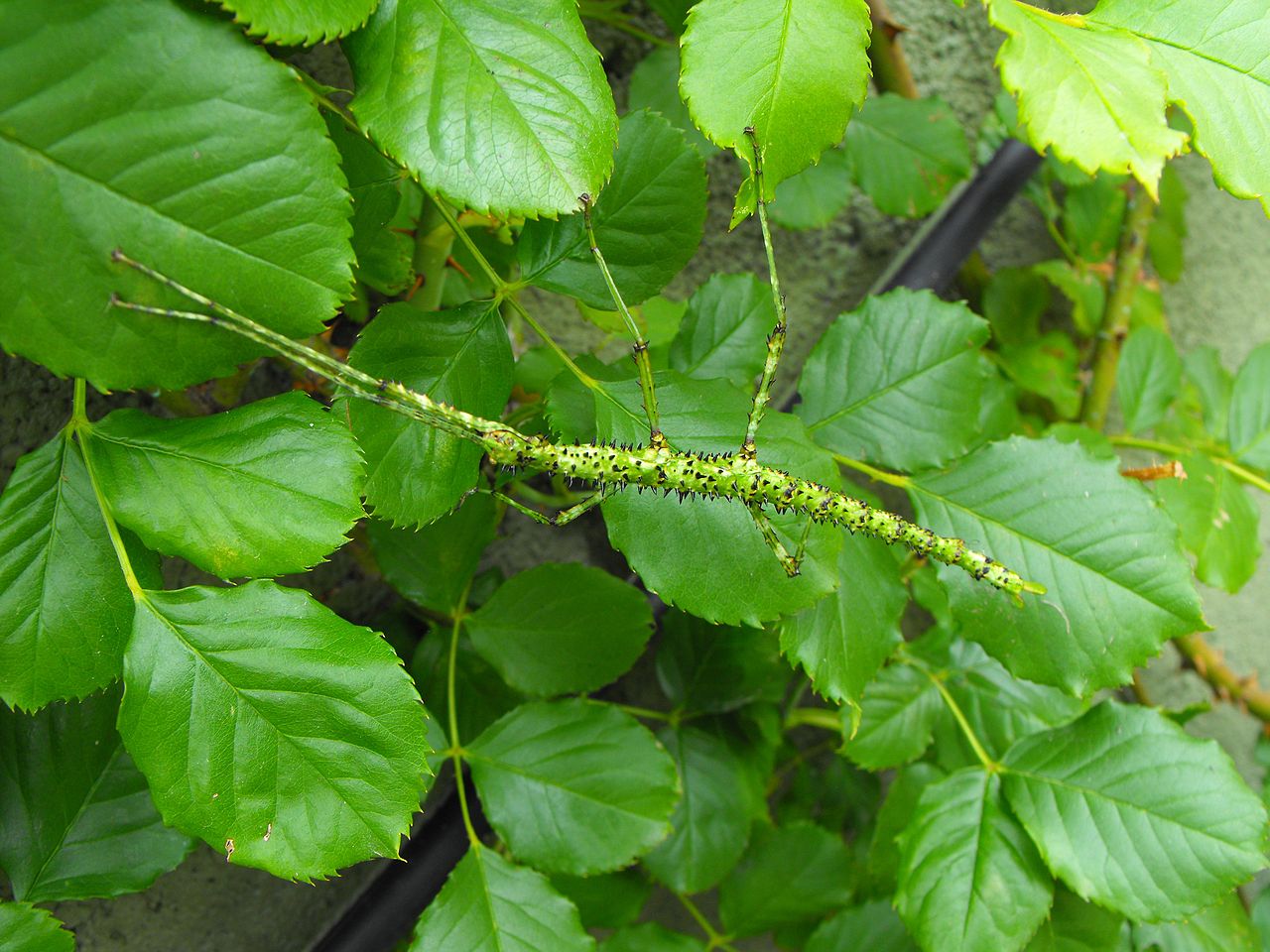


Characteristics and adaptations
Phasmids typically have elongated bodies and cryptic coloration that enhance concealment in vegetation. Many show sexual dimorphism: males are often smaller and more motile, sometimes capable of flight, while females tend to be larger and heavier. Limbs and body surfaces may bear spines, lobes or veins that strengthen the resemblance to plant parts.
Anatomy and movement
Most stick insects are relatively slow-moving and rely on stillness as a primary defence. Their mouthparts are adapted for chewing leaves, and their legs and body allow them to grasp and align with twigs and stems. Some species are able to autotomize (detach) a limb to escape a predator, and that limb may be regenerated over successive molts.
Camouflage and defence
Beyond passive camouflage, phasmids use behavioural tricks such as rocking to mimic foliage swaying in the breeze and freezing when disturbed. Several species possess startle displays: they reveal brightly coloured hind wings or secrete defensive chemicals to deter predators. Others practice thanatosis, feigning death until danger passes.
Life cycle and reproduction
Stick insects undergo incomplete metamorphosis: eggs hatch into nymphs that resemble small adults and grow through successive molts. Many eggs are seed-like in appearance and may be dispersed by ants attracted to small nutritive structures, which helps protect eggs. Parthenogenesis — reproduction without fertilization — occurs in a number of species and allows females to produce offspring when mates are absent.
Feeding, ecology and distribution
Phasmids are herbivores that feed on leaves of a variety of trees and shrubs. Most are nocturnal feeders, which reduces exposure to diurnal predators. They occur worldwide in suitable habitats, with greatest diversity in tropical and subtropical forests of Asia, Australasia, the Americas and Africa, and with some species reaching temperate regions.
Taxonomy and fossil record
The name Phasmatodea derives from the Ancient Greek phasma, meaning apparition or phantom, reflecting their uncanny invisibility in vegetation. Fossil relatives show that stick-like forms have existed for many millions of years, although the group's detailed evolutionary relationships continue to be studied and refined.
Human interactions and significance
Many phasmids are kept as pets or used in education to demonstrate camouflage, behaviour and development; some commonly kept genera are well known to hobbyists. Scientists study stick insects to learn about mimicry, evolution, reproductive strategies and biomechanics. In some regions introduced species can affect local vegetation or native insect communities.
Conservation and research
While many species are common, others have restricted ranges and face habitat loss or other threats. Conservation assessments for specific species depend on geography and available data. Ongoing research addresses taxonomy, distribution, natural history and the ecological roles of phasmids.
Further resources
- Overview of Phasmatodea
- Taxonomic resources on the order Phasmatodea
- Camouflage and mimicry in insects
- Stick-mimicking species
- Leaf-mimicking insects
- Phylliidae: true leaf insects
- Family-level information on Phylliidae
- Distribution in Asia and southeast Asia
- Occurrences in the Pacific and Australasia
- Etymology of Phasmatodea
Questions and answers
Q: What are stick insects also known as?
A: Stick insects are also known as phasmids, walking sticks, stick-bugs, or ghost insects.
Q: What is the order that stick insects belong to?
A: Stick insects belong to the order Phasmatodea.
Q: What do stick insects camouflage themselves as?
A: Stick insects camouflage themselves as either sticks or leaves.
Q: What family do leaf insects belong to?
A: Leaf insects generally belong to the family Phylliidae.
Q: Where are stick insects found?
A: Stick insects are found in south and southeast Asia to New Zealand.
Q: How many species of stick insects have been described?
A: Over 3,000 species of stick insects have been described.
Q: What is the meaning of the name Phasmatodea?
A: The name Phasmatodea comes from the Ancient Greek phasma, meaning an apparition or phantom.
Related articles
Author
AlegsaOnline.com Stick insect (Phasmatodea): camouflage, biology and diversity Leandro Alegsa
URL: https://en.alegsaonline.com/art/93909
Sources
- doi.org : 10.1146/annurev.en.23.010178.001013
- pubs.rsc.org : "Insects and their chemical weaponry: new potential for drug discovery"
- doi.org : 10.1039/C005319H
- pubmed.ncbi.nlm.nih.gov : 20957283
- pubs.acs.org : "Single-insect NMR: a new tool to probe chemical biodiversity"
- doi.org : 10.1021/cb600318u
- pubmed.ncbi.nlm.nih.gov : 17168538