
Southern Netherlands
The Southern Netherlands were the southern territories of the historic Low Countries, encompassing most of modern Belgium and neighbouring areas; ruled successively by Spain, Austria and France before Belgian independence.
The Southern Netherlands is a historical term for the southern portion of the medieval and early modern Low Countries. It comprised the territories that largely correspond to present-day Belgium, parts of Luxembourg and northern France, and small border areas of the modern Netherlands. Because of its predominantly Roman Catholic population, the region has sometimes been called the "Catholic Netherlands." The area played a central role in European politics, trade and culture from the late Middle Ages through the 19th century.
Image gallery
10 Images

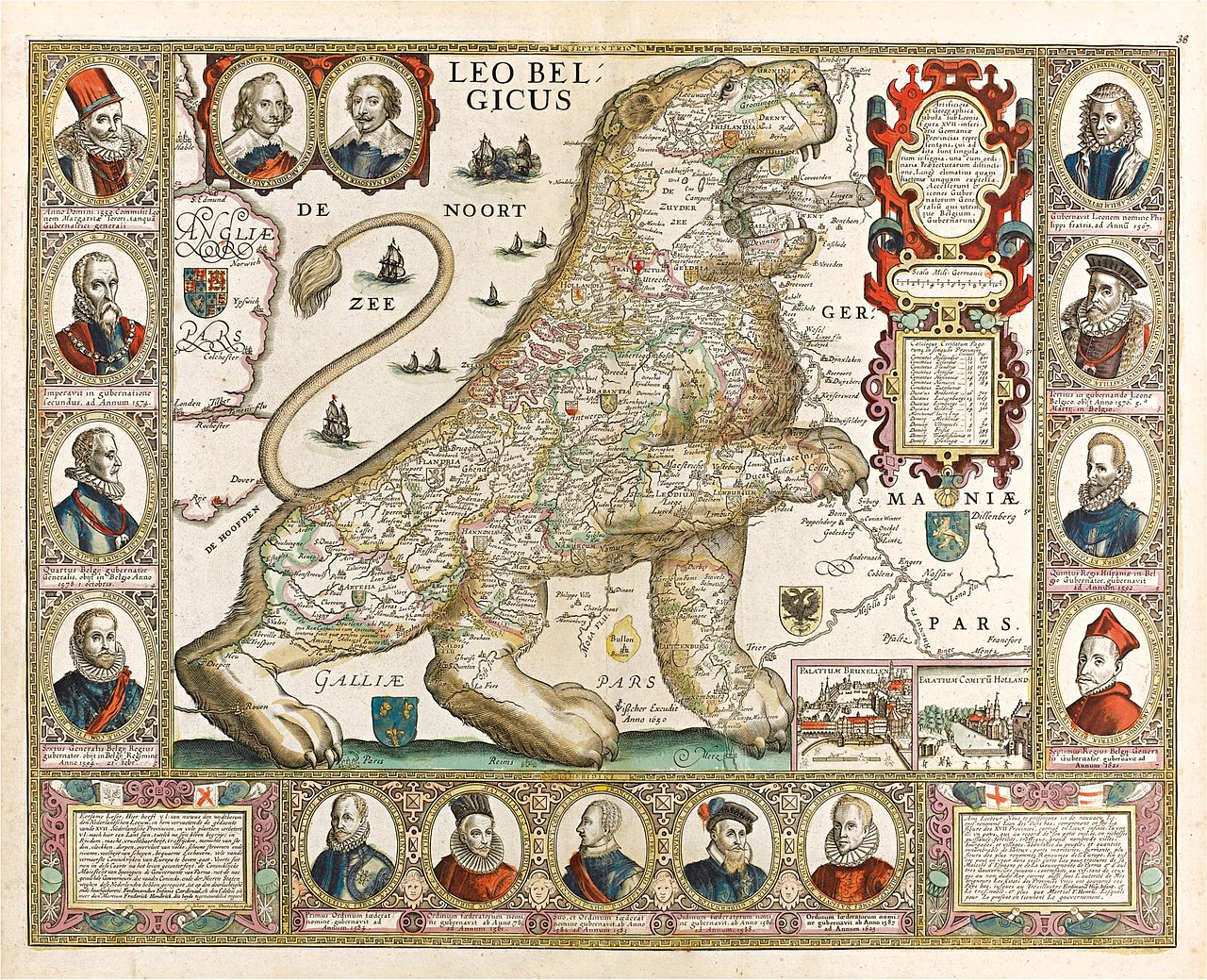


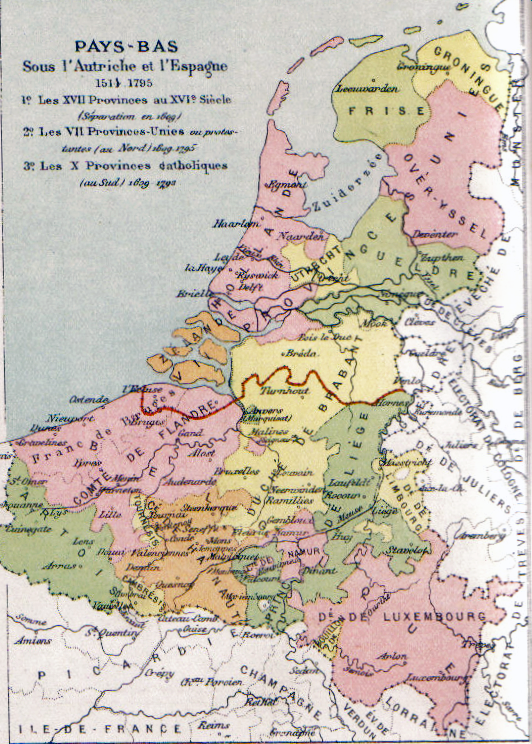

Geography and political composition
The region included the principalities, counties and ecclesiastical territories that made up the southern Low Countries. Major urban centres such as Brussels, Antwerp, Bruges and Ghent were economic and cultural hubs. The territorial extent changed over time, at various points including the Imperial Abbey of Stavelot-Malmedy, the County of Bouillon, most of modern Belgium, the Duchy and later Province of Luxembourg, parts of the contemporary Netherlands, and until 1678 much of the present-day Nord-Pas-de-Calais region in northern France.
Historical overview
From the 16th century the Southern Netherlands formed the southern portion of the lands known as the Low Countries. After the Habsburg inheritance, the area fell under Spanish Habsburg control in the 16th century and was governed by Spain (Spanish rule) until the early 18th century. During the late 16th century a political and religious division emerged: the northern seven provinces, led by Holland and Zeeland, moved toward independence and became known as the United Provinces after 1581, while the southern provinces remained under Habsburg authority.
Military reconquest and consolidation in the south were carried out by Spanish generals such as Alexander Farnese, Duke of Parma. After the War of the Spanish Succession (see War of the Spanish Succession) the Southern Netherlands passed to the Austrian branch of the Habsburgs (Austrian rule) in 1714. The region remained part of the Holy Roman Empire until it was occupied and then annexed by revolutionary France during the French Revolutionary and Napoleonic wars (French Revolutionary Wars, later French administration France), roughly from 1794 until 1815.
19th-century reorganisation and independence
After Napoleon's defeat the 1815 Congress of Vienna reorganised the region, joining the Southern Netherlands with the former United Provinces to form a single kingdom under the House of Orange. This arrangement proved unstable: differing religions, laws and economic interests contributed to the Belgian Revolution of 1830, after which the predominantly Catholic southern provinces became the independent Kingdom of Belgium.
Importance and distinctions
The Southern Netherlands were distinguished from the Protestant north by religion and by patterns of governance: the north developed a maritime commercial republic, while the south retained urban manufacturing, landed estates and closer ties to Catholic dynastic regimes. Economically, the southern towns were centers of textile production, trade and later industrial development. Culturally, the region produced notable contributions in art, architecture and commerce during the Renaissance and Baroque eras.
- Key phases: Habsburg Spanish rule (16th–early 18th century), Austrian administration (1714–1794), French annexation (1794–1815), union and then independence (1815–1830).
- Related events: War of the Spanish Succession, French Revolutionary Wars, Congress of Vienna.
- Geographical links: Part of the wider Low Countries, connected to contemporary Belgium, Luxembourg, Netherlands and northern France.
For further reading see general histories of the Low Countries and studies of early modern European politics; specific administrative and cultural histories explore how Spanish, Austrian and French rule shaped institutions, religious life and urban economies across the Southern Netherlands.
Related articles
Author
AlegsaOnline.com Southern Netherlands Leandro Alegsa
URL: https://en.alegsaonline.com/art/92305