
Congress of Vienna (1814–1815): Reshaping Europe after Napoleon
Diplomatic conference in Vienna (1814–1815) where European powers negotiated territorial settlements and a balance of power to restore stability after the Napoleonic Wars.
The Congress of Vienna was a prolonged diplomatic meeting of the principal European states that convened in Vienna from 1 November 1814 to 8 June 1815. It gathered representatives of the major powers and many smaller states to determine the political map of Europe after the collapse of the French imperial system. The Austrian Austrian statesman Klemens Wenzel von Metternich played a leading role in directing proceedings and shaping the settlement.
Image gallery
10 Images

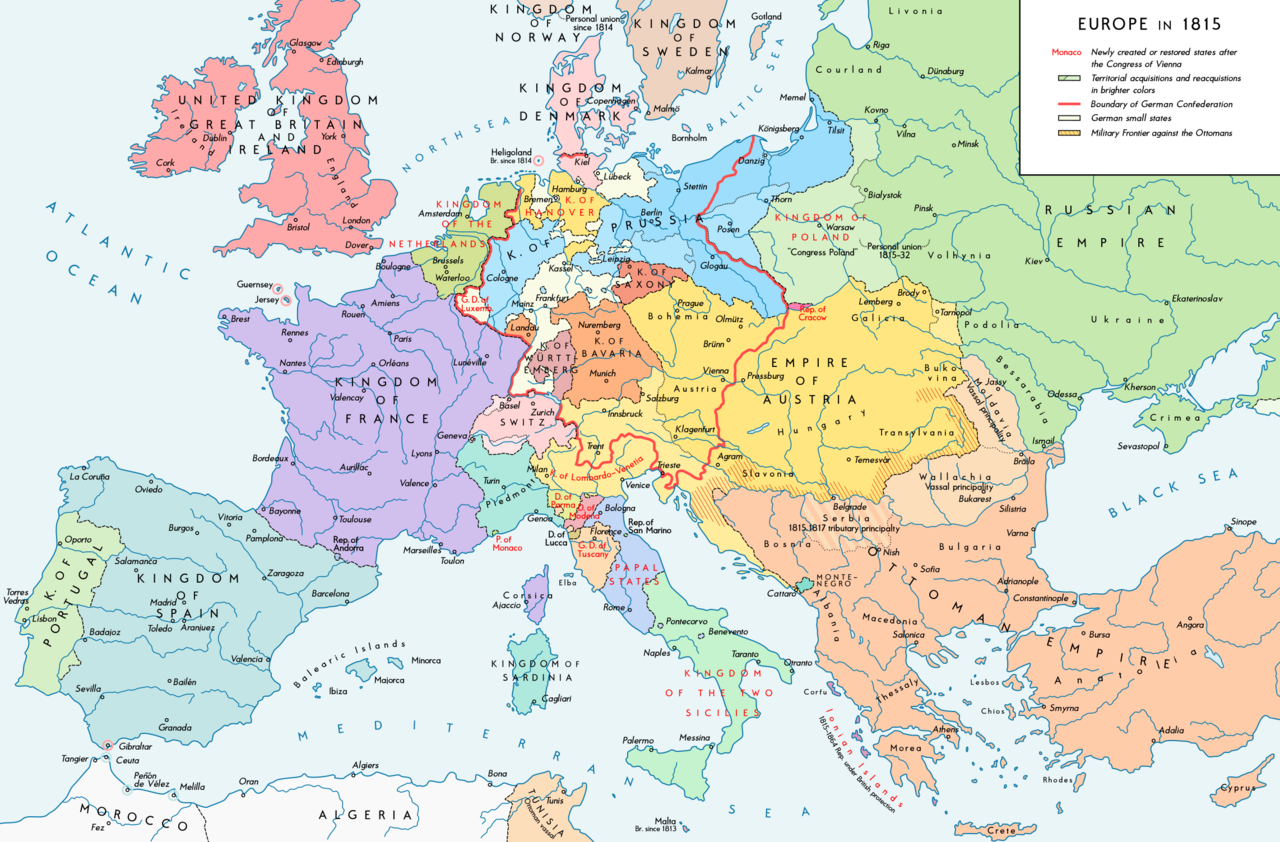


Purpose and context
The chief aim of the conference was to re-establish stability after the wars associated with Napoleon and to prevent any single power from dominating the continent as France had done. Delegates sought to restore legitimate monarchies where possible, redraw frontiers to create defensible borders, and arrange compensations among states. The terms for France itself had largely been fixed earlier by the Treaty of Paris, but the wider reordering of Europe remained open to negotiation.
Participants and diplomatic practice
Although formal plenary sessions were held, much of the work was carried out in informal discussions among the Great Powers. The social life of the congress—balls, dinners, and private salons—was integral to diplomacy and to forging personal relationships that influenced decisions. France, initially excluded by some, regained a place in negotiations through the skillful diplomacy of Charles-Maurice de Talleyrand-Périgord, who represented French interests and helped moderate the settlement.
Main provisions and outcomes
- Territorial adjustments: borders were redrawn to strengthen states that could check future French expansion and to compensate victors—examples included changes affecting the Netherlands, German states, Italy, Prussia and Russia.
- Restoration of dynasties and conservative principle of legitimacy: many pre-revolutionary rulers were returned to power or confirmed.
- Recognition of Swiss neutrality and measures to secure the balance of power in Central and Western Europe.
- Formation of the diplomatic framework known as the Concert of Europe, an informal system intended to manage international disputes collectively.
Legacy and significance
The Congress established a durable diplomatic settlement that kept large-scale interstate war in Europe relatively limited for much of the 19th century. Its emphasis on balance of power and collective consultation shaped international relations and contributed to the development of regular multilateral diplomacy. At the same time, the conservative restoration it endorsed suppressed many emerging nationalist and liberal movements, sowing political tensions that would surface later in the century.
Notable features of the Congress include the predominance of great-power bargaining over smaller states' autonomy, the reliance on personal influence and informal negotiation rather than single formal treaty-making, and the ability of skilled diplomats—above all Metternich and Talleyrand—to shape outcomes. The event is widely regarded as a turning point in modern diplomacy, both for the settlements reached and for the diplomatic practices it exemplified.
Questions and answers
Q: What was the Congress of Vienna?
A: The Congress of Vienna was a conference of ambassadors of the major powers of Europe that was held in Vienna from November 1, 1814, to June 8, 1815.
Q: Who was the chairman of the Congress of Vienna?
A: The chairman of the Congress of Vienna was the Austrian statesman Klemens Wenzel von Metternich.
Q: What was the purpose of the Congress of Vienna?
A: The purpose of the Congress of Vienna was to decide about the political situation in Europe after the defeat of Napoleon.
Q: Was there only one Congress of Vienna?
A: No, there were discussions in informal sessions among the Great Powers. There was never one "Congress of Vienna".
Q: What was the Congress concerned with?
A: The Congress was concerned with determining the entire shape of Europe after the Napoleonic wars, with the exception of the terms of peace with France.
Q: When were the terms of peace with France decided?
A: The terms of peace with France had already been decided by the Treaty of Paris, signed a few months earlier, on May 30, 1814.
Q: Did the victorious powers hope to include the French in the negotiations?
A: No, the four victorious powers (the Concert of Europe) hoped to exclude the French from participation in the negotiations. However, Charles-Maurice de Talleyrand-Périgord managed to get into "her inner councils" in the first weeks of negotiations.
Related articles
Author
AlegsaOnline.com Congress of Vienna (1814–1815): Reshaping Europe after Napoleon Leandro Alegsa
URL: https://en.alegsaonline.com/art/22514