
Nord-Pas-de-Calais
Former administrative region in northern France, historically industrial (coal, steel, textiles). Merged into Hauts-de-France; centred on Lille and the departments Nord and Pas-de-Calais with close cross‑border links.

Nord-Pas-de-Calais was an administrative entity in the far north of France that covered a densely settled and industrialised strip facing the English Channel. It ceased to exist as a separate administrative region after the territorial reform that created Hauts-de-France, but the name remains in common use for historical, cultural and economic description. The area’s status as an administrative region and the role of its prefecture in regional governance were long associated with the city of Lille, whose metropolitan area is a major urban centre in northern Europe (Lille and the surrounding conurbation). Around the early 2010s the territory counted roughly four million inhabitants and a number of important urban and industrial centres (urban area).
Image gallery
10 Images


Geography and administration
The former region comprised two departments, Nord and Pas-de-Calais. It lies along the Belgian border and looks out across the Channel toward southern England, forming a corridor of transport and exchange between Paris, Belgium and the United Kingdom. The landscape includes coastal beaches and dunes, fertile plains, and inland former mining basins with towns laid out around industrial sites. The location has long shaped trade routes, migration patterns and cross-border labour markets.
History and population
The area has a layered history: medieval cloth production and Flemish cultural links gave way to intensive industrialisation in the 19th and early 20th centuries. Coal mining, steelworks and textile factories supported dense working-class communities and distinctive urban forms. Deindustrialisation in the later 20th century led to economic restructuring, demographic shifts and social challenges, although many towns have preserved strong local identities and traditions.
Economy and labour
Historically the regional economy was dominated by coal (coal), integrated steel production (steel) and textiles (textiles). The decline of these sectors produced above-average unemployment and long-term labour-market adjustment needs; unemployment figures were regularly cited as higher than the national average (unemployment). Public and private initiatives have worked to diversify the economy into services, logistics, technology and tourism, and to redevelop former industrial sites.
Transport and regeneration
Major transport investments have helped reconnect the region. High-speed rail services such as the TGV shortened journey times to Paris and other French cities, while the fixed link under the Channel, the Channel Tunnel, enhanced cross-Channel movement of people and goods. These improvements have supported logistics, commuters and new business opportunities, and they form part of wider regeneration efforts in former mining and industrial areas.
Culture, heritage and tourism
Nord-Pas-de-Calais preserves an important industrial heritage. The Nord-Pas-de-Calais mining basin is widely recognised for its cultural and technical legacy and is featured in regional museums and conservation projects. The area also contains First World War memorial landscapes and cemeteries that attract international visitors. Culinary and cultural traditions show Flemish and Picard influences: local gastronomy features cheeses, beers and hearty dishes rooted in working-class cuisine, and festivals celebrate distinct regional identity.
Tourism benefits from the coastline, historic towns and proximity to neighbouring countries. Easy access to Belgium and short crossings to England make the area a convenient destination for short international trips and cross-border cultural exchanges.
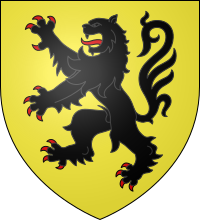
- Former administrative status: administrative region merged into Hauts-de-France
- Prefecture and largest city: Lille (Lille metropolitan area)
- Main departments: Nord, Pas-de-Calais
- Historic industries: coal, steel, textiles
- Key transport projects: TGV, Channel Tunnel
- Cross-border links: Belgium, England
- Urban and labour issues: urban area, unemployment
Although the official regional administration is now Hauts-de-France, Nord-Pas-de-Calais remains a useful term for discussing the specific geography, industrial past, cultural traditions and contemporary redevelopment of France’s northernmost departments. Ongoing efforts combine heritage conservation with economic diversification, improved transport links and European cross-border cooperation to support the region’s social and economic renewal.
Related articles
Author
AlegsaOnline.com Nord-Pas-de-Calais Leandro Alegsa
URL: https://en.alegsaonline.com/art/70667