
Shale gas: formation, extraction, uses and impacts
Shale gas is natural gas trapped in fine-grained sedimentary rocks. This article explains its geology, how it is produced, uses, economic importance and environmental and social concerns.
Overview
Shale gas is a form of natural gas that is held in low‑permeability sedimentary rock known as shale. Unlike gas in conventional reservoirs, it is dispersed through tiny pores and organic material in the rock. Advances in drilling and stimulation over recent decades have made production from shale reserves commercially viable in many regions.
Image gallery
3 Images

Formation and characteristics
Shale forms from compacted mud, clay and organic matter deposited in ancient lakes, seas or deltas. Over geological time heat and pressure transform the organic material into hydrocarbons. The host rock is typically thinly layered, rich in organic carbon, and has very low permeability, which means gas does not flow easily without artificial enhancement.
Extraction methods
Recovering shale gas generally requires two technologies used together: horizontal drilling to reach a long section of the target rock, and hydraulic fracturing to create pathways for gas to flow. Typical stages include site preparation, directional drilling, well casing, high‑pressure fracturing with water, sand and additives, then production and processing.
Uses and economic importance
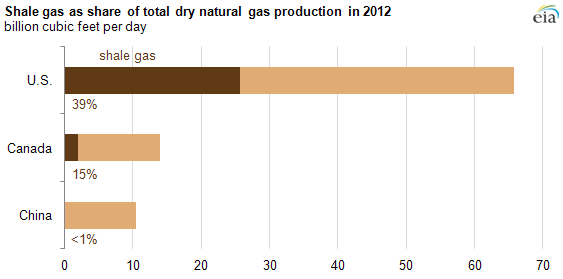
Shale gas is used for heating, electricity generation, industrial feedstock and as a chemical feedstock. Development of shale resources has affected energy markets, contributing to domestic supply, price shifts and changes in fuel mix in some countries. Local employment and investment often expand when fields are developed.
Environmental and social issues
Production raises concerns about water consumption, management of flowback and produced water, potential groundwater contamination if wells or casings fail, air emissions including methane leakage, and induced seismicity from injection activities. Community impacts, traffic and land use are also commonly debated. Regulations, monitoring and best practices aim to reduce risks.
Distinctions and notable facts
- Shale gas differs from conventional gas (pooled in permeable reservoirs) and from tight gas (in low‑permeability sandstones).
- Shale plays may also yield liquid hydrocarbons; when liquid yields are high the term "shale oil" is used for the resource or production.
- Technological and regulatory changes continue to shape its role in energy systems.
For more technical background or regional information consult specialist sources and regulatory guidance on exploration and environmental safeguards.
Related articles
Author
AlegsaOnline.com Shale gas: formation, extraction, uses and impacts Leandro Alegsa
URL: https://en.alegsaonline.com/art/89411