
Shale: a fine‑grained sedimentary rock — characteristics, formation and uses
Shale is a fine‑grained sedimentary rock formed from compacted mud and clay. It is important as a record of past environments, a host for fossils and organic matter, and a source of hydrocarbons and industrial materials.
Shale is a fine‑grained sedimentary rock composed mainly of compacted mud — a mixture of very small flakes of clay and other minerals together with silt‑sized fragments. The dominant component is clay‑sized material, but varying amounts of finer silt and minerals such as quartz and calcite are common. Shale is typically distinguished from similar rocks by its tendency to split into thin sheets, a property called fissility. Rocks with the same composition that lack this pronounced layering are often termed mudstones.
Image gallery
8 Images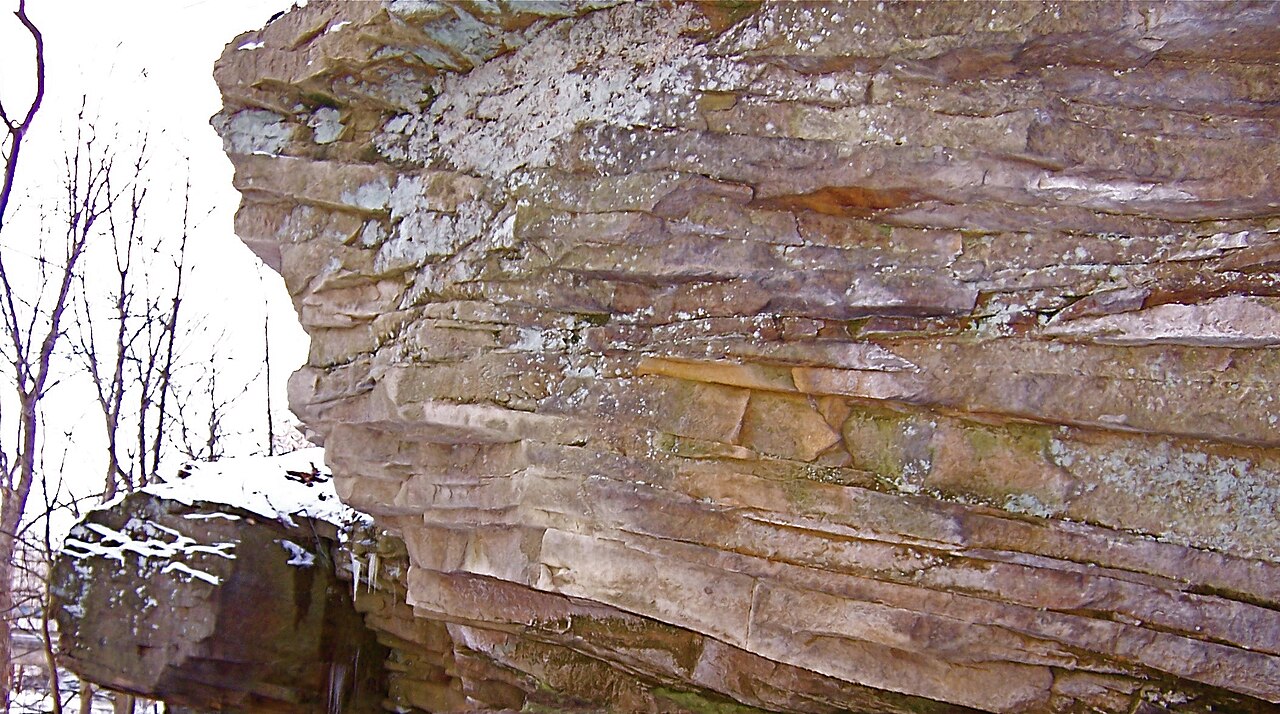


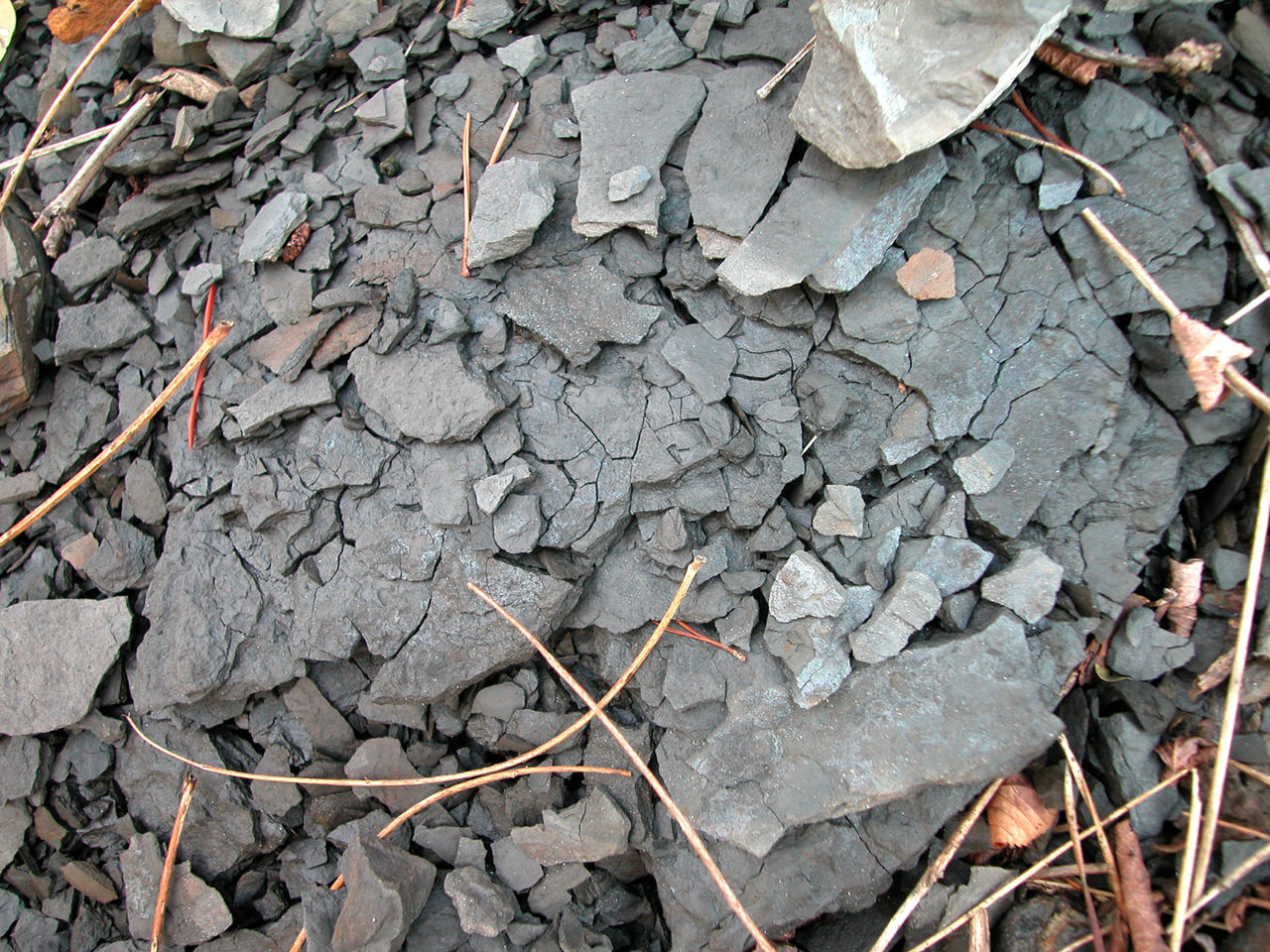

Characteristics and composition
Shales are identified by their very small grain size, lamination, and fissile breakage along planes less than about one centimetre thick. The proportion of clay to silt and other minerals varies, producing a range of textures and colours. Many shales are grey or brown; when they contain abundant organic residues and reduced iron compounds they may be dark or black. Shales commonly contain traces of organic matter, and in some settings the organic content is high enough to give the rock a characteristic dark colour and to make it an important source rock for hydrocarbons.
How shale forms
Shales form in low‑energy depositional environments where fine particles can settle out of suspension. Typical settings are deep marine basins, quiet parts of lakes, lagoons, and floodplain ponds. In these settings, slow accumulation of mud is followed by compaction and diagenesis (chemical and physical changes during burial), which expels water and cements the particles into rock. When burial occurs under oxygen‑poor conditions, organic material is better preserved and sulphide minerals may form; for example, pyrite and elemental carbon contribute to the black colour of some deposits. Such anoxic conditions mean little or no free oxygen was available in the sediment when it accumulated.
Uses, importance and economic role
Shales are important for several reasons. As repositories of preserved organic material they serve as source rocks for conventional petroleum and for unconventional resources such as shale gas and shale oil when organic‑rich layers are thermally mature. Shales also influence landscape behaviour because they weather to soft clayey soils and can form slope‑stability hazards. Industrially, some shales are used in brick and tile manufacture, cement production, and as raw material for ceramics. Extraction and processing of shale hydrocarbons require specific technologies and raise environmental and regulatory issues.
Fossils, records and environmental significance
Because of their fine grain and gentle deposition, shales often preserve delicate fossils — leaves, fish skeletons, and microscopic organisms — and they can record seasonal or annual layering (varves) useful to paleoenvironmental reconstruction. Black shales, deposited in low‑oxygen settings, are particularly valuable to scientists as archives of ancient ocean chemistry and biological productivity, and they sometimes coincide with important intervals in Earth history.
Distinctions and notable facts
- Fissility is the key field diagnostic separating most shales from massive mudstones.
- Mineral mix may include quartz, calcite and various clay minerals; the exact assemblage reflects the source rocks and depositional environment.
- Organic‑rich or "black" shales contain preserved organic matter and can include iron sulphides like pyrite.
- Fine silts present in some shales are equivalent to silt-sized particles and influence texture and strength.
- Geologists and engineers study shales for their mechanical behaviour; they can be impermeable seals for oil and gas but, when fractured, may act as unconventional reservoirs.
For additional introductory material and reference summaries, see resources on sedimentary rock classification and clay mineralogy (clay, minerals) and on organic geochemistry (organic matter, carbon). Further reading on depositional environments, shale gas technology, and environmental considerations is available from geoscience overviews and technical reviews (sedimentary rock, quartz, calcite, oxygen).
Questions and answers
Q: What is shale?
A: Shale is a type of fine-grained sedimentary rock that is formed from mud composed of clay minerals and tiny fragments of other minerals.
Q: What is the ratio of clay to other minerals in shale?
A: The ratio of clay to other minerals in shale varies.
Q: What is the characteristic feature of shale?
A: Shale is characterized by fissility, which refers to breaks along thin laminae or parallel layering less than one centimeter in thickness.
Q: What is the difference between shale and mudstones?
A: Mudstones are similar in composition to shale but do not exhibit fissility.
Q: How much organic matter do shales and mudrocks contain compared to other sedimentary rocks?
A: Shales and mudrocks contain approximately 95 percent of the organic matter found in all sedimentary rocks.
Q: What causes black shales to form?
A: Black shales form in anoxic conditions without oxygen, and they contain free carbon and iron sulfides such as pyrite, which give them their black coloration.
Q: How much organic matter do black shales contain by mass on average?
A: Despite containing a high percentage of the organic matter found in sedimentary rocks, black shales only contain less than one percent of organic matter by mass on average.
Related articles
Author
AlegsaOnline.com Shale: a fine‑grained sedimentary rock — characteristics, formation and uses Leandro Alegsa
URL: https://en.alegsaonline.com/art/89412