
Scaphopoda (tusk shells): biology, fossil record and human connections
Scaphopoda, or tusk shells, are a small class of marine molluscs with tubular, tusk-like shells. This article describes their anatomy, ecology, fossil history, classification and cultural uses.
Scaphopods, commonly called tusk shells, are a distinct class of marine molluscs characterized by a slender, tubular shell open at one or both ends and by a burrowing lifestyle. The class is small compared with gastropods or bivalves but has a global distribution in soft sediments from shallow subtidal zones to several hundred metres depth. About 500 living species are recognized and many more have been described from the fossil record. The English name "tusk shell" reflects the shell's curved, elongated form; the scientific name Scaphopoda derives from Greek roots that can be translated as "boat-" or "shovel-foot." Reference 1
Image gallery
10 Images


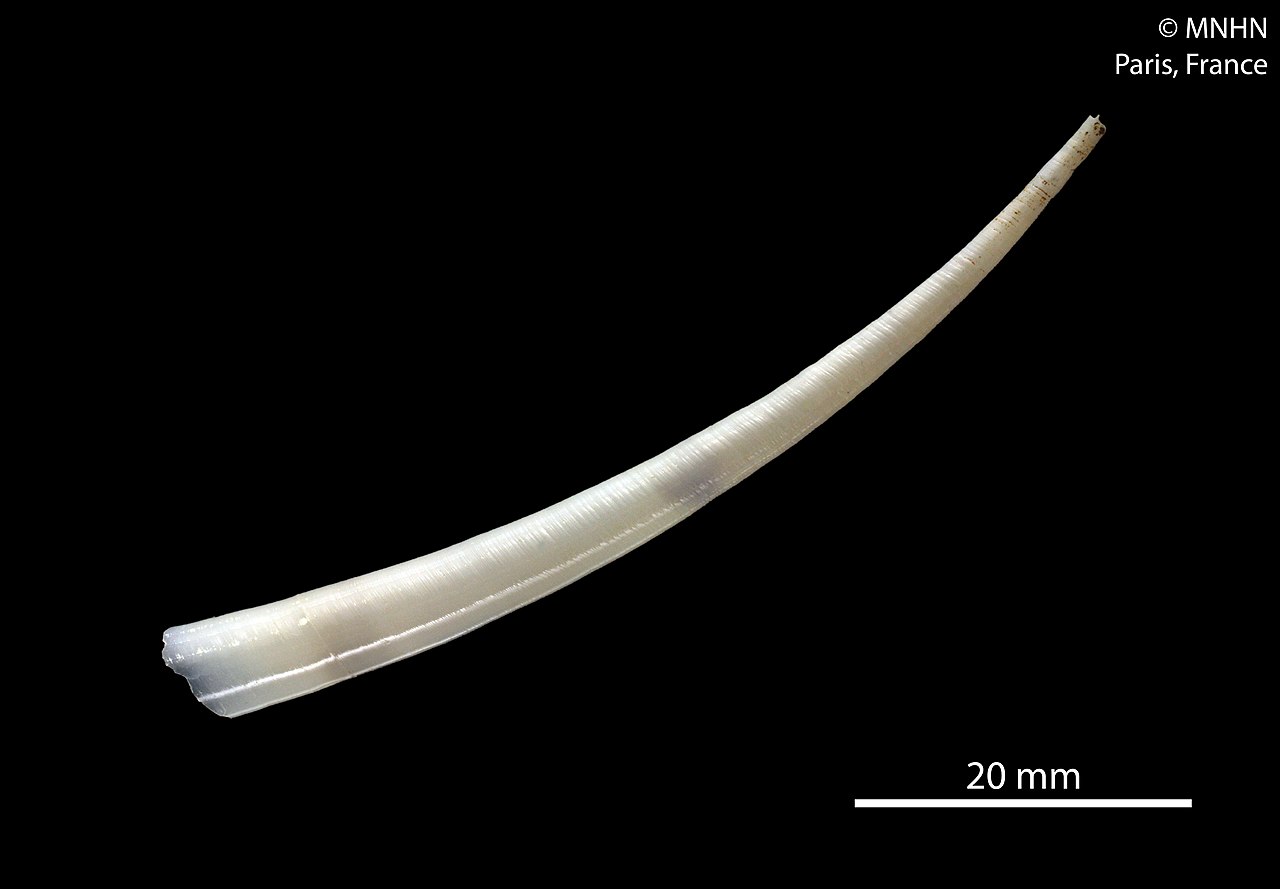


Distinctive anatomy
Scaphopods live inside their tapering shells with the larger opening oriented toward the sediment surface. The animal's muscular foot extends from the larger aperture to dig and to anchor the animal. A unique feature of scaphopods is the captacula, dozens of slender, adhesive tentacles used to capture microscopic prey such as foraminiferans and other small infaunal organisms. A radula—a rasping organ found in many molluscs—aids in processing food. Unlike many marine molluscs, scaphopods lack true gills; gas exchange occurs across the mantle and body surface within the shell. Reference 2
Habitat and ecology
These animals burrow into sand or mud and are typically found with only the shell's anterior end protruding. They play a role in the benthic food web as predators and scavengers on microfauna and as contributors to sediment mixing. Scaphopods occupy a variety of depths and soft-bottom habitats worldwide; some species are common on continental shelves while others live much deeper. Their vertical positioning and feeding habits make them important members of infaunal communities. Reference 3
Classification and fossil record
The class Scaphopoda is usually divided into two principal orders that differ in shell shape and internal anatomy. Their fossil record is extensive: hundreds of fossil species have been described from Paleozoic and later strata, showing the group's long history though taxonomy remains under revision in some groups. Modern systematic work combines shell morphology, anatomy and molecular data to clarify relationships. Reference 4 Reference 5
Reproduction and life cycle
Scaphopods reproduce sexually; most species have separate sexes. Fertilization strategies and larval development vary among taxa, and some scaphopods produce free-swimming larval stages that disperse in the plankton before settling and acquiring their adult shell. Because many life-history details remain incompletely documented, researchers continue to study scaphopod reproductive biology and early development. Reference 6
Uses, cultural importance and notable facts
Though not commercially important as food, scaphopod shells—especially those of certain dentalium species—have long been used as beads and ornaments by indigenous peoples in North America and elsewhere, where they served as trade items, status symbols and elements of traditional dress. Collectors prize some species for their graceful, ivory-like shells. Conservation concerns are limited but include habitat disturbance and incomplete taxonomic knowledge that complicates assessments. Reference 7 Reference 8
Quick facts and further reading
- Common name: tusk shells or tooth shells. Source A
- Shell: elongated, tubular, open at least anteriorly. Source B
- Feeding: captacula and radula capture and process microfauna. Source C
- Distribution: global in soft-bottom marine habitats. Source D
- Diversity: ~500 living species; many fossil species described. Source E
Related articles
Author
AlegsaOnline.com Scaphopoda (tusk shells): biology, fossil record and human connections Leandro Alegsa
URL: https://en.alegsaonline.com/art/87774