
Elephant: biology, behavior, and conservation of the largest land mammal
Comprehensive overview of elephants: anatomy, social behavior, reproduction, ecological role, threats, and differences between African and Asian species.
Overview
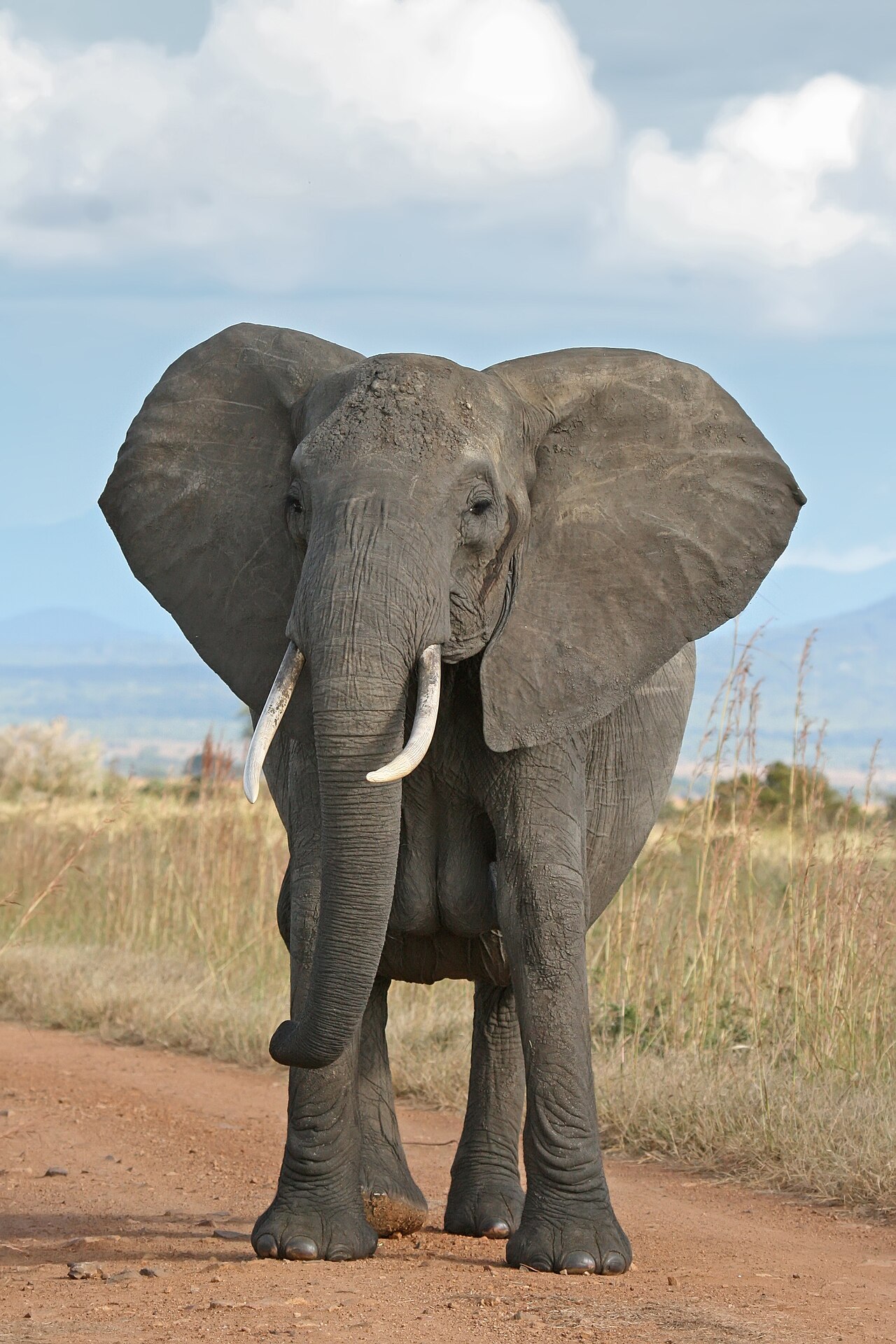
Elephants are large, long-lived mammals known for their trunks, tusks, and complex social lives. They are the largest living land mammals and belong to the family Elephantidae. Two widely recognized living groups are African elephants (genus Loxodonta) and Asian elephants (genus Elephas). Their size, intelligence, and role in ecosystems make them conspicuous across much of Africa and parts of Asia. For general perspective on size and status see largest living land mammals.
Image gallery
10 Images




Anatomy and appearance
Key features include a flexible trunk formed by the fusion of the nose and upper lip, which is used for breathing, smelling, grasping, drinking and social interaction. Tusks are elongated incisor teeth; both sexes of many African elephants grow prominent tusks, whereas in Asian elephants tusks are typically larger in males or sometimes absent in females. Thick, wrinkled skin protects against sun and abrasion, and large flattened ears (especially in African species) help regulate body temperature. Elephants have a distinctive dentition in which cheek teeth (molars) are replaced several times during life as they wear down.
Behavior and social structure
Elephant societies are often matriarchal: family groups are led by an older female and composed of related adult females and their young. Adult males commonly leave the natal herd and may be solitary or form loose bachelor groups. Herds show cooperative care of calves, coordinated movement and strong bonds between individuals. Communication includes a range of vocalizations, body postures and low-frequency sounds that travel long distances; these infrasonic signals allow elephants to "talk" over several kilometers and to perceive vibrations through the ground (infrasound communication). They also display behaviors interpreted as empathy and complex problem solving.
Reproduction and development
Elephants have one of the longest gestation periods among mammals, typically around 20 to 22 months, which allows extensive prenatal development (gestation length). Calves are relatively large at birth—often close to 100 kilograms (about 225 pounds) in many populations—and are nurtured and protected by the herd. Growth and learning are prolonged; calves remain dependent on mothers and other females for several years, during which time social skills and foraging techniques are acquired. Reliable information about typical newborn weights is summarized in many sources (newborn weight).
Ecological role and importance
Elephants function as keystone species and ecosystem engineers. By feeding on trees and shrubs, they shape vegetation structure and create open areas used by other species. Their movements disperse seeds across long distances, and their digging can create water access for other animals. Because of these effects, changes in elephant populations can have cascading impacts on habitats.
Conservation status and threats
Elephant numbers have declined in many regions due to habitat loss, fragmentation and especially poaching for ivory. Conservation efforts range from protected areas and anti-poaching patrols to community-based initiatives and international agreements aimed at reducing illegal trade. Balancing human livelihoods, land use and elephant conservation remains a major challenge in places where their ranges overlap with agriculture.
Distinctions and notable facts
- There are important differences between African and Asian elephants in size, ear shape, tusk presence and skull form.
- Elephants possess exceptional memory and problem-solving abilities, which have been studied in both wild and managed settings.
- Historical records note individual elephants of extraordinary size; one well-known example cited in historical accounts was recorded in Angola in 1974 (notable record).
- Strong family relationships and cooperative care of offspring are central to elephant life; for further reading on social bonds see elephant family relationships.
Elephants continue to inspire scientific research, conservation action and cultural interest. Their conservation status varies by region and species, and efforts to protect them combine ecological science, law enforcement and engagement with local communities. For broader overviews and educational resources consult general reference links such as gestation and lifecycle summaries and introductory guides to mammal biology (comparative size and biology).
For a concise primer on elephant hearing and communication see infrasound communication, and for general facts about newborns and early growth see newborn and calf development. Additional conservation-oriented resources and species profiles are available through many wildlife organizations and research institutions (family and social behavior studies, historic records and notable individuals).
Questions and answers
Q: What are elephants?
A: Elephants are large grey animals with big ears, long noses and white tusks. They are the largest living land mammals.
Q: What is the largest elephant ever recorded?
A: The largest elephant ever recorded was one shot in Angola in 1974. It weighed 27,060 pounds (12.25 tonnes) and stood 13 feet 8 inches (4.17 m) tall.
Q: How much does a baby elephant weigh at birth?
A: At birth, an elephant calf may weigh as much as 100 kg (225 pounds).
Q: How long does an elephant calf develop inside its mother?
A: An elephant calf develops for 20 to 22 months inside its mother, which is longer than any other land animal.
Q: How do wild elephants behave towards each other?
A: Wild elephants have strong family relationships and their ways of acting toward other elephants are hard for people to understand.
Q: How do elephants communicate with each other?
A: Elephants "talk" to each other with very low sounds, most of which people cannot hear. But elephants can hear these sounds far away.
Q: What kind of skin do elephants have?
A: Elephants have strong, leathery skin to protect themselves.
Related articles
Author
AlegsaOnline.com Elephant: biology, behavior, and conservation of the largest land mammal Leandro Alegsa
URL: https://en.alegsaonline.com/art/30786
Sources
- www3.nationalgeographic.com : "African Elephant"
- animalfactguide.com : "Elephants"
- news.discovery.com : "Hungry Elephants Are No Match for Fearless Ants : Discovery News"
- news.bbc.co.uk : Elephant 'had aquatic ancestor'
- academia.edu : "Extinction of a gomphothere population from Southeastern Brazil: Taphonomic, paleoecological and chronological remarks"
- uen.org : "Endangered Animals - Elephants - UEN"
- iucnredlist.org : iucnredlist.org/details/12392/0.html
- elephantdatabase.org : elephantdatabase.org/preview_report/2013_africa/Loxodonta_africana/2012/Africa.html
- iucnredlist.org : iucnredlist.org/details/7140/0.html
- harpweek.com : "Cartoon of the Day: "The Third-Term Panic""