
Shovel: design, types, uses and care
An overview of the shovel — a hand tool for scooping and moving loose materials — its parts, common variants, historical development, typical uses and guidance on selection and maintenance.
A shovel is a handheld implement designed to scoop, lift and move loose materials. Its working end is a broad blade joined to a handle, usually set at a slight angle to aid levering and loading. For a concise basic definition consider it a tool optimized for transporting material rather than cutting or prying.
Image gallery
10 Images


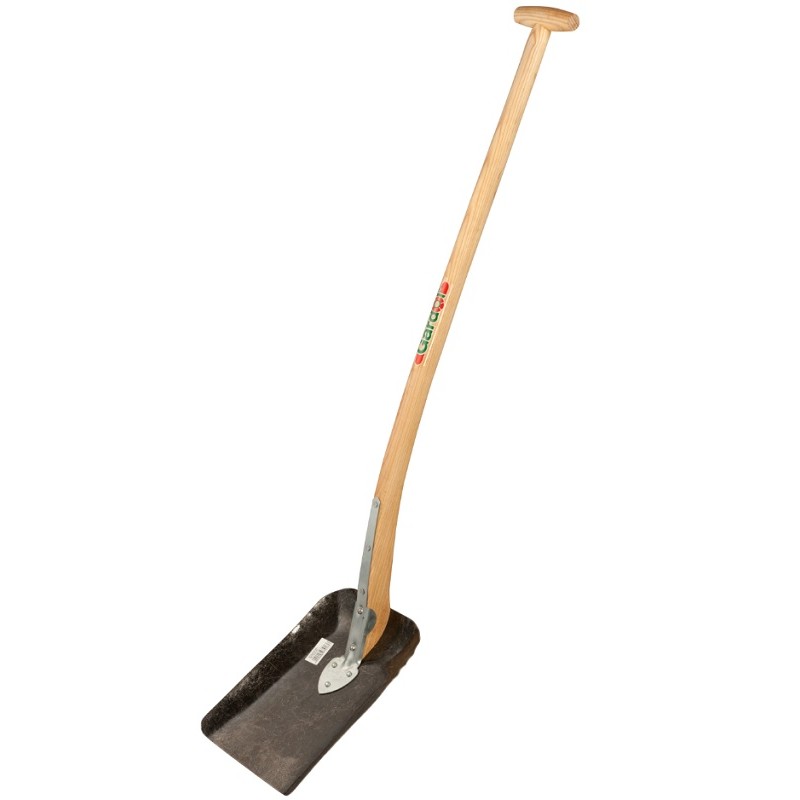


Design and main components
The principal parts of a shovel are the blade, the socket or collar that connects blade to shaft, the shaft or handle, and often a grip (straight, D-shaped or T-shaped). Blades vary in shape and edge: rounded-point blades penetrate compacted soil; square or flat blades act as scoops for loose substances. Common handle materials include wood and modern alternatives; many blades are made from steel or lightweight alloys. See also comparison with a spade, which usually has a straighter blade and transmits force more directly for cutting.
Common types
- Round-point shovel: curved blade for digging and breaking ground.
- Square or scoop shovel: flat blade for moving loose loads such as coal or grain.
- Snow shovel: wide, often plastic- or metal-rimmed blade for clearing snow.
- Trenching and drain shovels: narrow blades for creating channels.
- Roof and coal shovels: specialized shapes for specific materials or tasks.
Shovels are used to handle a variety of loose materials, for example bulk aggregates, coal and gravel, as well as snow, compost and grain.
History and evolution
Simple digging tools have ancient origins, evolving as metallurgy improved. Early metal-bladed shovels replaced wooden or bone scoops in many cultures once iron and steel became available. Over time commercial manufacturing standardized blade shapes and sizes for labor, agriculture and construction; in recent decades new materials such as fiberglass-reinforced handles and corrosion-resistant coatings have broadened performance and lifespan.
Uses, ergonomics and safety
Shovels serve in gardening, landscaping, construction, snow removal and material handling. Proper use reduces strain: bend the knees, keep the back reasonably straight, avoid twisting while carrying heavy loads and use a suitably sized tool for the task. Wear gloves and eye protection when needed. Replace or repair split handles and blunt or rusted blades to maintain safety.
Selection and maintenance
- Match blade shape to task: pointed for digging, square for scooping.
- Choose handle length for leverage and control; D-grips help with short, powerful work.
- Prefer treated or synthetic handles in wet conditions; many blades are made of metal and handles of wood or composite materials.
- Keep the blade clean and store upright; sharpen a steel edge lightly if needed and prevent rust with a light coating of oil.
Though simple in form, the shovel remains a fundamental tool because of its versatility and straightforward mechanics. Selecting the right type and using sound technique extend its usefulness and reduce injury risk.
Related articles
Author
AlegsaOnline.com Shovel: design, types, uses and care Leandro Alegsa
URL: https://en.alegsaonline.com/art/90034