
Scimitar oryx (Oryx dammah): description, habitat, and conservation
Large antelope native to North Africa, the scimitar oryx (Oryx dammah) is extinct in the wild but persists in captivity and reintroduction programs. This article summarizes its appearance, ecology, and conservation history.
Overview
The scimitar oryx (Oryx dammah) is a distinctive desert antelope originally widespread across North Africa. Famous for its long, backward-curving horns and pale coat, the species was declared extinct in the wild in the late 20th century but survives in captivity and managed herds. Many modern conservation efforts focus on captive breeding and carefully planned reintroductions to former range countries.
Image gallery
10 Images




Physical characteristics
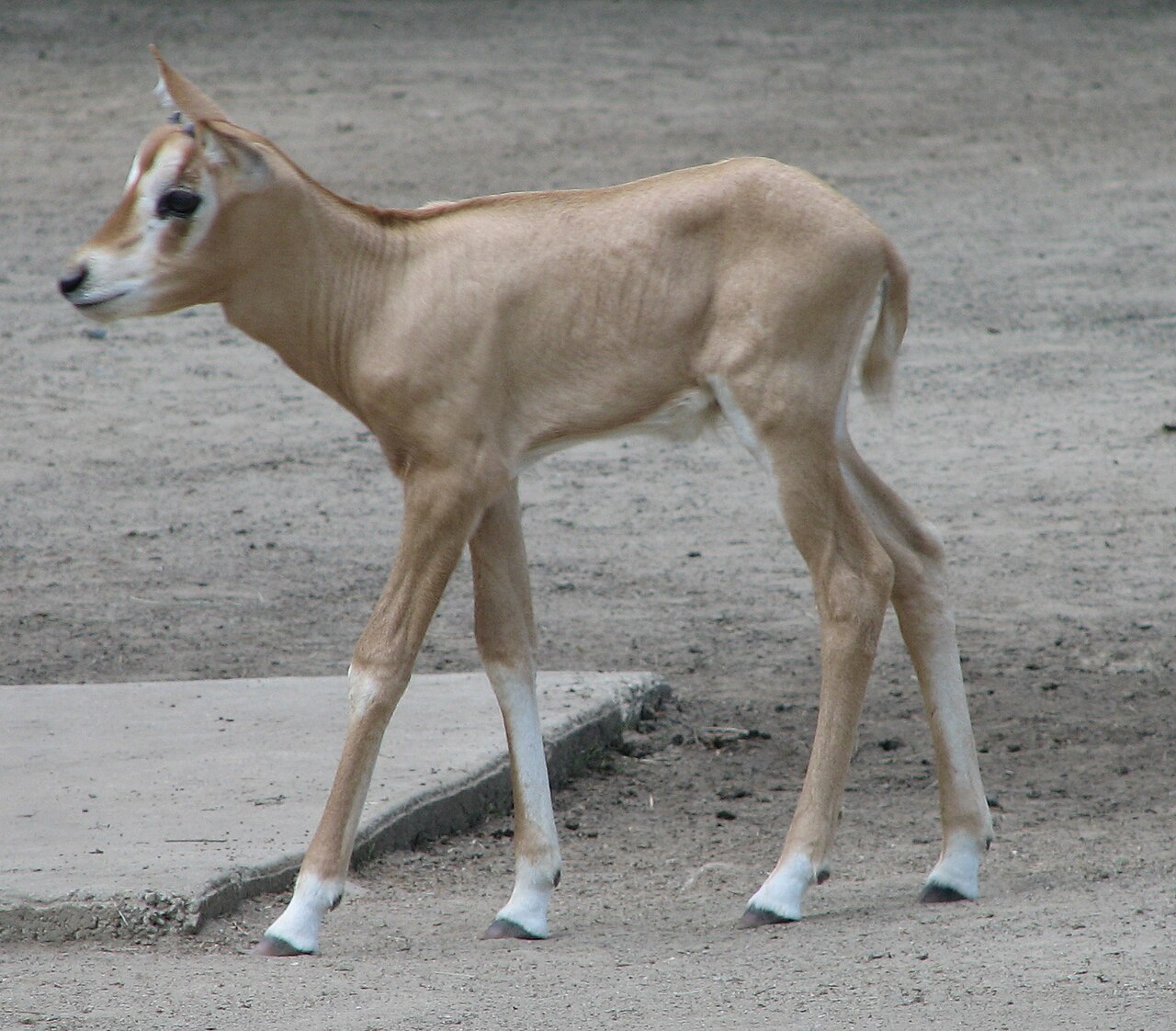
Adults have a mostly white or pale sandy coat with a reddish-brown chest and neck. Unlike other oryx species, the scimitar oryx lacks strong black facial or leg markings. Both males and females carry long, slender horns that curve like a scimitar; these are used for defense and in social displays. Young are called calves and adult males are often referred to as bulls. Key traits include:
- Long, curved horns present in both sexes
- Light-colored coat suited to reflect heat
- Adaptations for arid environments, including efficient water use
Habitat, diet and behavior
Scimitar oryx were adapted to open desert and semi-desert plains. They are herbivores, feeding on grasses, herbs and seasonal browse, and can obtain moisture from food during dry periods. Generally diurnal, they are most active in cooler parts of the day and form social groups that improve vigilance against predators. For more on the oryx group, see oryx genus resources and for husbandry information consult captive-care sources such as zoo and reserve guidelines.
Conservation history and reintroductions
Intensive hunting, habitat loss, and prolonged drought contributed to the species' decline and eventual extirpation from the wild. Captive populations maintained by zoos, private collections and wildlife parks became the basis for recovery plans. Beginning in the 21st century, coordinated breeding and release projects have returned animals to parts of their former range under strict monitoring. These efforts illustrate the challenges and possibilities of restoring species once considered lost in their native habitats.
Importance and notable facts
The scimitar oryx is an emblematic example of a species saved from extinction in the wild through ex situ conservation. Because it is a desert specialist, studying its physiology and behavior informs broader research on arid-land ecology and climate resilience. Readers can learn about their dietary role among grazers at a general herbivore overview page: herbivore ecology, and about their daily activity patterns at a summary source on diurnal animals: diurnal behavior.
Related articles
Author
AlegsaOnline.com Scimitar oryx (Oryx dammah): description, habitat, and conservation Leandro Alegsa
URL: https://en.alegsaonline.com/art/88047
Sources
- iucnredlist.org : "Oryx dammah"