
Scapula (shoulder blade)
The scapula, or shoulder blade, is a flat triangular bone of the pectoral girdle. It links the upper limb to the trunk, serves as a muscle attachment platform, and forms the socket for the shoulder joint.
The scapula, commonly called the shoulder blade, is a broad, flat bone that forms part of the pectoral girdle. It occurs in all major groups of land vertebrates, including tetrapods, and in humans it lies on the posterior thoracic wall. The scapula participates indirectly in shoulder movement by providing the glenoid surface that articulates with the humerus and by forming a mobile connection with the clavicle.
Image gallery
10 Images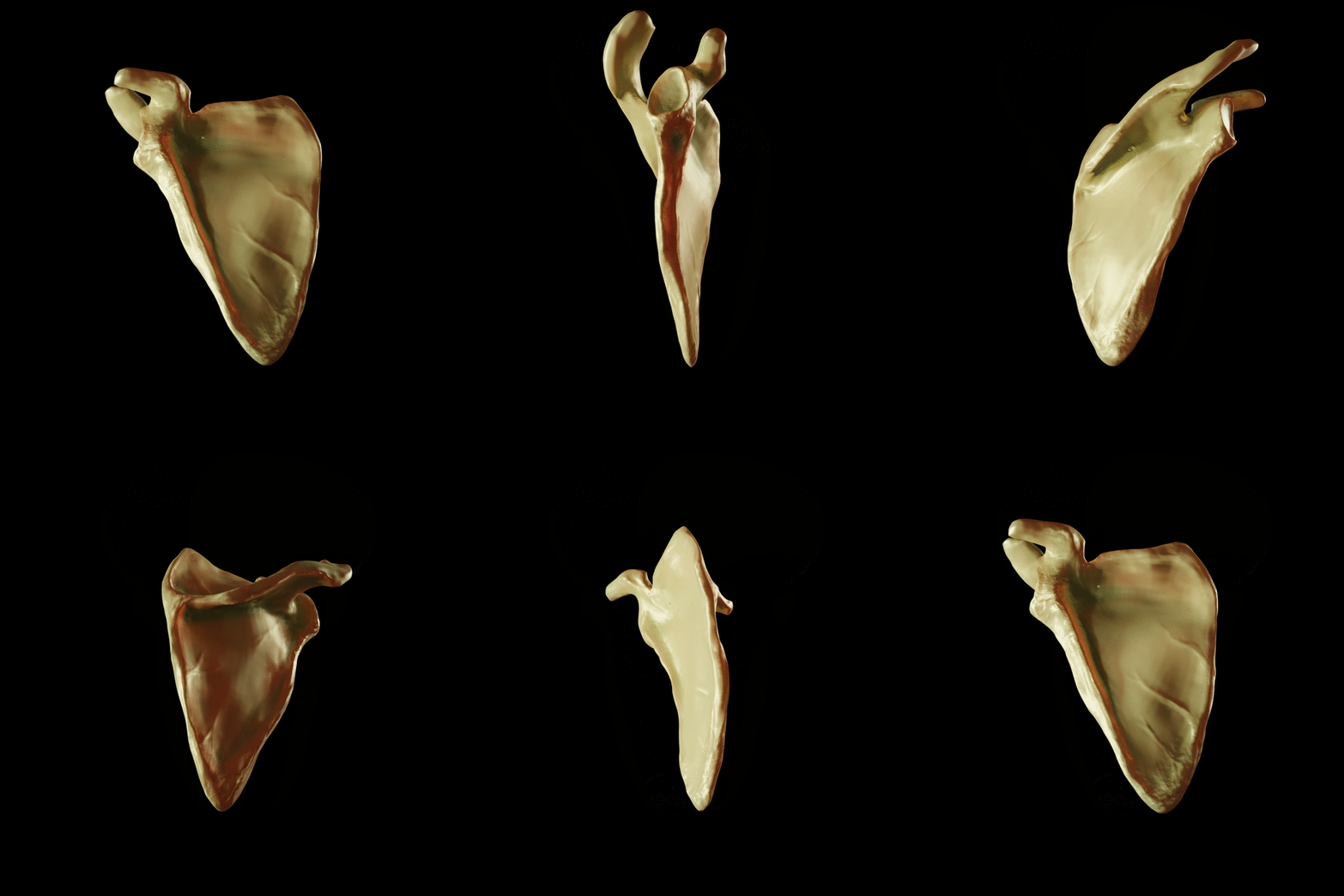




Anatomy and function
The human scapula is roughly triangular and thin, with a ridge called the spine running across its posterior surface. Its lateral angle bears the shallow glenoid cavity that receives the head of the humerus to form the glenohumeral (shoulder) joint. Two prominent processes extend from the scapula: the acromion, which forms the high point of the shoulder and meets the clavicle, and the coracoid process, a hook-like projection that serves as an attachment for ligaments and muscles.
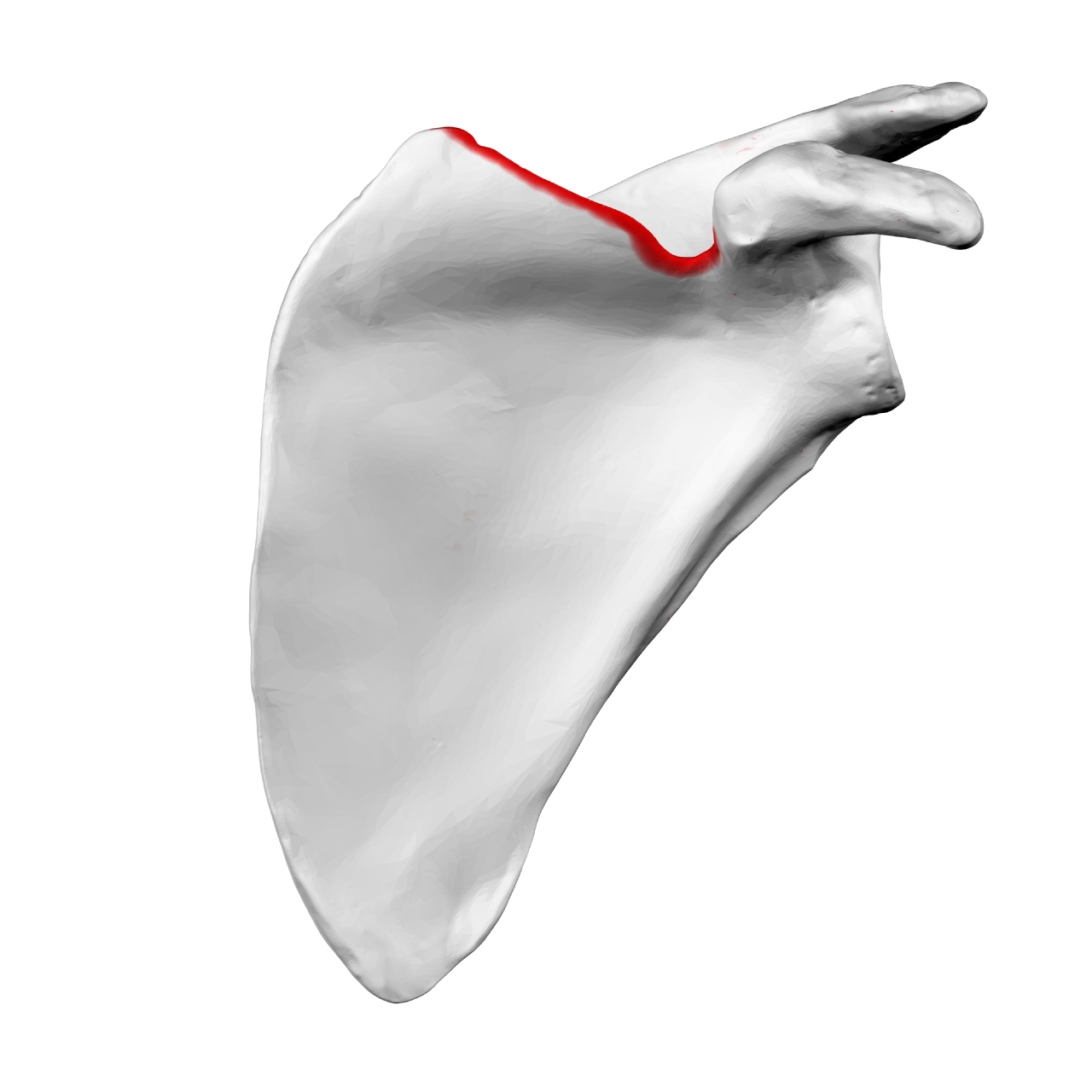
Key borders and landmarks—superior, medial (vertebral), lateral (axillary), and the superior and inferior angles—help describe position and muscle attachments. The scapula has multiple muscle insertion sites: it anchors rotator cuff muscles (supraspinatus, infraspinatus, teres minor, subscapularis) and larger movers such as the deltoid, trapezius, levator scapulae, rhomboids, and serratus anterior. These muscles control elevation, depression, protraction, retraction, and rotation of the shoulder blade, allowing a wide range of upper limb movement.
Distinctive features and variation
- Glenoid cavity: shallow and designed for mobility rather than stability; often augmented by a fibrocartilaginous labrum.
- Acromion and acromioclavicular joint: provide a bony roof over the shoulder joint and link to the clavicle.
- Scapulothoracic articulation: not a true joint—movement occurs between scapula and thoracic cage through muscular and fascial gliding.
- Comparative anatomy: shape and orientation vary across species; in many quadrupeds the scapula is more vertical, while in birds it is elongated to support flight muscles.
During development the scapula forms from mesenchymal condensations and ossifies from several centers; its complex shape reflects the demands of muscle attachment and joint formation. In evolutionary terms, the scapula is a central element of the pectoral girdle that has adapted to different modes of locomotion.
Clinical significance
Scapular injuries include fractures, dislocations of the acromioclavicular joint, and dysfunctions such as scapular winging, often caused by serratus anterior weakness or long thoracic nerve damage. Problems with the glenoid labrum or rotator cuff tendons can impair shoulder stability and mobility. Assessment commonly relies on physical examination and imaging, and treatment ranges from conservative rehabilitation to surgical repair depending on severity.
Related articles
Author
AlegsaOnline.com Scapula (shoulder blade) Leandro Alegsa
URL: https://en.alegsaonline.com/art/87775