
Scalpel: surgical cutting instrument, materials, history, and uses
A scalpel is a precise cutting instrument used in surgery and dissection. This article explains its design, materials, history, clinical uses, safety practices, and alternatives such as lasers and electrocautery.
A scalpel is a small, extremely sharp cutting instrument designed primarily for surgical procedures and precise dissections. Often described as a specialized knife, the scalpel is engineered to make controlled incisions through skin and soft tissue with minimal trauma. Modern operating rooms use a range of scalpels—from reusable handles with disposable blades to entirely single-use instruments—selected to balance sharpness, sterility, and cost.
Image gallery
10 Images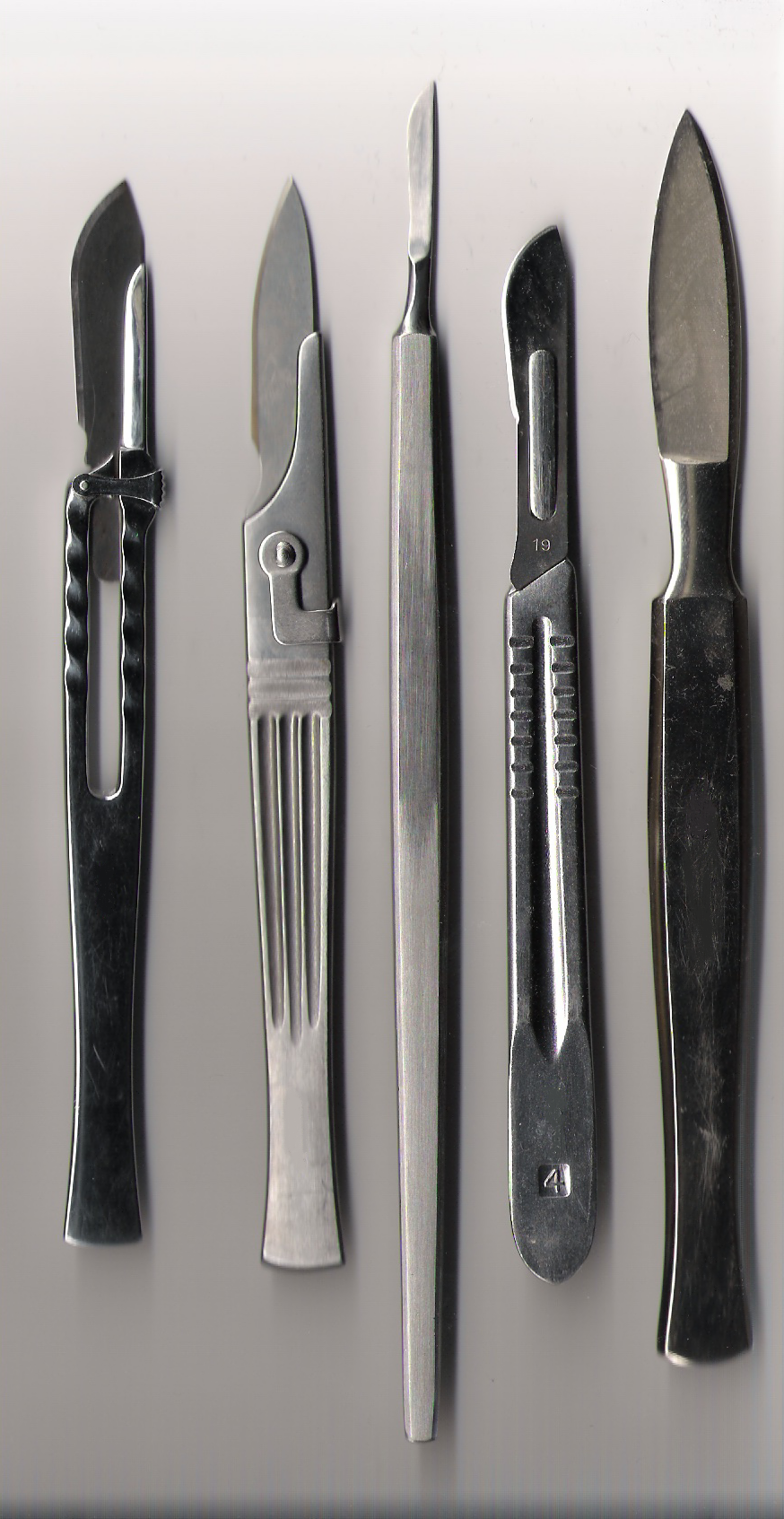


Design, components, and variations
At its simplest a scalpel consists of a blade and a handle. Blades are manufactured in a variety of shapes and edge profiles to suit tasks such as skin incisions, precise dissections, or cutting tough tissue. Many contemporary systems use replaceable disposable blades that are snapped onto a reusable handle; this arrangement lets clinicians maintain a sharp edge while reducing the need to reprocess whole instruments. Blades and handles are produced in standardized shapes and sizes so that different combinations are interchangeable in clinical practice. Specialized variants include micro-scalpels for delicate ophthalmic work and larger blades for general surgery.
- Blade materials: most commonly stainless or carbon steel and other alloys (metals) chosen for edge retention and corrosion resistance.
- Alternative materials: titanium and coated alloys are used when nonmagnetic or lighter tools are needed (titanium). Extremely sharp obsidian and diamond-tipped blades exist for specialized or historical use (obsidian, diamond).
- Single-use vs reusable: disposable blades are common to prevent cross-infection, while handles and some instruments are designed for repeated sterilization.
History and notable facts
Sharp cutting tools for medical use date back millennia. Ancient Egyptian embalmers and surgeons used stone blades such as obsidian for precise cuts. Classical sources and archaeological finds show that Roman medicine employed a large toolkit with many shaped instruments for different procedures. The modern concept of a replaceable, standardized surgical blade evolved over the 19th and 20th centuries as sterilization, industrial manufacturing, and aseptic technique developed.
Obsidian remains notable because its fracture pattern can produce an edge many times sharper than a honed metal blade; however, its fragility and sterility considerations limit routine clinical use. In the late 20th century manufacturing advances and concerns about infection control accelerated adoption of single-use blades and disposable scalpel systems.
Uses, alternatives and safety considerations
Scalpels are used for skin incisions, tissue dissection, biopsies and many other procedures where a clean, controlled cut is required. When cutting without mechanical blades is advantageous, surgeons may use energy-based alternatives: lasers and electrocautery devices can cut and coagulate simultaneously, reducing bleeding in some contexts. These techniques have different effects on surrounding tissue and are chosen according to clinical goals.
Sterility and operator safety are central to scalpel use. Blades are commonly disposed of after a single use or sterilized by autoclave or validated chemical processes for reuse. In environments that involve strong imaging magnets, such as magnetic resonance imaging, the presence of metal instruments and forces related to magnetism require nonmagnetic tools or alternative cutting methods. Proper sharps disposal, protective technique, and attention to instrument selection help minimise infection risk and procedural complications.
For more technical guidance on blade selection, sterilization protocols, and instrument procurement, clinicians consult surgical instrument manuals and institutional policies; manufacturers and professional societies also publish standards and recommendations to ensure safe, effective use of scalpels in contemporary practice. For general information on surgical instruments and safe handling practices, readers may follow sources provided by surgical societies and institutional protocols (surgery, blades).
Related articles
Author
AlegsaOnline.com Scalpel: surgical cutting instrument, materials, history, and uses Leandro Alegsa
URL: https://en.alegsaonline.com/art/87757
Sources
- telegraph.co.uk : "Roman ruins cast new light on a trip to doctor"