
Knife: form, function, history, and common types
A knife is a hand tool or weapon with a sharpened edge used for cutting and shaping. This article outlines its parts, materials, historical development, common types, uses, and safety and legal considerations.
A knife is one of the most widespread and enduring hand tools: ahandled implement with a sharpened edge used to sever, shape, or separate materials. Its basic design—an edge mounted on or formed with a handle—appears in many cultures and contexts, from food preparation and craftwork to hunting, self‑defense, ceremonial use, and industrial tasks. Knives range from small folding blades to large fixed‑blade tools and can be made from stone, metal, ceramic or modern composites.
Image gallery
10 Images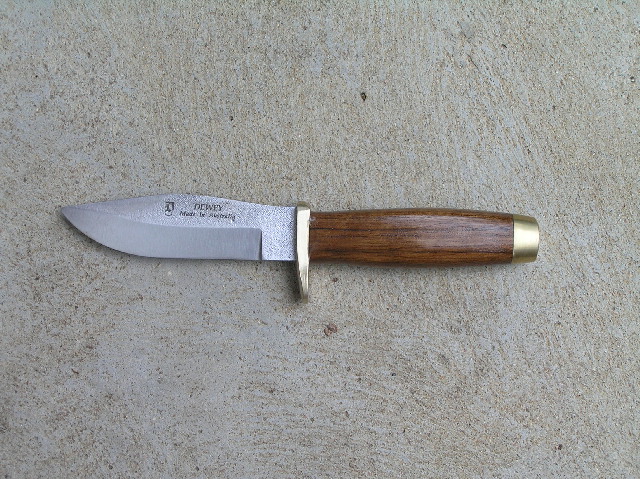


Basic parts and characteristics
Although shapes vary, most knives share a few key components: the blade (the cutting portion), the edge (the sharpened side), the spine (the opposite, often unsharpened side), the tip (blade’s forward point), and the heel (the rear part used for heavier cuts). The handle provides grip; many knives include a tang—a continuation of the blade metal inside the handle—for strength. Additional features may include a bolster, guard, or pommel. Blade geometry, edge angle, steel composition and heat treatment determine cutting performance, toughness and corrosion resistance.
History and technological development
Cutting tools are among the oldest technologies used by humans and their ancestors. Archaeological finds show sharp stone implements in very early archaeological layers; later, toolmakers developed more sophisticated flaking and polishing techniques. The introduction of metalworking profoundly affected knife design. During periods commonly called the Copper Age and the Bronze Age, people began to produce long‑lasting metal blades that were stronger and could be made thinner and sharper than many stone tools. Iron and steel technologies later allowed further improvements in durability, edge retention and forms tailored to specialized tasks.
Manufacture and materials
Modern knives are made by forging, stock removal (machining), or casting, followed by heat treatment to harden and temper the metal. Common blade materials include carbon steels, which can be sharpened to a fine edge but may rust, and stainless steels, which resist corrosion though they may be harder to sharpen. Nonmetallic blades, such as ceramic, offer long edge life but can be brittle. Many blades receive finishes, coatings or surface treatments to improve appearance, reduce wear, or inhibit corrosion.
Types and uses
- Kitchen knives: chef’s, paring, serrated and specialty blades for cooking and food preparation.
- Pocket and utility knives: folding or compact fixed blades used for everyday tasks, outdoors and trades.
- Hunting and outdoor knives: robust fixed blades for skinning, cutting cordage, and camp tasks.
- Combat and tactical knives: designed for military or defensive roles, often emphasizing strength and grip security.
- Specialty knives: carving, surgical, throwing, ceremonial and industrial blades made for narrow functions.
Choice of a knife depends on intended use, legal restrictions and personal preference. Edge geometry, blade length, handle design and balance influence how well a knife performs for a task.
Safety, maintenance and legal aspects
Proper care—regular sharpening, cleaning and safe storage—keeps knives effective and reduces accidents. Many jurisdictions regulate the carry and ownership of knives; laws may limit blade length, locking mechanisms, or public carriage. Users should be aware of local rules and follow safe handling practices: cut away from the body, keep fingers clear of the edge, and use a stable surface for cutting tasks.
Knives combine a simple idea with a wide variety of technical and cultural adaptations. From ancient flaked stone to modern alloys and design refinements, the knife remains an indispensable tool across daily life, crafts and professions.
Related articles
Author
AlegsaOnline.com Knife: form, function, history, and common types Leandro Alegsa
URL: https://en.alegsaonline.com/art/53977
Sources
- miamiherald.com : miamiherald.com/news/local/crime/article240387366.html