
Sashimi — Japanese thinly sliced raw seafood and its traditions
Sashimi is a Japanese dish of thinly sliced raw (or lightly cooked) seafood, valued for freshness, knife technique and presentation. Covers types, preparation, safety, history and etiquette.
Sashimi is a traditional element of Japanese cuisine consisting of thinly sliced raw seafood or, in a few cases, thinly prepared meats. Unlike sushi, sashimi is served without vinegared rice and is presented to showcase the flavor and texture of the ingredient itself. The dish emphasizes freshness, precise cutting, and a restrained, elegant plating.
Image gallery
10 Images


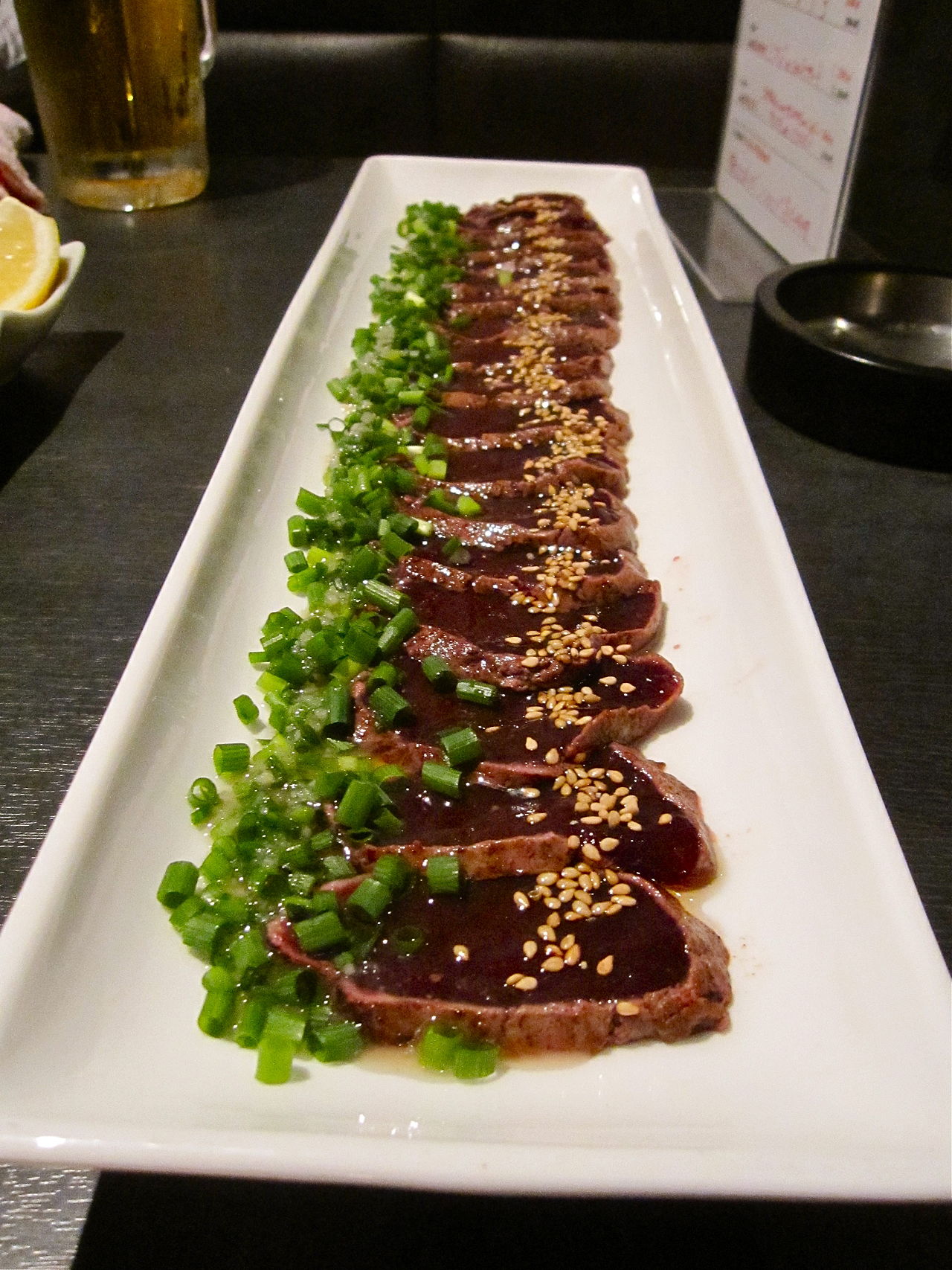
Characteristics and serving
At its core sashimi depends on very fresh ingredients and careful handling; many chefs source fish that are eaten within hours of landing. Typical accompaniments include soy sauce, a small amount of wasabi, shredded daikon radish, perilla (shiso) leaves and sometimes grated ginger. Presentation and the thickness and shape of each slice are important: the cut can alter mouthfeel and release different flavors.
Common varieties
Many types of seafood are used for sashimi. Popular choices include:
- Salmon (鮭, sake) — oily and rich.
- Tuna (まぐろ, maguro) and its fatty portion (otoro) — prized for texture and depth.
- Squid (いか, ika) — firm and slightly sweet.
- Shrimp (えび, ebi) — sometimes served raw, sometimes briefly cooked.
- Mackerel (さば, saba) — richer, often marinated.
- Horse mackerel (あじ, aji) — delicate and oily.
- Octopus (たこ, tako) — usually boiled for texture.
- Scallop (ほたて貝, hotate-gai) — sweet and tender.
- Yellowtail (はまち, hamachi) — buttery and mild.
- Pufferfish (ふぐ, fugu) — hazardous unless prepared by licensed chefs.
- Sea urchin (ウニ, uni) — creamy, oceanic taste.
- Whale meat (鯨肉) — historically consumed in some regions.
History and technique
Sashimi evolved over centuries as an expression of seasonality and seafood appreciation. Professional preparation requires skillful use of specialized knives and knowledge of cutting styles: for example, hira-zukuri gives broad, sash-shaped slices while usuzukuri produces very thin, translucent pieces. A yanagiba is a long, single-edged knife commonly used to make clean slices that preserve texture.
Safety, preparation, and etiquette
Food safety is essential because sashimi is often raw. Fish are handled to minimize contamination and, where appropriate, freezing is used to reduce the risk of parasites. Some items are partially cooked or cured for texture or safety; octopus and certain shellfish are commonly blanched. Pufferfish requires specially licensed preparation due to toxic organs.
When eating sashimi, many diners dip a corner of the slice briefly into soy sauce, add a touch of wasabi if desired, and eat it in one bite to appreciate the balance of flavor and texture. Because sashimi highlights a single ingredient, cultural appreciation of seasonality, knife craft and ingredient quality is central to the experience.
For more general context about the role of fresh fish in cuisine see fresh fish resources and guides to specific seafood types listed above. Additional regional and historical details can be explored via introductory references and culinary texts.
Related articles
Author
AlegsaOnline.com Sashimi — Japanese thinly sliced raw seafood and its traditions Leandro Alegsa
URL: https://en.alegsaonline.com/art/87413
Sources
- books.google.com : "Sashimi"