
Tuna: biology, distribution, uses, and conservation
Tuna are large, fast-swimming oceanic fish in the family Scombridae. This article covers their biology, species, behavior, human uses, and conservation concerns including fisheries and sustainability.
Overview
Tuna are several species of large, migratory pelagic fish found in temperate and tropical oceans worldwide. Commonly referred to simply as tuna or tuna fish, many species belong to the genus Thunnus and the broader family Scombridae. As a group they are ecologically important predators and a major target of commercial and artisanal fisheries. See a list of species and classifications at species information and the family entry at Scombridae.
Image gallery
10 Images



Physical characteristics
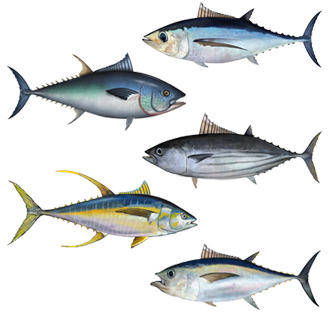
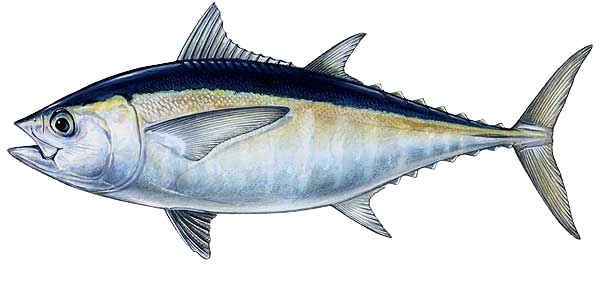
Tuna are streamlined, torpedo-shaped fish built for sustained, fast travel. Their muscular bodies, crescent-shaped tails and finlets reduce drag and allow rapid swimming; some observations report speeds up to 77 km/h in bursts. Unlike many fish with pale flesh, tuna have pink to deep red meat. This color results from abundant myoglobin in their muscle cells; myoglobin stores and transports oxygen within muscle tissue and gives active, swimming muscles a darker hue (myoglobin is an example of a small molecule that binds oxygen).
Physiology and adaptations
Some tuna species exhibit regional endothermy: they can elevate the temperature of certain tissues above ambient water temperature through muscular activity and specialized blood vessel arrangements. This ability allows species such as the Northern bluefin to remain active in cooler waters and expand their foraging range; for discussion of a notable species see Northern bluefin tuna. High metabolic rates, efficient oxygen delivery and sustained swimming distinguish tuna physiologically from many other teleost fish.
Distribution, behavior and diet
Tuna occur across the world’s major oceans, with different species favouring particular regions and depth ranges. Many undertake long migrations between feeding and spawning areas. They are opportunistic predators, feeding on smaller fish, squid and crustaceans, and they in turn are prey for larger sharks, marine mammals and humans. Tuna often form schools, which can include mixed species, and show complex social and migratory behaviour.
Human uses and cultural importance
Tuna are among the most valued wild-capture fish globally. They are sold fresh, frozen, and canned, and certain species supply high-demand products such as sashimi and steaks. Commonly harvested species include bluefin, yellowfin, albacore, bigeye and skipjack. Commercial methods range from purse seines and longlines to pole-and-line fishing. Tuna fisheries contribute substantially to coastal economies and global seafood markets.
Conservation, health and management
Intense fishing pressure has reduced populations of several tuna species, particularly some bluefin stocks that are slow to mature and vulnerable to overexploitation. Conservation responses include quota systems, size limits, time-area closures and international management through regional fisheries organizations. From a consumer perspective, tuna is a nutritious source of protein, omega-3 fatty acids and vitamins, but some products can contain elevated levels of mercury; advisories recommend moderation for pregnant people and young children.
Notable distinctions and facts
- Tuna differ from many reef or freshwater fish by being highly migratory pelagic predators.
- The reddish flesh is attributable to high myoglobin content, reflecting their aerobic endurance.
- Management success varies: some stocks show recovery with strict measures, while others remain depleted.
For further reading on taxonomy, physiology and fishery management, consult species-specific resources and regional conservation authorities via species information and the family overview at Scombridae. Additional technical background on muscle oxygenation and cellular molecules is available at pages about myoglobin and general molecular biology (molecules; oxygen). For details on notable species and conservation status see Northern bluefin tuna.
Questions and answers
Q: What is a tuna?
A: Tuna is a fish that belongs to the family Scombridae and the genus Thunnus. It is a fast swimmer and several species of tuna are warm-blooded.
Q: What is the speed at which tuna can swim?
A: Tuna can swim at up to 77 km/h.
Q: What makes tuna flesh different from other fish?
A: Tuna flesh is pink to dark red in color because it contains greater quantities of myoglobin. Myoglobin is a molecule that binds oxygen.
Q: What enables some larger tuna species to live in cooler waters?
A: Some larger tuna species, such as the Northern bluefin tuna, are able to raise their blood temperature above the water temperature with muscular activity. This allows them to live in cooler waters and survive a wider range of circumstances.
Q: What family does tuna belong to?
A: Tuna belongs to the family Scombridae.
Q: What genus does tuna belong to?
A: Tuna belongs to the genus Thunnus.
Q: Are most species of fish's flesh white?
A: Yes, most species of fish have white flesh, but tuna flesh is different and is pink to dark red.
Related articles
Author
AlegsaOnline.com Tuna: biology, distribution, uses, and conservation Leandro Alegsa
URL: https://en.alegsaonline.com/art/102013
Sources
- fishbase.org : "Thunnus"