
Sautéing: high-heat cooking for quick browning and retained moisture
Sautéing is a quick, high-heat cooking technique that browns small pieces of food in a little fat while preserving texture and moisture. Includes methods, history, comparisons, and practical tips.
Sautéing is a short, high-heat cooking technique used to cook small portions of food quickly. The word comes from the French sautér, “to jump,” describing how ingredients often move in the pan. A minimal amount of fat in a wide, shallow pan — typically a skillet — is heated so pieces are cooked and browned without becoming soggy. Because cuts are usually small or thin, heat penetrates rapidly and surface caramelization develops while the interior stays tender.
Image gallery
7 Images
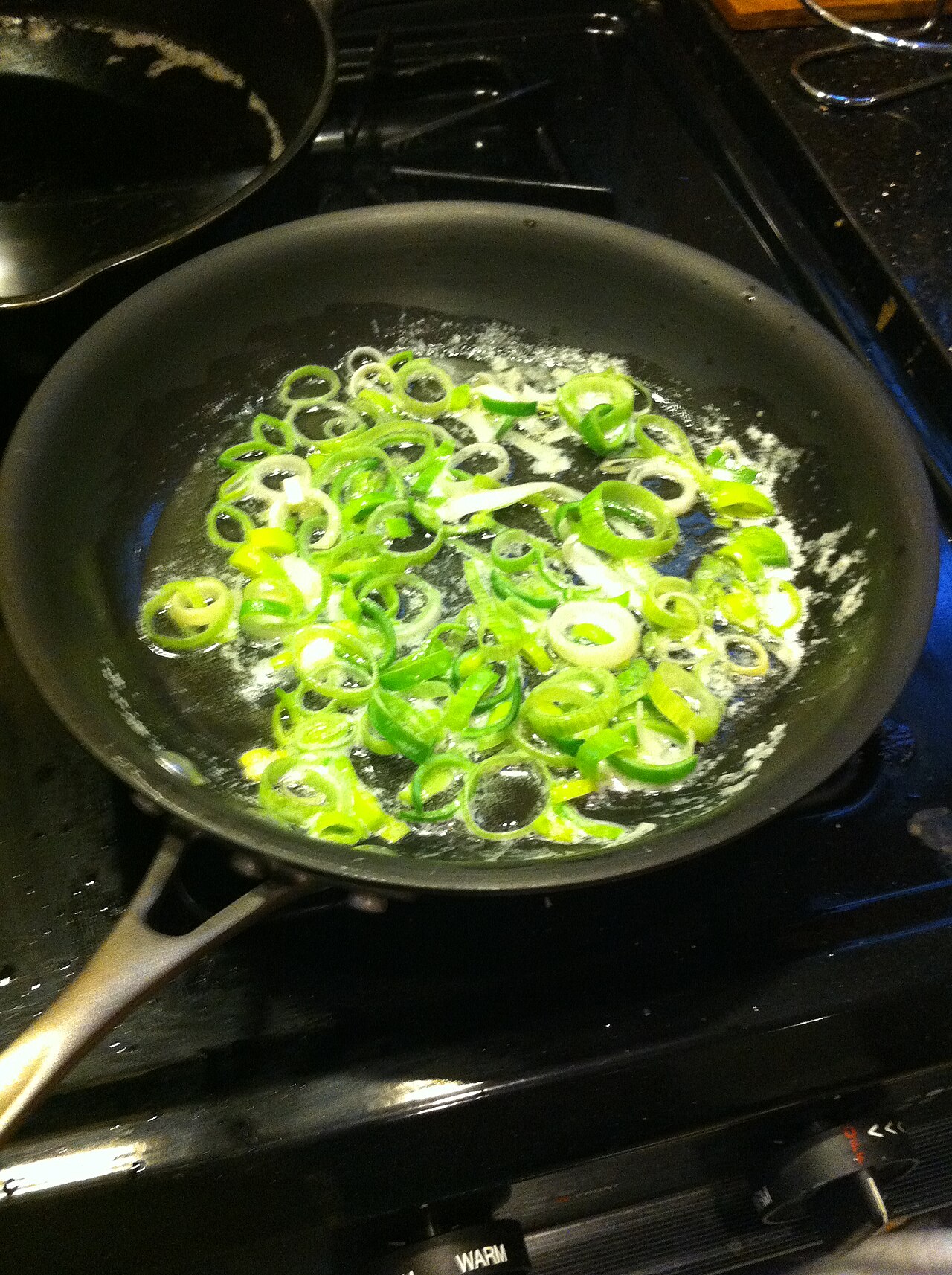


Technique and characteristics
Key features of sautéing include a shallow pan, a quick burst of high heat, and active motion: flipping, stirring or tossing the contents so they cook evenly. Ingredients are commonly cut into pieces or sliced thinly to reduce cooking time. Browning occurs through the Maillard reaction, which enhances aroma and color while helping the food remain moist and maintain its basic texture. A well-executed sauté locks in juices and concentrates flavor without long exposure to heat.
Fats used for sautéing are chosen for their flavor and smoke point. Olive oil is a frequent choice for its taste, while clarified butter offers butter flavor with higher tolerance for heat. Regular butter contributes rich flavor but can burn sooner because of milk solids; clarified butter reduces that risk. Many cooks balance oil and butter to get both heat stability and desirable taste.
Uses and finishing
Sautéing is ideal for vegetables, bite-sized pieces of meat, and fillets of fish. After the main ingredient is cooked, the browned bits left on the pan — the pan's remains (fond) — are often deglazed with liquid (wine, stock, or vinegar) to form a quick sauce, a common finish in classic European cooking. This step captures concentrated flavors and transforms simple sautéed food into a composed dish.
History and culinary context
Sautéing is rooted in classical French cuisine but is a basic technique across many culinary traditions. The method evolved as cooks learned to control heat and fat to produce consistent browning and texture in less time than roasting or braising. Over time, chefs adapted sautéing tools and fats to regional ingredients and preferences.
Distinctions and common confusions
Sautéing is sometimes confused with other dry-heat methods. It differs from pan-frying, which usually handles larger cuts and may use slightly lower heat and more fat; searing is a brief high-heat step to brown a surface, not always intended to cook the interior. Stir-frying, from East Asian cuisine, uses very high heat and constant stirring in a wok, often with thinner oil and smaller pieces; sautéing is similar in spirit but typically uses a flatter pan and less frenetic motion.
Practical tips
- Dry ingredients before adding them to the hot pan to promote even browning.
- Preheat the pan and fat sufficiently so food sizzles on contact, then don’t crowd the pan; overcrowding traps steam and prevents proper color.
- Adjust heat rather than fat: raising the temperature briefly helps finish cooking; lowering it prevents burning and preserves texture.
- Use a combination of oils and butter when you want both flavor and higher temperature tolerance — or choose clarified butter for a butter taste with greater stability.
Mastering sautéing gives cooks a fast, versatile way to prepare proteins and vegetables with appealing color and retained juiciness. Its economy of time and ingredients makes it a foundational skill in home kitchens and professional brigades alike. For more technique demonstrations and recipes, see resources linked here: techniques, ingredient guides, and fat and oil comparisons.
Related articles
Author
AlegsaOnline.com Sautéing: high-heat cooking for quick browning and retained moisture Leandro Alegsa
URL: https://en.alegsaonline.com/art/87585