
Satay — Southeast Asian Grilled Meat Skewers
Satay (sate) is a popular Southeast Asian street food of skewered, seasoned meat grilled over coals and often served with peanut sauce and rice or accompaniments.
Overview
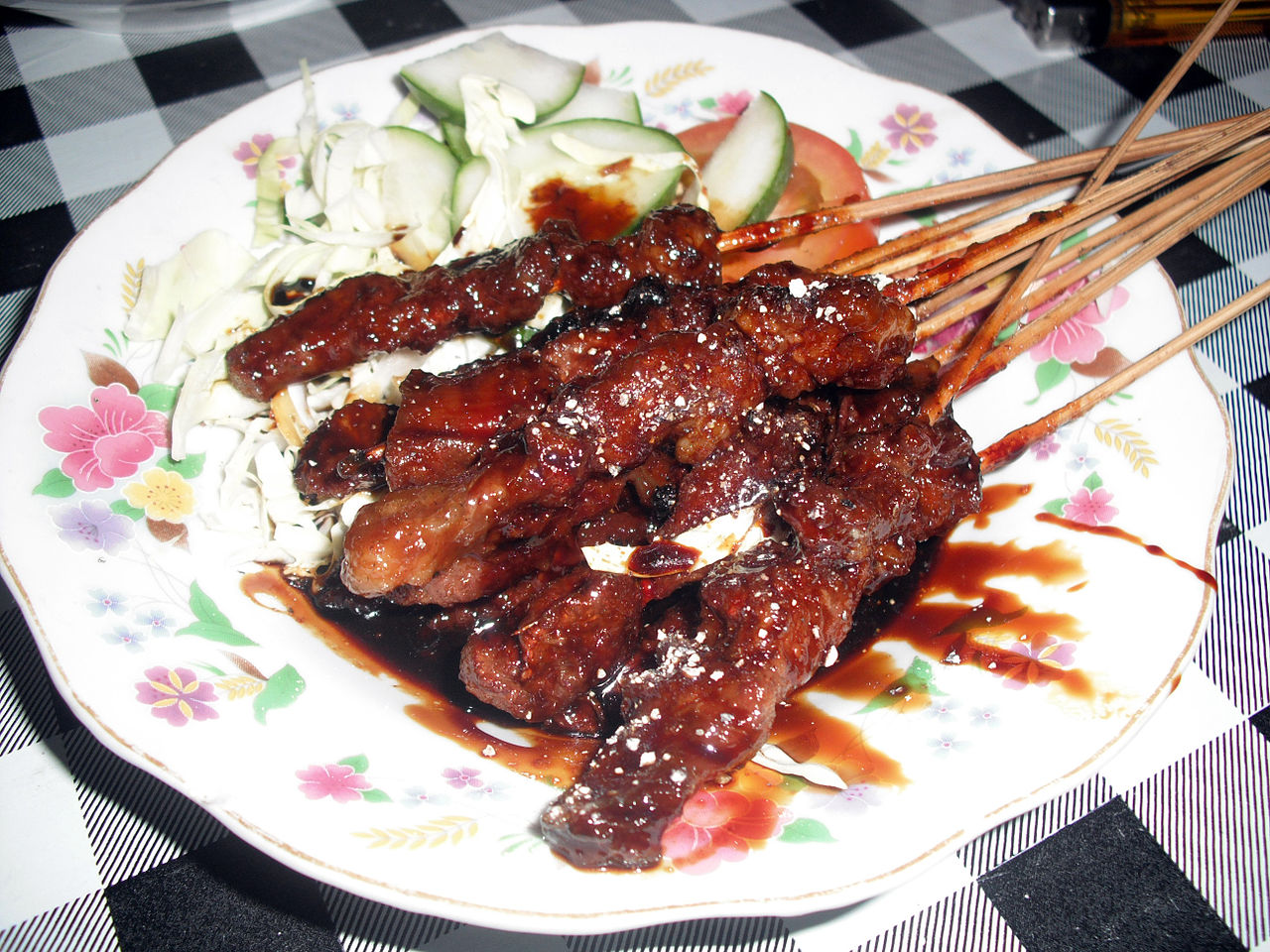
Satay (also spelled sate) is a widely enjoyed Southeast Asian dish consisting of small pieces of meat threaded onto bamboo or metal skewers and grilled. It is commonly associated with countries such as Singapore, Indonesia, Malaysia and the Philippines. Served at street stalls, hawker centres and restaurants, satay is notable for its smoky char, spiced marinade and a sauce—frequently a peanut-based dip.
Image gallery
10 Images




Characteristics and common ingredients
Typical satay pieces are small and quick to cook. Meats are cut into cubes or thin strips, marinated, skewered and grilled over charcoal. Seasonings often include turmeric, coriander, garlic, lemongrass and sweet soy. A few common accompaniments are sliced raw onion, cucumber, compressed rice cakes and a fragrant peanut or soy-based sauce.
- Common meats: chicken, beef, lamb, pork, goat; in coastal areas, fish or seafood may be used.
- Typical sauces: peanut sauce (kacang), spicy soy-based sauces, or regional variants with coconut and spices.
History and development
The dish is widely credited to Javanese street vendors and traders who adapted skewering and grilling methods to local tastes. From Java it spread across the Malay Archipelago and further afield, taking on regional seasonings and serving styles. Satay’s portability and simple cooking made it ideal for market and roadside sales.
Regional variations and cultural role
Different regions developed distinct styles—Sate Madura and Sate Padang in Indonesia, sweeter soy-glazed versions in Malaysia, and diverse hawker interpretations in Singapore. In the Indonesian tradition the term Javanese is often used when citing origins. In the Malaysian and Philippine contexts, local ingredients and culinary influences shape the sauces and sides.
Importance and distinctions
Satay is a hallmark of street food culture across Southeast Asia and is served at casual gatherings, festivals and formal meals. It is distinct from Middle Eastern kebabs by the characteristic Southeast Asian marinades, use of peanut-based sauces in many regions, and typical accompaniments such as ketupat (rice cakes). Its variety reflects centuries of trade, local tastes and inventive street culinary traditions.
Related articles
Author
AlegsaOnline.com Satay — Southeast Asian Grilled Meat Skewers Leandro Alegsa
URL: https://en.alegsaonline.com/art/87436
Sources
- indonesia.travel : "Jakarta Street Food Scene: Truly Indonesia". Indonesia Travel.