
Scallion (green onion): description, uses, varieties and storage
Scallions, also called green or spring onions, are young Allium plants used for their mild onion flavor. This article explains identification, culinary uses, cultivation, varieties, storage and basic nutrition.
Overview
Scallions are young plants in the Allium group harvested before the bulb fully develops. Common English names include scallion, green onion, spring onion and salad onion; usage varies by region and sometimes by size. They are valued for a fresh, mild onion flavor that works well both raw and cooked, and for the contrasting textures of the white lower stem and the hollow green leaves.
Image gallery
8 Images




Appearance and parts
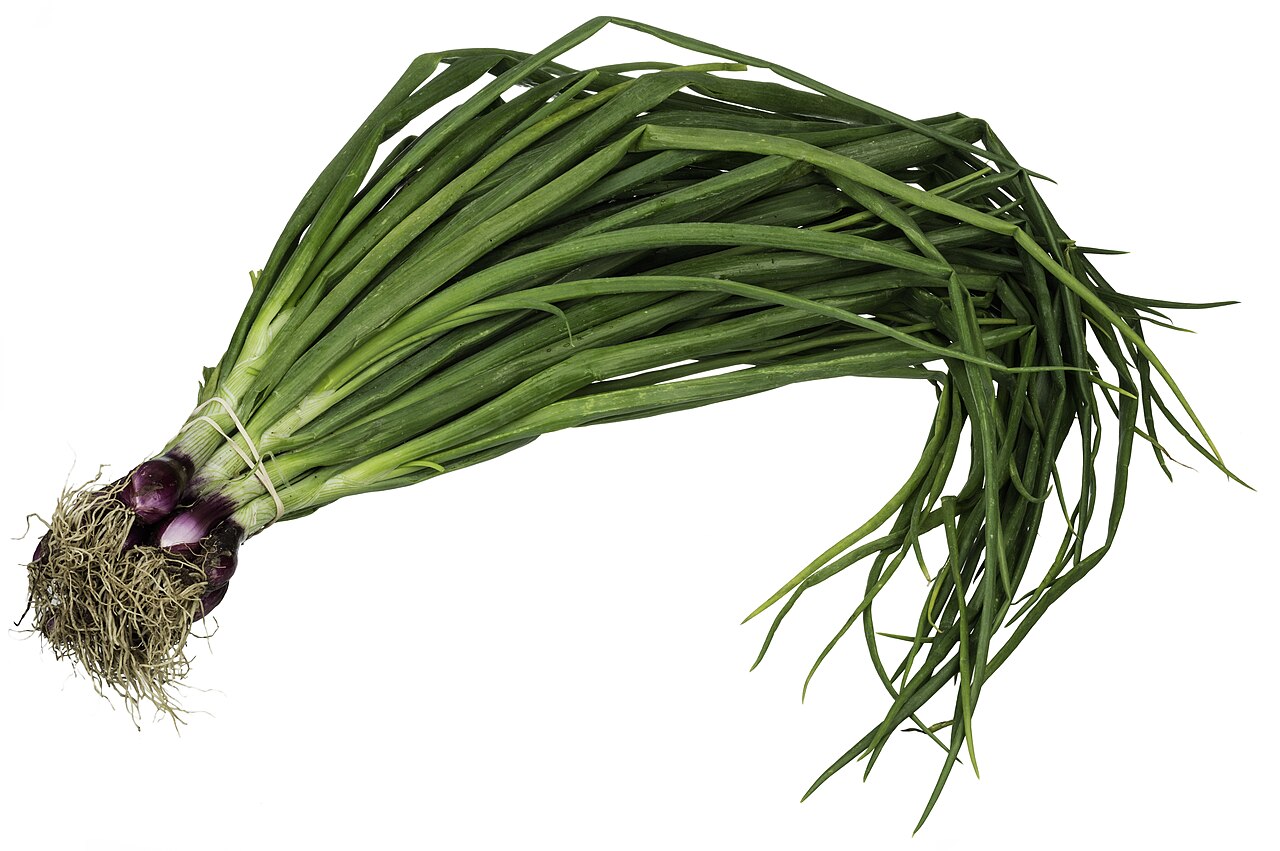
A typical scallion has a pale, crisp white base and a long green stalk that becomes hollow and tender toward the tips. The white portion has a sharper, more onionlike bite and is often used as a cooking aromatic, while the green tops are milder and used as a garnish or finishing herb. Both parts are edible and commonly used together or separately depending on the recipe.
Varieties and botanical notes
Some scallions are specific bunching varieties that do not form large bulbs, while others are young plants of common onions harvested early. Bunching onions (sometimes called Welsh or Japanese negi in specific regional forms) are grown for their long, tender stalks. Other Allium relatives such as chives, shallots and leeks are related but differ in size, growth habit and flavor intensity.
Culinary uses and preparation
Scallions are versatile across many cuisines. Raw, they add brightness to salads, salsas and cold sauces; thinly sliced tops are a common garnish. Light cooking softens their flavor: the white bases are used early in stir-fries, soups and sautés, while greens are added near the end of cooking or sprinkled on finished dishes. They may be grilled, roasted, pickled or used in batters for pancakes and fritters in some regional dishes.
Storage, preservation and regrowth
For short-term storage, keep scallions unwashed and refrigerated; options include wrapping in a slightly damp paper towel inside a bag or standing them upright in a jar with a little water covered loosely. They can be frozen or pickled for longer use, though freezing changes texture. Scallions are also easy to regrow: placing trimmed root ends in water will often produce new green growth that can be harvested again.
Cultivation and harvest
Scallions are commonly grown from seed, sets or transplants and suit cool-season planting. They tolerate close spacing and succession sowing for steady harvests. Plants are ready when stalks reach the desired thickness and length; growers harvest early to preserve the mild flavor that distinguishes scallions from fully bulbized onions.
Nutrition and practical notes
Scallions add flavor with relatively few calories and provide modest amounts of vitamins and minerals found in alliums, including vitamin C, vitamin K and folate, along with dietary fiber and antioxidant compounds typical of onions. Naming conventions can be confusing: when a recipe specifies scallions, consider whether it intends the tender green tops, the more pungent white bases, or both.
Related articles
Author
AlegsaOnline.com Scallion (green onion): description, uses, varieties and storage Leandro Alegsa
URL: https://en.alegsaonline.com/art/87753